Why Immersive VR Is the Future of Brand Engagement
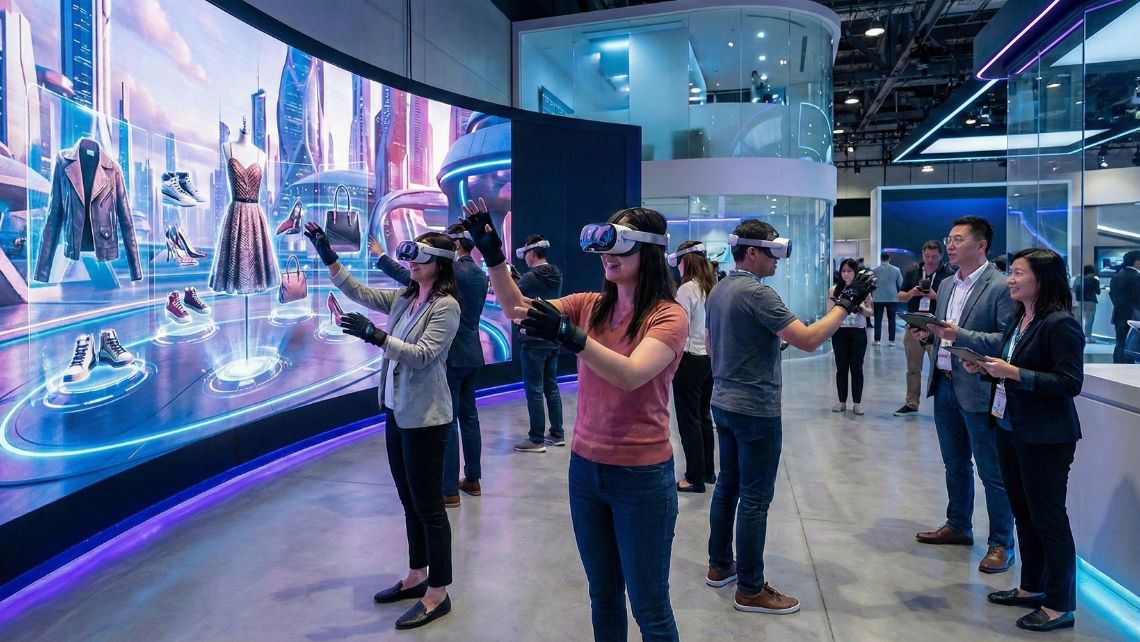
Immersive VR is rapidly reshaping how brands connect with audiences who expect more than passive messaging. As attention spans continue to fragment and digital environments become increasingly saturated, brands are under pressure to deliver experiences that feel meaningful rather than transactional. Immersion has emerged as the key differentiator between fleeting exposure and lasting impact.
Brand engagement today is no longer defined by visibility alone. It is shaped by emotional depth, time spent within an experience, and how clearly a brand is remembered afterwards. A well-designed VR immersive experience allows individuals to step inside a brand environment, explore it at their own pace, and build a personal connection that static or linear formats struggle to achieve.
What makes immersive VR particularly effective is its ability to remove distraction. When users are fully present inside a virtual space, attention is focused rather than divided. This uninterrupted engagement creates stronger emotional resonance and enables brands to communicate ideas through experience instead of explanation, which significantly improves recall.
At Immersive Studio, immersive environments are developed as strategic engagement tools rather than visual novelties. Their work across virtual reality applications prioritises purposeful interaction, spatial clarity, and emotional flow. As immersive VR continues to mature, it is becoming a central pillar in how forward-thinking brands communicate value, personality, and intent.
How immersive VR Is Redefining Brand Engagement
Shifting From Observation to Participation
Immersive VR redefines brand engagement by transforming audiences from observers into active participants. Instead of watching a message unfold, users move through branded spaces and influence how the experience progresses. This sense of control encourages curiosity, leading to longer engagement and a stronger emotional connection with the brand.
A thoughtfully structured VR immersive experience allows exploration without friction. Users are not forced through linear journeys or interrupted by overt prompts. They engage on their own terms, which builds trust and makes the experience feel authentic. This voluntary participation is one of the strongest advantages immersive VR holds over traditional digital forma
The Influence of Virtual Reality Developers
The success of immersive VR depends heavily on execution. Virtual reality developers shape how users perceive space, movement, and interaction. Every design choice, from navigation flow to environmental responsiveness, influences how credible and engaging the experience feels.
Immersive Studio delivers custom virtual reality services that balance creative storytelling with robust VR development, ensuring immersive VR experiences remain intuitive, stable, and strategically aligned with brand goals. Each VR application is designed to feel intuitive while maintaining performance and stability. This ensures users remain immersed without frustration, allowing brand messages to unfold naturally within the environment.
Purpose-Driven Interaction in Virtual Environments
Virtual reality applications are most effective when interaction serves a clear purpose. Rather than presenting information passively, immersive VR encourages learning through action. Users remember what they do far more vividly than what they are told, which makes experiential interaction a powerful driver of brand recall.
As expectations around engagement continue to rise, immersive VR is no longer viewed as an experimental channel. It is becoming a foundational medium for brands seeking deeper emotional connection, longer interaction times, and experiences that remain memorable well beyond the moment of use.
Emotional Connection Through Fully Immersive Experiences
Building Emotional Depth Through Presence
Immersive VR creates emotional connection by placing users inside a brand world rather than positioning them as external viewers. When individuals feel present within an environment, their emotional responses mirror real-world experiences. This sense of presence allows brands to communicate tone, values, and intent in a way that feels instinctive rather than instructional.
A carefully designed VR immersive experience encourages users to slow down and absorb their surroundings. Instead of scanning content, they experience it. This emotional pacing is critical for brands that want to be remembered for how they made people feel, not just for what they said. Immersive VR enables that shift by replacing passive reception with embodied interaction.
Storytelling Through Virtual Reality Applications
Virtual reality applications allow stories to unfold spatially. Users encounter narratives through movement, discovery, and interaction rather than linear progression. This approach strengthens emotional investment because the experience feels personal. Each interaction reinforces meaning through action, which deepens emotional recall long after the session ends.
Virtual reality developers play a crucial role in shaping this emotional journey. Through intentional VR development, they control how environments respond, how transitions feel, and how attention is guided. At Immersive Studio, emotional flow is treated as a design priority, ensuring immersive VR experiences remain cohesive, believable, and emotionally resonant from start to finish.
Increasing Dwell Time and Attention Without Forcing Interaction
Why Users Stay Longer in Immersive Environments
Immersive VR naturally increases dwell time because engagement is driven by curiosity rather than obligation. Once users enter a virtual environment, distractions fade and focus sharpens. Attention is sustained not by prompts or interruptions, but by the desire to explore. This is where immersive VR delivers a clear advantage for brand engagement.
A VR immersive experience allows users to set their own pace. They choose where to go and what to interact with, which creates a sense of ownership over the experience. This autonomy encourages longer sessions and deeper exploration, resulting in more meaningful engagement without the need for forced interaction mechanics.
Designing Attention Through VR Development
The structure of a virtual environment directly influences how long users remain engaged. Virtual reality developers design spatial layouts that encourage movement and discovery, while VR development decisions ensure performance remains smooth and uninterrupted. When technology fades into the background, attention stays anchored in the experience.
Virtual reality applications developed by Immersive Studio prioritise intuitive navigation and responsive interaction. Each VR application is designed to maintain immersion by reducing friction and cognitive load. As a result, immersive VR becomes a space where attention is earned rather than demanded, allowing brands to connect with audiences in a way that feels natural, engaging, and memorable.

From Observation to Participation in the Brand Story
Turning Brand Narratives Into Lived Experiences
Immersive VR enables brands to move beyond storytelling as a presentation and into storytelling as participation. Instead of observing a narrative from a distance, users become part of it through movement and interaction. This shift transforms brand stories into experiences that feel lived rather than delivered, which significantly strengthens emotional connection.
Within a VR immersive experience, users engage with environments that respond to their actions. Each interaction reinforces the narrative without relying on explicit instruction. Immersive VR allows brand values to be discovered through experience, making messages feel authentic and self-evident rather than imposed.
Interaction Design Shaped by Virtual Reality Developers
Virtual reality developers play a defining role in how participation feels. Through thoughtful VR development, they design interactions that feel intuitive and meaningful. Movement, object behaviour, and spatial feedback are carefully aligned so users remain immersed without confusion or friction.
At Immersive Studio, this approach ensures every VR application supports narrative clarity and engagement depth. Virtual reality applications are structured to guide participation subtly, allowing users to feel in control while still experiencing a cohesive brand journey. Immersive VR thrives when interaction feels natural, and that naturalness is a result of deliberate design choices.
Why Immersive Experiences Are More Memorable Than Traditional Media
Memory Formation Inside Immersive Environments
Immersive VR enhances memory because it engages multiple senses and cognitive processes at once. When users actively move through a virtual space, their brains process information as experience rather than content. This experiential encoding leads to stronger recall and more lasting impressions.
A VR immersive experience encourages learning through action. Users remember what they explore and interact with far more vividly than what they simply read or watch. Immersive VR creates mental associations tied to space and movement, which significantly improves long-term memory retention for brand messages.
The Role of Virtual Reality Applications in Recall
Virtual reality applications are designed to reinforce memory through repetition without monotony. As users revisit spaces or interact with familiar elements, recognition builds naturally. Virtual reality developers use VR development techniques that support recall by aligning visual cues, spatial consistency, and interaction logic.
Immersive VR experiences created by Immersive Studio are structured to maximise memorability without overwhelming the user. Each VR application balances sensory input with clarity, ensuring experiences remain impactful rather than exhausting. This balance allows immersive VR to deliver brand experiences that stay present in the mind long after the headset is removed.
Scalability and Flexibility of Virtual Brand Environments
Designing Experiences That Grow With the Brand
Immersive VR offers a level of scalability that traditional engagement formats struggle to match. A single virtual environment can evolve over time, adapting to new objectives without losing its core structure. This flexibility allows brands to extend the lifespan of their experiences while maintaining relevance as strategies shift.
A well-planned VR immersive experience can support multiple use cases within the same environment. Spatial elements can be expanded, refined, or reconfigured without rebuilding from scratch. Immersive VR therefore becomes a long-term engagement asset rather than a one-off activation, delivering continued value through thoughtful VR development.
Modular VR Development for Ongoing Engagement
Virtual reality developers design immersive environments with modularity in mind. Through structured VR development, individual components of a VR application can be updated independently. This approach allows brands to introduce new content, messaging, or interaction layers without disrupting the overall experience.
Virtual reality applications developed by Immersive Studio follow this scalable framework. Each VR application is created to remain adaptable, ensuring immersive VR experiences can grow alongside brand needs. This flexibility supports consistent engagement while allowing brands to respond quickly to changing priorities.
The Role of Virtual Reality Developers in Shaping Brand Perception
Translating Brand Identity Into Virtual Space
Immersive VR does more than present information. It translates brand identity into a spatial, interactive form. The way an environment feels, moves, and responds communicates as much as visual design or messaging. At Immersive Studio, this responsibility is led by experienced virtual reality developers who translate brand tone, interaction design, and technical performance into cohesive immersive VR environments.
Every design decision within a VR immersive experience influences perception. Scale, pacing, and interaction style all contribute to how users interpret a brand. Immersive VR succeeds when these elements work together to create a coherent and credible brand presence.
Technical Precision Through VR Development
Behind every successful immersive VR experience is rigorous VR development. Performance, stability, and responsiveness are essential for maintaining immersion. Even minor disruptions can break presence and weaken brand impact. Virtual reality developers focus on optimising these technical foundations so users remain fully engaged.
At Immersive Studio, virtual reality applications are built with precision to ensure reliability across devices and environments. Each VR application is developed to support immersion without distraction, allowing brands to communicate with confidence. Immersive VR, when executed with care, becomes a powerful extension of brand perception rather than a standalone novelty.
Integrating Immersive VR Into a Wider Brand Ecosystem
Creating Consistency Across Digital Touchpoints
Immersive VR becomes most powerful when it is integrated into a broader brand ecosystem rather than treated as an isolated experience. When virtual environments reflect the same tone, messaging, and intent found across other digital touchpoints, engagement feels cohesive. This consistency strengthens recognition and reinforces trust throughout the customer journey.
This strategic role of immersive environments is explored further in how brands are leveraging VR experience for brand growth, particularly when immersive VR is positioned as a long-term engagement layer rather than a one-off experience.
A VR immersive experience can act as a central brand environment that complements existing channels. Users may enter with prior brand awareness and leave with a deeper understanding shaped by interaction. Immersive VR supports this continuity by offering an experiential layer that connects seamlessly with wider brand communication.
Supporting Integration Through VR Development
Virtual reality developers ensure immersive experiences align technically and creatively with broader brand systems. Through considered VR development, virtual environments are designed to sit comfortably alongside existing platforms and content strategies. This alignment allows immersive VR to enhance, rather than disrupt, the brand ecosystem.
At Immersive Studio, each VR application is developed with integration in mind. Virtual reality applications are structured to support long-term brand consistency, ensuring immersive VR experiences complement ongoing engagement strategies rather than compete with them.
Measuring Engagement Inside Virtual Environments
Understanding Behaviour Beyond Traditional Metrics
Immersive VR introduces new ways to understand engagement. Instead of focusing solely on clicks or views, brands can observe how users move, pause, and interact within a space. These behavioural insights reveal genuine interest and emotional engagement, offering a richer understanding of audience response.
A VR immersive experience provides data rooted in behaviour rather than assumption. Time spent exploring, interaction frequency, and navigation patterns all contribute to a clearer picture of how immersive VR influences perception and recall. This depth of insight allows brands to refine experiences with greater confidence.
Insight-Driven Improvement Through Virtual Reality Applications
Virtual reality applications are designed to evolve based on user behaviour. Virtual reality developers use data captured during experiences to inform ongoing VR development decisions. Adjustments can be made to improve clarity, flow, and engagement without compromising immersion.
Immersive Studio applies this insight-led approach to every VR application they develop. Immersive VR experiences are refined continuously to ensure they remain effective, engaging, and aligned with brand goals. By measuring what truly matters inside virtual environments, immersive VR becomes a measurable, optimisable component of modern brand engagement.
Wrapping Up
Why Immersive Experiences Are Shaping the Future of Brand Engagement
Immersive VR has moved beyond experimentation and into a position of strategic relevance for modern brands. As audiences demand experiences that feel meaningful, interactive, and emotionally engaging, immersive environments offer a solution that aligns attention, memory, and participation within a single medium.
A well-executed VR immersive experience enables brands to communicate through presence rather than persuasion. Users are not told what to think or feel. They discover meaning through interaction. This experiential approach strengthens emotional connection, increases dwell time, and improves recall in ways that traditional formats struggle to achieve.
Virtual reality applications developed with purpose allow brands to remain flexible, scalable, and measurable. With the right VR development strategy and experienced virtual reality developers, immersive VR becomes a long-term engagement asset rather than a short-term campaign tool. For brands focused on relevance and longevity, immersive VR is not simply the future of engagement. It is the new foundation.
When immersive VR is planned with longevity in mind, it supports the same principles discussed around using immersive VR to support brand growth strategies, reinforcing engagement well beyond the initial interaction
Frequently Asked Questions - Immersive VR
What Is Immersive VR and How Does It Work for Brands?
Immersive VR places users inside a fully interactive virtual environment where they can explore, move, and engage with branded content in a natural way. Unlike traditional media, which presents information passively, immersive VR allows users to experience a brand through action and presence. This approach creates stronger emotional connections because users feel involved rather than targeted. A VR immersive experience works for brands by transforming messaging into lived interaction, allowing values, products, or narratives to be discovered organically. Virtual reality applications are designed to respond to user behaviour, making engagement feel personal and memorable. When supported by strategic VR development, immersive VR becomes a powerful communication tool that aligns attention, emotion, and recall.
How Does Immersive VR Improve Brand Engagement Compared to Traditional Media?
Immersive VR improves brand engagement by replacing interruption with invitation. Instead of competing for attention, brands offer environments that users choose to explore. This voluntary participation leads to longer dwell times and deeper emotional investment. A VR immersive experience removes distractions and focuses attention within a single space, allowing messages to be absorbed through experience rather than repetition. Virtual reality developers design these environments to encourage curiosity and interaction, which strengthens memory retention. Compared to traditional formats, immersive VR creates engagement that feels meaningful, self-directed, and far more memorable.
What Types of Businesses Benefit Most From Immersive VR Experiences?
Any brand seeking deeper emotional connection and stronger recall can benefit from immersive VR. Businesses that rely on storytelling, complex offerings, or experiential differentiation gain particular value. A VR immersive experience allows abstract ideas to be understood through interaction, making it easier for audiences to connect with purpose and intent. Virtual reality applications are especially effective where engagement quality matters more than volume. With the right VR development approach, immersive VR can be adapted across industries and objectives, making it a flexible solution rather than a niche tool.
How Long Does It Take to Develop a VR Immersive Experience?
The timeline for developing a VR immersive experience depends on complexity, interactivity, and scope. Simple environments may require less time, while richer virtual reality applications demand more detailed VR development. Virtual reality developers focus on environment design, interaction logic, and performance optimisation to ensure immersion is maintained throughout. Immersive VR projects are typically developed in structured phases, allowing refinement and iteration. This approach ensures the final experience aligns with engagement goals while remaining technically stable and scalable.
What Is the Difference Between VR Applications and Standard Digital Experiences?
VR applications differ from standard digital experiences because they are spatial and immersive rather than screen-based. Users do not scroll or click. They move, explore, and interact within a three-dimensional environment. Immersive VR engages multiple senses simultaneously, which strengthens emotional response and memory formation. A VR immersive experience allows users to learn through action, while traditional formats rely on observation. Virtual reality applications therefore deliver deeper engagement by turning content into experience rather than information.
Do Immersive VR Experiences Increase Customer Retention?
Immersive VR experiences support customer retention by creating stronger emotional bonds and more memorable interactions. When users feel personally connected to an experience, they are more likely to remember and return to the brand. A VR immersive experience reinforces familiarity through spatial memory and interaction, which builds long-term recognition. Virtual reality developers design environments that encourage exploration without fatigue, ensuring experiences remain enjoyable. Through ongoing VR development, immersive VR can evolve over time, supporting continued engagement and retention.
How Are Virtual Reality Applications Used in Marketing Strategies?
Virtual reality applications are used in marketing strategies to deepen engagement rather than replace existing channels. Immersive VR acts as an experiential layer that enhances broader campaigns by offering interaction and presence. A VR immersive experience allows audiences to explore brand narratives at their own pace, strengthening understanding and emotional connection. Virtual reality developers ensure these applications align with brand goals and messaging. When integrated thoughtfully, immersive VR becomes a central engagement touchpoint within a wider marketing ecosystem.
Why Are Professional Virtual Reality Developers Important for Brand VR Projects?
Professional virtual reality developers are essential because immersive VR relies on both creative and technical precision. Poor performance or confusing interaction can break immersion and weaken brand perception. Experienced teams understand how VR development choices influence emotion, attention, and usability. Virtual reality applications must balance visual richness with stability to maintain presence. With skilled virtual reality developers, immersive VR experiences feel intuitive, credible, and aligned with brand identity, ensuring engagement supports long-term objectives rather than short-term novelty.