Why VR Content Creation Is Key to Immersive Brand Experiences
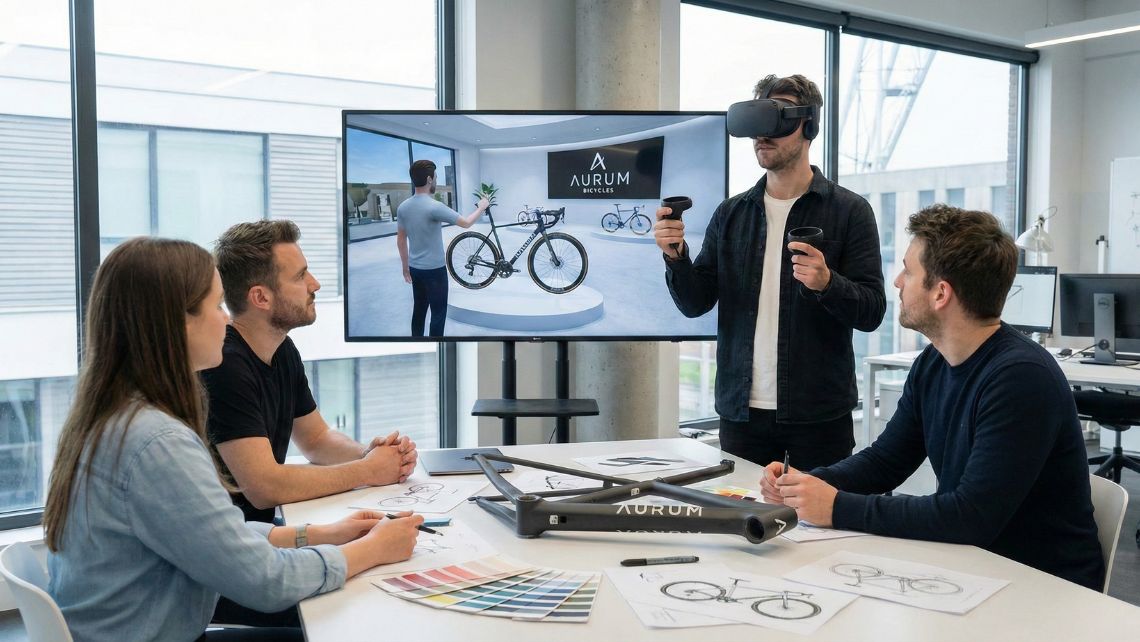
VR content creation has become one of the most effective ways for brands to move beyond passive messaging and into experiences that audiences genuinely remember. As digital environments become increasingly crowded, brands must work harder to earn attention rather than assume it. Immersive experiences respond to this shift by placing users inside a narrative space where engagement is active, focused, and experiential.
At its core, VR content creation is not driven by novelty or spectacle. Its real value lies in how convincingly it can combine storytelling, visual realism, and interaction into a single experience. When quality is lacking, users disengage quickly. When executed well, immersive environments encourage exploration, curiosity, and emotional connection, all of which support stronger brand recall.
For brands seeking meaningful engagement, VR content creation allows messages to be experienced rather than explained. Instead of relying on claims or visuals alone, audiences form understanding through presence and participation. This shift from observation to involvement is what makes immersive brand experiences so effective when they are built on strong creative and technical foundations.
Why VR Content Creation Is the Foundation of Immersive Brand Experiences
How VR Content Creation Changes Engagement Compared to Traditional Digital Content
VR content creation fundamentally reshapes how audiences interact with brand messaging. Traditional digital formats are designed for quick consumption and often compete with constant distractions. Immersive environments reduce this fragmentation by surrounding the user with a single, coherent experience. Attention becomes intentional, guided by spatial design rather than interrupted by external stimuli.
Because users are placed inside the experience, engagement becomes participatory. VR content creation allows brands to lead audiences through environments where meaning is discovered through movement and interaction. This active form of engagement increases time spent with the brand and deepens understanding of its message.
The Relationship Between Immersion, Attention, and Brand Recall
Immersion is what transforms engagement into memory, and VR content creation is what enables that immersion. When visual consistency, audio design, and interaction logic align, users experience a sense of presence that feels natural rather than forced. In this state, attention is more focused and less likely to drift.
This heightened attention directly supports brand recall. Instead of remembering isolated visuals or phrases, users recall experiences and moments. VR content creation embeds brand meaning into the environment itself, making recall more intuitive and less dependent on repetition.
The Strategic Role of VR Visualisation
VR visualisation plays a central role in making immersive environments believable and navigable. Spatial accuracy, depth, and environmental coherence help users orient themselves instinctively. When environments feel realistic and stable, users are more likely to explore without hesitation.
Combined with 3D visualisation, VR visualisation enables brands to represent ideas, spaces, or products in ways that feel tangible. VR content creation ensures these visual elements are not only visually impressive but also optimised for performance and comfort, which are critical for maintaining immersion.
Interactive VR and Active Participation
Interactive VR transforms immersive experiences from guided tours into participatory journeys. Interaction introduces choice, and choice creates personal relevance. When users can influence outcomes or explore at their own pace, engagement becomes self-motivated rather than directed.
Effective VR content creation treats interaction as part of the narrative structure. Actions are designed to reinforce meaning rather than distract from it. Through well-considered interaction design, interactive VR strengthens emotional investment and supports deeper message retention.
Creating VR Videos Within Immersive Experiences
Creating VR videos requires a different approach than traditional video production. In immersive environments, the viewer controls their perspective, which means attention must be guided rather than dictated. Spatial audio, environmental motion, and visual cues are essential tools for maintaining focus.
When creating VR videos as part of a broader immersive strategy, consistency becomes critical. Visual language, pacing, and tone must align with the surrounding experience. VR content creation ensures that immersive video elements feel integrated rather than isolated, supporting a cohesive brand experience across all touchpoints.
Storytelling as the Core of Effective VR Content Creation
Narrative Design in Immersive Environments
VR Content creation relies on storytelling that works spatially rather than sequentially. In immersive environments, users are not guided by timelines or scroll depth, but by curiosity and movement. Storytelling must therefore be embedded into the environment itself, allowing meaning to emerge through exploration. VR Content creation treats space as part of the narrative, where layout, scale, and progression subtly guide users through an experience without explicit instruction.
This approach shifts storytelling from exposition to discovery. Instead of delivering information directly, VR Content creation allows users to encounter moments that build understanding naturally. This form of narrative engagement feels less like marketing and more like participation, which supports deeper emotional connection and recall.
Guiding Attention Without Breaking Immersion
Maintaining narrative focus in immersive spaces requires restraint and precision. VR Content creation avoids forcing attention through aggressive prompts or overlays, which can disrupt presence. Instead, attention is guided through environmental cues such as lighting contrast, sound direction, and spatial composition. These techniques help users understand where to look and when, without feeling controlled.
VR visualisation plays a critical role here by ensuring visual clarity across the full field of view. When environments are visually coherent, users can follow the story intuitively. VR Content creation aligns these visual cues with narrative intent so that storytelling remains fluid, even when users move at their own pace.
Emotion and Meaning Through Interactive Storytelling
Emotion is strengthened when users feel involved in how a story unfolds. VR Content creation integrates interactive VR elements that allow users to influence progression, reinforcing a sense of agency. These interactions are not distractions but narrative tools that deepen engagement. Each action becomes part of the story rather than an interruption.
By aligning interaction with narrative purpose, VR Content creation ensures that storytelling feels personal. This approach makes experiences more memorable, as users associate meaning with their own choices and actions rather than passively consuming information.
Realism and Credibility Through 3D Visualisation
Why Visual Realism Shapes User Trust
Realism is not about visual excess, but about consistency and believability. VR Content creation depends on environments that behave as users expect them to, both visually and spatially. When scale, depth, and proportion feel natural, users are more willing to explore without hesitation.
This trust forms the foundation of immersion. Achieving that consistency at scale often depends on robust 3D content creation services that ensure models, materials, and spatial accuracy are built specifically for immersive environments rather than adapted from traditional digital assets.
3D visualisation supports this by giving structure and physicality to virtual spaces. VR Content creation uses 3D visualisation to ensure that objects and environments feel grounded, reducing cognitive friction and allowing users to focus on the experience rather than questioning its authenticity.
The Role of Lighting, Materials, and Spatial Detail
Subtle visual details play a significant role in how immersive environments are perceived. Lighting direction, material response, and surface detail all influence whether a space feels convincing. VR Content creation pays close attention to these elements because inconsistencies can quickly break immersion.
VR visualisation ensures that lighting and materials behave consistently across environments, reinforcing realism. When combined with 3D visualisation, these details help users interpret space intuitively. VR Content creation aligns visual fidelity with performance considerations so realism enhances comfort rather than compromising it.
A structured approach to high-fidelity 3D visualisation helps maintain visual realism while keeping environments optimised for comfort and performance across immersive platforms.
Supporting Interaction Through Visual Consistency
Visual realism also affects how users interact with immersive environments. Interactive VR relies on users understanding what can be engaged with and how it will respond. VR Content creation uses visual cues such as material contrast, motion, and spatial placement to signal interactivity naturally.
When visual design supports interaction, users feel confident experimenting and exploring. VR Content creation integrates interactive VR mechanics with visual logic so actions feel expected and satisfying. This cohesion between realism and interaction strengthens immersion and reinforces brand credibility.
Visual Foundations for Creating VR Videos
Creating VR videos within immersive environments introduces additional visual challenges. Unlike real-time environments, video content must align perfectly with surrounding visual language to avoid breaking immersion. VR Content creation ensures that immersive video elements match the tone, scale, and realism of the wider experience.
By grounding video content in consistent VR visualisation and 3D visualisation principles, VR Content creation allows immersive video to feel like a natural extension of the environment. This visual continuity supports storytelling and maintains user trust throughout the experience.
Interactive VR as a Driver of Deeper Brand Engagement
Defining Interactive VR in a Brand Experience Context
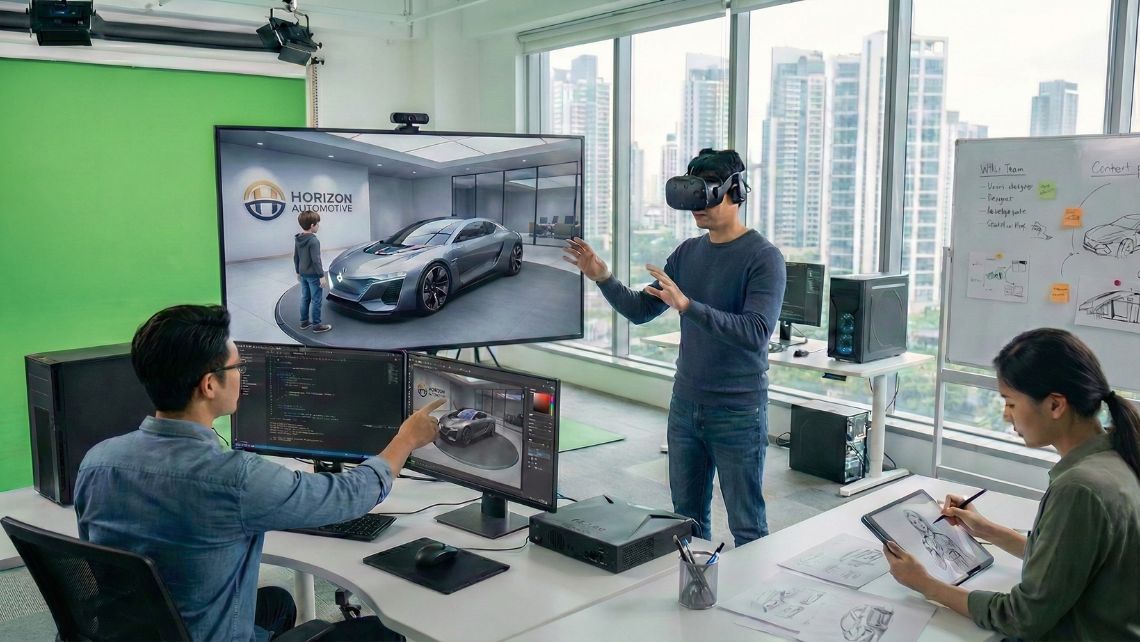
Interactive VR shifts immersive experiences from observation to participation. Instead of being guided through a fixed sequence, users are encouraged to explore, trigger responses, and influence how the experience unfolds. VR content creation makes this possible by designing interaction logic that feels intuitive rather than instructional. When users understand how to engage without being told, immersion remains intact and curiosity is sustained.
In a brand context, interactive VR is not about complexity for its own sake. The goal is to create moments where interaction reinforces meaning. VR content creation ensures that every action has a clear purpose, whether it is revealing information, advancing a narrative, or encouraging exploration. This sense of agency increases emotional investment and makes the experience feel personally relevant.
Delivering this level of purposeful interaction requires more than technical functionality alone. Well-planned virtual reality services ensure that interaction design supports narrative flow, user comfort, and performance stability, allowing interactive VR to feel intuitive rather than experimental.
Interaction Design That Encourages Exploration
Effective interaction design relies on clarity and feedback. Users need to understand what can be interacted with and what effect their actions will have. VR content creation uses spatial cues, animation, and sound to guide behaviour without breaking immersion. When interaction feels natural, users are more willing to explore at their own pace.
Interactive VR also benefits from balance. Too few interactions can make an experience feel passive, while too many can feel overwhelming. VR content creation focuses on pacing interactions so they support the narrative flow rather than interrupt it. This approach keeps users engaged while maintaining comfort and usability.
The Role of VR Visualisation and 3D Visualisation in Interaction
Visual quality plays a critical role in how interactions are perceived. VR visualisation ensures that interactive elements feel like part of the environment rather than overlays placed on top of it. When scale, lighting, and spatial relationships are consistent, users instinctively understand how to engage.
3D visualisation further enhances interaction by giving depth and physicality to objects and environments. VR content creation integrates 3D visualisation with interaction logic so that actions feel responsive and believable. This cohesion strengthens immersion and reinforces trust in the experience.
Creating VR Videos That Sustain Attention
How Creating VR Videos Differs From Traditional Video
Creating VR videos requires a fundamentally different mindset than conventional video production. In immersive environments, the viewer controls where they look, which means attention cannot be forced through framing alone. VR content creation addresses this challenge by designing environments that naturally draw the eye through movement, sound, and spatial composition.
Unlike flat video, immersive video places the viewer inside the scene. VR content creation ensures that important moments are supported by environmental cues rather than relying on cuts or camera movement. This approach helps maintain focus without disrupting immersion.
Guiding Attention Within Immersive Video Spaces
Directing attention in immersive video relies on subtle guidance rather than instruction. Spatial audio can draw attention to a specific area, while environmental motion can suggest where to look next. VR content creation carefully orchestrates these elements so that users remain engaged without feeling constrained.
VR visualisation plays an important role here by maintaining visual clarity across the entire field of view. When environments are coherent and well-balanced, users are less likely to feel disoriented. VR content creation uses these principles to support longer viewing times and deeper engagement.
Integrating Immersive Video Into Interactive VR Experiences
Creating VR videos is most effective when video content feels like a natural part of a wider immersive experience. Rather than existing in isolation, immersive video can be combined with interactive VR elements that allow users to explore further or trigger additional content. VR content creation ensures that transitions between video and interaction feel seamless.
When immersive video is supported by 3D visualisation and interaction design, it becomes more than a passive viewing experience. VR content creation aligns visual storytelling with interactivity so that video content reinforces the overall narrative and strengthens brand recall.
Aligning VR Content Creation With Brand Strategy
Translating Brand Objectives Into Immersive Experiences
VR content creation is most effective when it begins with a clear understanding of brand intent. Immersive experiences should never exist in isolation from wider marketing or communication goals. Whether the objective is awareness, education, or emotional connection, VR content creation must be shaped around what the brand wants audiences to understand, feel, or remember after the experience ends.
Strategic alignment ensures that immersion supports meaning rather than distracting from it. VR content creation allows brands to turn abstract objectives into spatial experiences where values and messages are expressed through environment design, pacing, and interaction. When this translation is handled carefully, users intuitively grasp the message without needing explicit explanation.
Integrating VR Content Creation Across Digital Touchpoints
Immersive experiences deliver the strongest impact when they complement existing digital channels. VR content creation should be planned with context in mind, considering where and how audiences will encounter the experience. This might involve connecting immersive environments with web, video, or live activations so the journey feels continuous rather than fragmented.
Consistency is key in this process. VR visualisation and 3D visualisation must align with established brand aesthetics, while interactive VR behaviours should reflect the tone and personality audiences already recognise. VR content creation ensures that immersive touchpoints reinforce brand identity instead of introducing visual or experiential disconnects.
Measuring Engagement and Experience Effectiveness
Measurement is often overlooked in immersive projects, yet it plays a crucial role in long-term strategy. VR content creation enables new forms of insight by tracking how users move, where they spend time, and which interactions they choose to engage with. These behavioural signals provide a deeper understanding of audience interest than surface-level metrics alone.
By analysing these patterns, brands can refine future experiences and improve relevance. VR content creation supports this iterative approach by allowing environments, interactions, and narratives to be adjusted over time, ensuring immersive experiences continue to align with evolving brand goals.
Production Considerations for High-Quality VR Content Creation
Planning and Pre-Production for Immersive Projects
Strong immersive experiences are built long before production begins. VR content creation relies on detailed planning to define narrative structure, interaction logic, and technical requirements from the outset. Pre-production is where creative ambition is balanced with practical execution, ensuring the experience remains engaging without compromising performance or comfort.
During this phase, VR visualisation concepts and 3D visualisation requirements are established to maintain consistency across environments. VR content creation benefits from this clarity by reducing friction later in the process and ensuring that creative intent is preserved through to delivery.
This is where experienced VR experience design and build support becomes critical. Aligning storytelling, interaction logic, VR visualisation, and technical constraints early prevents fragmentation later and ensures VR Content creation remains focused on experience quality rather than reactive problem-solving.
Technical Execution and Performance Optimisation
The technical side of immersive production directly impacts user comfort and perception of quality. VR content creation must account for performance constraints, device compatibility, and interaction responsiveness. Even visually impressive environments can lose impact if performance issues disrupt immersion.
Interactive VR requires particular attention to optimisation, as user input must feel immediate and reliable. VR content creation ensures that interaction systems, visual assets, and audio elements work together smoothly, supporting immersion rather than drawing attention to technical limitations.
Testing, Iteration, and Experience Refinement
Testing is essential to delivering reliable immersive experiences. VR content creation involves continuous evaluation of comfort, usability, and narrative clarity throughout development. Small adjustments to pacing, interaction placement, or visual emphasis can significantly improve how users experience the environment.
This iterative process is especially important when creating VR videos within interactive experiences. Transitions between video and real-time environments must feel seamless to avoid breaking immersion. VR content creation treats refinement as an ongoing process, ensuring the final experience feels cohesive, intuitive, and aligned with brand intent.
Wrapping Up
Why VR Content Creation Determines Immersive Brand Success
VR content creation is no longer an experimental add-on for brands exploring immersive media. It is the defining factor that separates short-lived novelty from experiences that leave a lasting impression. When immersive environments are thoughtfully designed, users do not feel like they are consuming marketing content. Instead, they feel present inside a story that unfolds through exploration, interaction, and visual depth.
High-quality VR content creation ensures that storytelling, interactive VR mechanics, and visual execution work together as a unified system. VR visualisation establishes spatial credibility, while 3D visualisation adds depth and realism that users intuitively trust. When these elements are combined with purposeful interaction design, brand messages are experienced rather than explained, making them more memorable and emotionally resonant.
Ultimately, VR content creation is about intention and craft. Brands that invest in immersive quality create experiences that feel coherent, comfortable, and meaningful. This cohesion is what allows immersive brand experiences to drive engagement, reinforce perception, and support long-term recall in a way few other formats can achieve.
Frequently Asked Questions - VR Content Creation
What Is VR Content Creation and Why Is It Important for Brands?
VR content creation refers to the process of designing, building, and delivering immersive virtual experiences that users can explore and interact with. For brands, its importance lies in how it transforms communication from passive viewing into active participation. Rather than asking audiences to absorb information, VR content creation allows them to experience ideas spatially and emotionally. This sense of presence increases focus and reduces distraction, which directly supports stronger engagement. When combined with VR visualisation and interactive VR elements, immersive experiences help brands communicate value through exploration, making messages feel intuitive rather than imposed. Over time, this experiential understanding improves brand recall and strengthens emotional connection.
How Does VR Content Creation Support Immersive Brand Experiences?
VR content creation supports immersive brand experiences by aligning narrative, environment design, and interaction into a single cohesive system. Immersion only works when users feel comfortable and oriented, which is why visual consistency and performance are critical. Through 3D visualisation, brands can present spaces and concepts with realistic scale and depth, while interactive VR allows users to engage at their own pace. VR content creation ensures that these elements reinforce each other, preventing immersion from breaking due to poor execution. The result is an experience where users feel involved rather than guided, allowing brand meaning to emerge naturally through participation.
What Role Does VR Visualisation Play in VR Content Creation?
VR visualisation plays a foundational role in VR content creation by shaping how users perceive and understand immersive spaces. Spatial accuracy, lighting, and environmental coherence all influence whether an experience feels believable. When VR visualisation is handled well, users instinctively trust the environment and feel confident exploring it. This trust is essential for maintaining immersion and encouraging interaction. VR content creation integrates VR visualisation with narrative and interaction design so that visual elements are not just impressive, but purposeful. This approach ensures that environments support storytelling and engagement rather than distracting from them.
What Makes Interactive VR More Effective Than Passive Experiences?
Interactive VR is more effective because it transforms users from observers into participants. VR content creation uses interaction to introduce choice, agency, and consequence, which increases personal relevance. When users take action, they become emotionally invested in outcomes, making experiences more memorable. Interactive VR also supports self-paced exploration, allowing users to focus on what interests them most. VR content creation ensures that interaction is intuitive and meaningful, avoiding unnecessary complexity. By aligning interaction with narrative and visual design, immersive experiences feel responsive and engaging rather than scripted.
What Is Involved in Creating VR Videos for Brand Experiences?
Creating VR videos involves designing immersive video content that places the viewer inside a scene rather than in front of it. Unlike traditional video, attention cannot be controlled through framing alone. VR content creation addresses this by using spatial audio, environmental movement, and visual cues to guide focus organically. When creating VR videos, consistency with surrounding immersive elements is essential. VR content creation ensures that video segments feel integrated within the wider experience, supported by VR visualisation and 3D visualisation. This cohesion helps maintain immersion and prevents video content from feeling disconnected or passive.
How Long Does a VR Content Creation Project Typically Take?
The timeline for VR content creation depends on scope, complexity, and level of interactivity. Experiences that rely heavily on interactive VR and detailed 3D visualisation require more planning and testing than simpler environments. Pre-production is particularly important, as it defines narrative flow, interaction logic, and technical constraints. VR content creation prioritises iteration, allowing experiences to be refined through testing and feedback. While immersive projects may take longer than traditional digital content, the result is a more durable and impactful experience that delivers long-term value rather than short-term attention.
What Are the Biggest Challenges in VR Content Creation?
One of the biggest challenges in VR content creation is maintaining immersion without compromising comfort or performance. Visual fidelity must be balanced with technical optimisation to ensure smooth experiences across devices. Interactive VR introduces additional complexity, as interactions must feel responsive and intuitive. Another challenge lies in directing attention without forcing it, particularly when creating VR videos. VR content creation addresses these challenges through careful planning, testing, and iteration. By treating storytelling, visual execution, and interaction as a single system, immersive experiences remain coherent and engaging.
How Can Brands Measure the Success of VR Content Creation?
Measuring success in VR content creation goes beyond simple view counts. Immersive experiences generate behavioural data that reveals how users move, interact, and spend time within environments. These insights help brands understand which elements resonate most and where engagement drops. VR content creation supports this analysis by designing experiences with measurable interaction points. When combined with qualitative feedback, these metrics provide a clear picture of how immersive experiences influence perception, understanding, and recall. This data-driven approach allows brands to refine future experiences and improve strategic alignment.