Next-Gen Events: Blending Virtual Reality and Augmented Reality
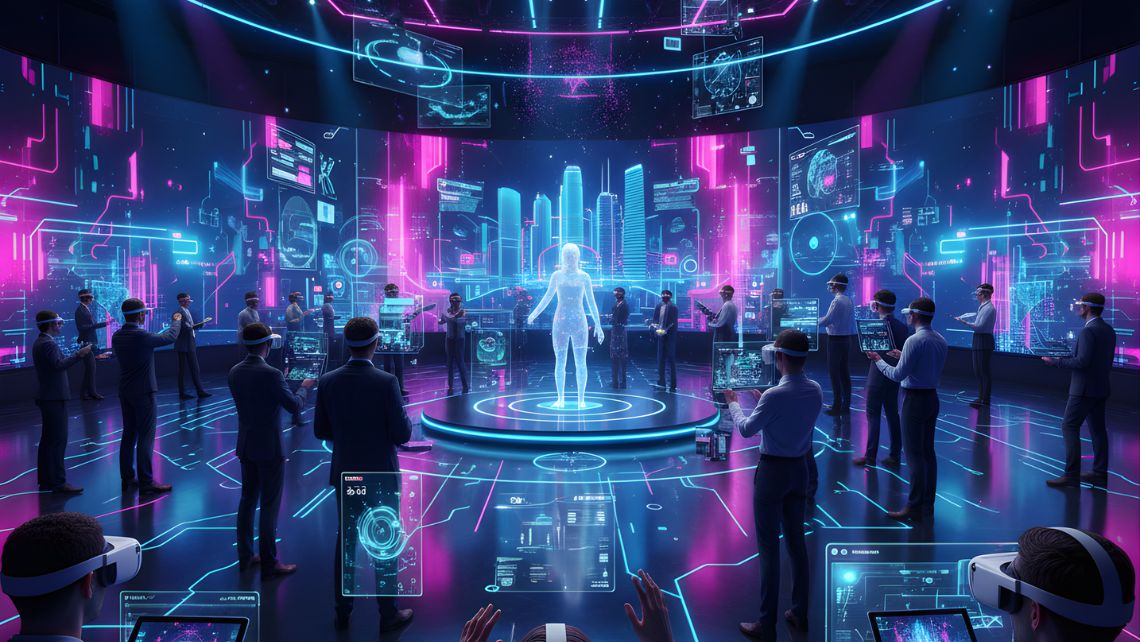
The fusion of virtual reality and augmented reality is redefining how audiences experience events, transforming traditional gatherings into next-generation, immersive environments. As event organisers strive to deliver richer engagement and interactivity, these two technologies are becoming indispensable tools that bridge the physical and digital realms. Unlike isolated virtual or augmented experiences, the combination of both creates a seamless hybrid dimension where real-world presence merges with virtual possibilities, opening the door to experiences that captivate audiences on every level.
Across exhibitions, product launches, and conferences, the adoption of virtual reality and augmented reality has accelerated as brands recognise the value of interactive storytelling and sensory immersion. Instead of relying on static visuals or conventional stage designs, event planners can now transport guests into digital environments that respond to their movement and behaviour. Immersive Studio has been at the forefront of this shift, helping organisations harness these technologies through its Virtual Reality Services and Augmented Reality App Development, ensuring every project is designed to deliver emotional resonance and measurable impact.
This article explores how the convergence of virtual reality and augmented reality is setting the standard for next-gen events. It also examines how brands can integrate these immersive layers into their experiences to create lasting engagement, improve accessibility, and redefine what it means to attend an event — whether in person or remotely.
Understanding Virtual Reality and Augmented Reality
Defining Virtual Reality
Virtual reality, often abbreviated as VR, is a fully immersive digital environment that replaces the physical world with a computer-generated one. Users interact with this environment through specialised headsets or devices, moving naturally within a 3D space to explore surroundings as if they were physically present. In the context of events, VR allows attendees to experience virtual venues, product demonstrations, or simulations that replicate real-world conditions with remarkable precision.
Immersive Studio’s Hosted VR Events Solutions exemplify how VR can elevate engagement by offering tailored environments that reflect brand identity and audience needs. Whether it’s a global product showcase or a virtual networking lounge, VR ensures every attendee feels connected regardless of their location, effectively expanding reach while maintaining exclusivity and authenticity.
Defining Augmented Reality
Augmented reality, or AR, differs from VR by enhancing rather than replacing the physical world. It overlays digital elements — such as 3D models, graphics, or interactive information — onto real environments viewed through a smartphone, tablet, or headset. This technology extends engagement beyond the screen, transforming ordinary event spaces into interactive storytelling arenas.
Through Augmented Reality App Development, Immersive Studio empowers event organisers to bring physical assets to life. For example, an attendee scanning a product display might reveal a 3D animation demonstrating its features, or view live social feeds hovering around an exhibit. AR enriches physical interactions and encourages audience participation, which has become a defining feature of modern event design.
The Intersection of Virtual Reality and Augmented Reality
The true innovation lies not in using VR or AR independently, but in merging them into a unified, interactive layer of experience. By blending virtual reality and augmented reality, organisers can create hybrid events that transcend traditional limitations. For instance, while some participants explore a virtual auditorium through VR headsets, others at the physical venue might use AR apps to visualise live metrics, holographic presentations, or networking overlays.
This approach ensures that all attendees — physical or remote — share the same level of interactivity and connection. It’s a concept Immersive Studio expands upon in its insight piece, How AR and VR Are Transforming the Events Industry, which details how immersive technologies are shaping the evolution of hybrid events. By combining the spatial depth of VR with the contextual intelligence of AR, brands can now design experiences that feel both deeply personal and universally connected.
The Reality-Virtuality Continuum
When exploring virtual reality and augmented reality, it’s essential to understand where they sit on the reality-virtuality continuum — a conceptual spectrum that spans from the purely physical world to fully virtual environments. At one end lies unenhanced reality, and at the other, total immersion through VR. Between these extremes exist mixed realities, where elements of both coexist and interact.
This blended space is where the future of events is unfolding. For example, a conference might feature a VR auditorium paired with AR-enhanced booths, allowing virtual attendees to experience the same informational overlays as in-person participants. This approach offers both flexibility and scalability, ensuring every event moment feels consistent, regardless of the user’s device or environment.
Immersive Studio’s multidisciplinary expertise ensures that each event solution aligns seamlessly across these realities, maintaining coherent design language, interaction logic, and visual identity.
Why Blending VR and AR is More Powerful Than Using Them Separately
While both VR and AR are transformative on their own, combining them unlocks a synergy that multiplies engagement and memorability. A fully virtual conference, for instance, can include AR-driven companion experiences that keep audiences connected to the brand even after the event ends. Similarly, physical exhibitions enhanced with AR can be expanded through VR environments for remote audiences, ensuring no attendee is excluded from the experience.
Immersive Studio’s integrated approach to virtual reality and augmented reality ensures that these technologies are not treated as isolated tools but as parts of a cohesive creative system. This allows for smoother data integration, consistent branding, and a continuous narrative that flows between digital and real-world interactions.
Why Blended VR + AR is the Next-Gen for Events
The integration of virtual reality and augmented reality is not a passing innovation; it represents a fundamental transformation in how audiences engage, learn, and connect during events. When used together, these technologies empower organisers to go beyond conventional experiences by merging sensory immersion with real-time interactivity. In this section, we explore the major reasons why this combination defines the future of the events industry and how Immersive Studio’s solutions make these possibilities a reality.
Amplified Engagement and Presence
Modern audiences crave interaction that feels both personal and dynamic. The blend of virtual reality and augmented reality satisfies this need by delivering multi-layered experiences that immerse attendees emotionally and cognitively. While VR transports participants into entirely new environments, AR enhances their real surroundings with contextual information, animations, or visual effects.
Immersive Studio’s Virtual Reality Services allow brands to build realistic and highly detailed 3D event spaces where users can explore, collaborate, and interact as if they were there in person. Simultaneously, its Augmented Reality App Development service brings these experiences into the physical realm, letting attendees scan objects, trigger animations, or view interactive overlays. The result is a continuous engagement loop that captures attention from the moment the event begins and sustains it well after the curtain falls.
This blended engagement mirrors the approach discussed in Immersive Studio’s insight, How AR and VR Are Transforming the Events Industry, where hybrid technologies are shown to increase retention, participation, and overall event satisfaction.
Breaking Physical and Geographical Barriers
One of the most significant advantages of blending virtual reality and augmented reality is the ability to connect audiences across distances. Traditional events are limited by location, capacity, and travel constraints, but immersive hybrid environments erase those boundaries entirely. Participants can join from anywhere in the world, experiencing the same content and interactivity as those on-site.
Through Hosted VR Events Solutions, Immersive Studio enables brands to host global-scale experiences that maintain a consistent design aesthetic and engagement quality across all attendees. Physical visitors might explore augmented product displays, while remote users navigate the same venue in VR — all synchronised in real time. This model not only expands audience reach but also reduces travel emissions, supporting the industry’s growing sustainability goals.
By linking the physical and digital seamlessly, event organisers can design inclusive spaces that welcome every participant, regardless of geography or device.
Richer Data, Analytics and Personalisation
When virtual reality and augmented reality are combined, they produce an unparalleled volume of data on audience behaviour, preferences, and interaction. This insight enables organisers to craft more tailored experiences for future events, making every engagement smarter and more relevant.
Immersive Studio integrates intelligent data-tracking within its VR and AR frameworks. In a VR environment, metrics might include time spent exploring specific booths or interactions with digital assets, while AR can track which physical elements attract the most engagement. This fusion of insights from both realities paints a complete picture of audience interest, enabling content adaptation in real time.
Furthermore, personalisation becomes effortless. For instance, an attendee viewing a presentation through AR glasses could see different data sets based on their profession, while VR participants might explore customised learning paths designed for their skill level. This ability to personalise experiences makes events not only more memorable but also more valuable to each individual.
Efficiency, Scalability and Cost Benefits
The hybrid use of virtual reality and augmented reality offers cost and operational advantages that make large-scale production more feasible. Traditional events require significant investment in travel, logistics, and materials, while digital counterparts can be scaled rapidly with fewer physical constraints.
Immersive Studio’s modular design methodology allows virtual assets to be reused across multiple event editions, saving time and resources without compromising creativity. Once a 3D environment or AR model is built, it can be adapted and redeployed for future activations. The platform’s scalability also means events can be hosted simultaneously for thousands of participants across multiple regions, each experiencing the same high-quality content.
Beyond the financial efficiencies, this approach also fosters greater sustainability — fewer flights, fewer printed materials, and reduced waste, all while enhancing the audience experience through immersive technology.
Trend Alignment and Audience Expectation
The modern audience has evolved. They expect more than static presentations; they seek immersive participation and emotional engagement. The blend of virtual reality and augmented reality directly aligns with this shift, meeting the demand for interaction, instant feedback, and shared experiences.
According to Immersive Studio’s analysis in Augmented Reality for Events: A Guide, AR’s accessibility through mobile devices complements VR’s deep immersion to form a balanced, future-proof solution for event planners. As younger generations raised on interactive media enter the professional sphere, their appetite for immersive digital participation continues to grow — a trend that brands cannot afford to ignore.
Event organisers who embrace this dual approach are positioning themselves at the forefront of innovation, delivering experiences that resonate with both physical and virtual audiences. This future-ready model reflects the next evolution in experiential design — one that transforms passive spectators into active participants through seamless technological integration.
A Glimpse into the Future of Blended Events
The long-term vision of virtual reality and augmented reality integration points towards persistent, evolving event ecosystems where digital venues remain active even after the event concludes. Imagine revisiting a virtual trade show weeks later to rewatch presentations or using an AR app to unlock exclusive post-event content.
Immersive Studio continues to push these frontiers by developing frameworks where the virtual and physical coexist in a fluid, scalable manner. Its solutions ensure that hybrid events evolve from temporary showcases into living platforms that continuously engage audiences, nurture communities, and extend brand impact long after the main event.
Key Use Cases of Blended VR + AR in Events
The integration of virtual reality and augmented reality has moved beyond experimental showcases to become a practical, results-driven approach for modern events. From hybrid exhibitions to interactive training, these technologies are transforming how audiences experience, engage, and retain information. Below, we explore the leading use cases that demonstrate how Immersive Studio applies VR and AR to deliver measurable impact and lasting engagement.
Hybrid Event Hubs and Exhibition Spaces
One of the most dynamic uses of virtual reality and augmented reality is the creation of hybrid exhibition environments where physical and digital audiences interact simultaneously. In such setups, physical attendees may navigate AR-enabled showrooms while remote participants explore identical virtual environments through immersive VR headsets.
Immersive Studio’s Hosted VR Events Solutions empower organisers to build unified event ecosystems where every attendee enjoys the same access to branded spaces, live presentations, and interactive product demonstrations. At the same time, AR applications built through the company’s Augmented Reality App Development service allow physical visitors to view holographic models or trigger 3D animations by scanning product displays.
This convergence ensures that whether an attendee is physically present or connecting virtually, the level of immersion and interaction remains equally powerful. It also extends the event’s value far beyond its physical footprint, creating a continuous experience that persists in digital space.
Immersive Networking and Social XR Spaces
Networking is a cornerstone of every successful event. By combining virtual reality and augmented reality, organisers can transform traditional networking into a truly interactive, spatial experience. Attendees can walk through virtual lobbies, interact with life-sized avatars, and access AR overlays displaying live introductions, company details, or conversation prompts.
Immersive Studio’s Virtual Reality Services enable the creation of custom-built networking lounges that replicate the energy of face-to-face interactions, complete with spatial audio and natural movement tracking. These VR spaces are further enhanced with AR integration, where participants at physical venues can use their mobile devices to view floating attendee profiles or see digital handshakes that confirm new connections.
This hybrid approach makes professional interaction more engaging, efficient, and human, while maintaining the accessibility that digital platforms provide.
Augmented Live Performances and Shows
The combination of virtual reality and augmented reality has revolutionised live entertainment by adding depth and dimension to performances. Artists and production teams can blend physical stagecraft with AR projections, creating immersive scenes that evolve dynamically during the show. At the same time, VR viewers can experience the performance from multiple perspectives — even from onstage vantage points impossible in real life.
Immersive Studio’s expertise in crafting immersive storytelling environments allows event producers to design shows that captivate both in-person and virtual audiences. Through VR, remote viewers can be virtually present within the venue, while AR layers add visual context and interactivity for those physically attending.
This dual mode of delivery enriches the performance narrative, giving every audience member — regardless of location — a sense of direct participation in the spectacle.
AR-Enhanced Supplements to Virtual Sessions
Even within fully digital settings, virtual reality and augmented reality can complement one another to heighten engagement. For example, attendees attending a virtual keynote in VR could simultaneously use an AR companion app on their phone to visualise live data, product details, or interactive 3D models in their real environment.
Immersive Studio integrates such synchronised experiences through its advanced event frameworks, ensuring seamless communication between VR and AR systems. This synchronisation makes it possible for users to move fluidly between digital and physical interactions without losing context or continuity.
By bridging virtual sessions with real-world interactivity, brands achieve deeper engagement, ensuring that learning or promotional content remains memorable and actionable long after the event concludes.
Training, Education and Experiential Workshops
The educational potential of virtual reality and augmented reality within events is enormous. By simulating real-world environments and overlaying them with digital instructions or feedback, training sessions can achieve unprecedented levels of effectiveness and engagement.
Immersive Studio’s Virtual Reality Services provide fully interactive training environments that replicate complex scenarios safely and accurately. When combined with AR overlays — such as guided annotations, 3D demonstrations, or real-time feedback — these experiences allow participants to learn by doing, not just observing.
Whether for healthcare workshops, engineering training, or brand education programmes, this hybrid approach enables knowledge transfer that is both immersive and measurable. Participants gain hands-on understanding, while organisers benefit from detailed analytics on progress, comprehension, and engagement.
Extended Event Engagement Post-Event
A defining advantage of virtual reality and augmented reality integration lies in extending audience engagement beyond the event itself. Hybrid experiences can live on through persistent virtual spaces or AR-enabled content that users revisit after the event concludes.
Immersive Studio designs VR environments that remain accessible post-event, allowing attendees to rewatch presentations, explore digital showrooms, or network asynchronously. AR applications can complement this by triggering new interactions when scanning physical merchandise or printed materials related to the event.
This continuity transforms events from one-off experiences into evolving digital ecosystems, where the brand’s narrative continues to unfold long after the final session. Such sustained engagement strengthens community ties, builds brand loyalty, and generates long-term value for both organisers and participants.
Unified Experience Across Realities
The power of virtual reality and augmented reality lies in their ability to merge into a cohesive experience that feels effortless to the user. Immersive Studio’s holistic approach ensures that transitions between VR and AR are seamless, creating a single narrative flow across both environments.
For instance, an attendee might start by joining a keynote in VR, then switch to AR mode to explore supplementary product demos in their physical space. Every interaction is connected, consistent, and data-informed, ensuring that no element of the event feels disjointed.
This integrated model encapsulates what next-generation events are all about — experiences that transcend format, geography, and device, offering audiences a unified journey through interconnected realities.
Technical and Design Considerations
Delivering seamless, immersive experiences that combine virtual reality and augmented reality requires careful planning, technical expertise, and a strategic approach to design. The success of a blended event depends on how well these technologies communicate, how consistent the user experience feels, and how adaptable the infrastructure is across various devices and settings. Immersive Studio’s multidisciplinary development framework addresses each of these factors, ensuring that hybrid events are not only visually compelling but also technically robust, scalable, and accessible.

Platform Compatibility and Device Management
The first technical challenge in integrating virtual reality and augmented reality is ensuring compatibility across multiple platforms and devices. Attendees may connect through VR headsets, desktop browsers, or AR-enabled mobile devices, each with different capabilities and limitations.
Immersive Studio’s Hosted VR Events Solutions are designed to accommodate this diversity by providing cloud-based access that optimises performance for every device. This ensures that all participants experience consistent quality, regardless of their hardware setup. Meanwhile, AR components built through Augmented Reality App Development adapt dynamically to a user’s camera, processor, and display, guaranteeing that the augmented elements appear stable and responsive in real-world conditions.
By prioritising cross-platform integration, Immersive Studio removes technical barriers, allowing organisers to reach wider audiences without compromising the immersive quality of the experience.
Seamless Integration and User Experience Design
When combining virtual reality and augmented reality, the greatest design challenge is maintaining continuity between environments. Transitioning between real and virtual spaces must feel natural, intuitive, and purposeful.
Immersive Studio achieves this through consistent spatial design, user interface alignment, and motion logic across both platforms. For example, an attendee who begins exploring a VR exhibition can later switch to an AR interface on their mobile device and still recognise the same branding, spatial hierarchy, and navigation patterns. This cohesive experience helps maintain immersion and prevents disorientation.
User-centric design also extends to interactivity. Elements such as gesture recognition, eye tracking, and contextual prompts guide participants fluidly through both realities, ensuring that the technology supports the narrative rather than distracting from it.
Latency, Synchronisation, and Real-Time Data
A seamless experience in virtual reality and augmented reality relies heavily on real-time responsiveness. Delays between user input and visual output can disrupt immersion and diminish engagement.
To address this, Immersive Studio’s systems are engineered with high-performance synchronisation protocols that minimise latency and ensure consistent rendering across VR and AR components. This is particularly critical during live events, where speakers, visuals, and audience interactions must align perfectly across both digital and physical venues.
In hybrid environments, synchronisation also ensures that AR overlays update in tandem with virtual elements — for instance, when a presenter in VR modifies a 3D model, that change appears instantly to AR viewers attending in person. Such responsiveness sustains the realism and cohesion of the entire event experience.
Content Creation and Asset Strategy
Designing content that performs well across virtual reality and augmented reality requires a unified asset strategy. Assets must be lightweight enough to render smoothly yet detailed enough to maintain realism and visual impact.
Immersive Studio’s Virtual Reality Services employ modular content pipelines that allow 3D assets, textures, and animations to be reused across platforms. This not only improves efficiency but also ensures brand consistency throughout both VR and AR environments. For example, the same 3D object might serve as an interactive element in a virtual exhibition hall and later appear as an AR overlay within a physical booth.
By adopting a scalable and adaptable content strategy, Immersive Studio ensures that every immersive environment functions flawlessly across different hardware profiles, network speeds, and user contexts.
Accessibility, Safety, and Comfort
While immersive technologies offer extraordinary engagement, they must also prioritise accessibility and user wellbeing. The design of virtual reality and augmented reality environments must consider factors such as motion sickness, spatial awareness, and ergonomic interaction.
Immersive Studio applies best practices in motion calibration, balanced field-of-view design, and spatial audio management to ensure comfort during prolonged sessions. For users who may not have access to advanced hardware, fallback modes — such as simplified 2D interfaces — maintain inclusivity without sacrificing content quality.
Furthermore, accessibility extends to physical safety. AR experiences are designed with clear environmental boundaries to prevent accidents, while VR environments include orientation cues and rest points to maintain spatial awareness. This focus on comfort and safety reflects Immersive Studio’s commitment to responsible immersive design.
Scalability and Fallback Modes
As events grow in scale, ensuring stability and performance becomes increasingly complex. Scalability is therefore central to Immersive Studio’s approach to virtual reality and augmented reality integration.
Its infrastructure supports multi-user synchronisation across thousands of concurrent sessions, all while maintaining consistent quality. For events where bandwidth or hardware availability varies, adaptive rendering techniques automatically adjust visual fidelity to preserve performance. Additionally, fallback modes — such as switching from full VR to AR or web-based 3D — ensure uninterrupted participation even under technical constraints.
This adaptive scalability guarantees that every attendee, regardless of device capability or location, can participate fully in the experience.
Data Privacy, Security, and Reliability
As more data flows through virtual reality and augmented reality systems, safeguarding user information becomes critical. Real-time tracking, interaction data, and behavioural analytics must all be managed securely to maintain user trust.
Immersive Studio’s event platforms are built with robust encryption, secure user authentication, and data minimisation protocols. This ensures that every interaction — whether in VR or AR — adheres to industry privacy standards while still capturing valuable insights for organisers.
Reliability is equally important. Redundant server systems, real-time monitoring, and failover protocols ensure that immersive experiences run smoothly, even during peak event hours. This focus on stability allows clients to host large-scale virtual and hybrid events with complete confidence.
The Design Philosophy Behind Seamless XR Integration
At the heart of every successful project that combines virtual reality and augmented reality is thoughtful design. Immersive Studio’s design philosophy focuses on creating emotional resonance through purposeful interactivity. Every interface, movement, and visual transition serves the narrative, reinforcing the brand’s story and audience connection.
By merging creative direction with technical precision, Immersive Studio delivers immersive environments that feel human, intuitive, and impactful. Each design decision — from spatial composition to interface animation — is crafted to ensure audiences don’t just attend an event; they experience it as an evolving, multi-sensory story.
How Immersive Studio Enables VR + AR Blended Events
Delivering seamless and engaging hybrid experiences powered by virtual reality and augmented reality demands creative mastery, robust infrastructure, and technical depth. Immersive Studio combines these elements through a proven, end-to-end process that transforms ideas into captivating interactive environments. The company’s holistic approach ensures that each project maintains creative coherence, high performance, and measurable return on investment.
Immersive Consultation and Strategy
Every immersive journey begins with a strategic consultation that identifies the client’s objectives, audience expectations, and content opportunities. By understanding these elements, Immersive Studio tailors its use of virtual reality and augmented reality to match brand tone, event purpose, and engagement goals.
This initial stage involves storyboarding, content mapping, and feasibility analysis, allowing the team to recommend the best mix of virtual and augmented features. Whether the goal is global audience reach, experiential storytelling, or data-driven engagement, the strategy is designed to maximise interactivity while minimising complexity.
Creative Design and 3D Environment Development
Immersive Studio’s Virtual Reality Services transform conceptual ideas into fully realised, interactive 3D spaces. These environments are crafted with precision, balancing aesthetic appeal and performance efficiency. When paired with Augmented Reality App Development, the result is a hybrid space that merges digital depth with physical presence.
For example, a virtual conference hall might host remote participants, while physical attendees use AR-enabled devices to view holographic presentations that appear to float above real-world surfaces. This combination creates a consistent experience that seamlessly links both realities. Every detail — from lighting to motion paths — is meticulously designed to sustain immersion without overwhelming the user.
Technical Implementation and System Integration
Executing large-scale events that rely on virtual reality and augmented reality requires powerful backend systems capable of synchronising data, visuals, and interaction in real time. Immersive Studio’s technical infrastructure integrates network scalability, cloud-based rendering, and cross-platform accessibility, ensuring stability even under heavy traffic.
By leveraging its Hosted VR Events Solutions, Immersive Studio provides organisers with a secure, high-performance environment that supports live broadcasts, audience participation, and analytics simultaneously. Each event can incorporate dynamic elements such as live polling, avatar networking, and AR-driven data visualisation — all updated instantly across platforms.
Deployment, Hosting, and Post-Event Analytics
Once developed, Immersive Studio oversees the deployment and hosting of the immersive environment. This phase ensures that the event runs smoothly and that every feature of virtual reality and augmented reality performs consistently across devices and regions.
Following the event, the team delivers detailed analytics capturing user behaviour, engagement patterns, and interactive hotspots. These insights are invaluable for refining future strategies, offering clear data on what resonated most with audiences. The analysis phase transforms immersive events from one-time experiences into evolving, data-informed ecosystems.
Ongoing Support and Experience Evolution
Immersive Studio’s commitment extends beyond event delivery. Through continuous updates and optimisations, the company ensures that its virtual reality and augmented reality solutions remain cutting-edge. Whether adding new AR functionalities or evolving existing VR platforms for future activations, every project is designed to grow and adapt alongside the client’s objectives.
This future-focused partnership model enables brands to expand their immersive ecosystems sustainably, ensuring long-term engagement and innovation.
Challenges, Risks, and Mitigation Strategies
As transformative as virtual reality and augmented reality are, their implementation comes with specific challenges. However, Immersive Studio’s expertise ensures these are proactively addressed through rigorous planning, testing, and technical precision.
Hardware Adoption and Accessibility
One key challenge lies in ensuring accessibility for audiences with varied hardware capabilities. Some users may have advanced headsets, while others rely on mobile AR. Immersive Studio mitigates this by developing adaptive solutions that automatically optimise for each device type. This inclusive design ensures consistent experiences, regardless of platform, without compromising visual fidelity or interactivity.
User Comfort and Motion Sickness
Extended exposure to virtual reality and augmented reality can occasionally cause disorientation or fatigue. Immersive Studio employs ergonomic design principles, optimised frame rates, and intuitive navigation systems to reduce discomfort. The environments are tested extensively to balance immersion with comfort, ensuring participants can explore freely without strain.
Technical Complexity and Integration Overhead
Blending multiple immersive technologies demands advanced integration. Immersive Studio’s modular architecture simplifies this process by allowing VR and AR components to operate cohesively within a single framework. Each module — from data synchronisation to 3D rendering — functions independently yet communicates seamlessly, ensuring system reliability during high-intensity live events.
Content Production Costs and Efficiency
Producing 3D assets for virtual reality and augmented reality can be resource-intensive. Immersive Studio addresses this through reusable asset libraries and procedural generation tools that accelerate development without sacrificing creativity. This method reduces costs and allows quicker turnaround times for event-ready environments.
Privacy, Security, and Data Management
Data integrity is critical in immersive environments. Immersive Studio incorporates secure authentication, encrypted data transmission, and GDPR-compliant analytics to ensure participant information remains protected. Each project includes robust permission controls, giving organisers full authority over data access and retention.
Bandwidth and Network Performance
Hybrid experiences that rely on virtual reality and augmented reality require reliable bandwidth for smooth rendering and real-time updates. Immersive Studio’s cloud-hosted platforms dynamically adapt to available network speeds, maintaining visual quality and synchronisation even under constrained connections.
Education and Onboarding
For some users, immersive environments may be unfamiliar. Immersive Studio integrates onboarding tutorials and guided walkthroughs directly into its event frameworks, helping participants quickly understand how to interact, navigate, and collaborate in both VR and AR. This ensures confidence and usability across diverse audience segments.
Future Directions and Emerging Trends
The future of virtual reality and augmented reality promises an era of even greater connectivity, intelligence, and personalisation. As hardware, networks, and creative tools evolve, the boundary between real and virtual will continue to dissolve, ushering in experiences that are persistent, data-rich, and emotionally resonant.
The Rise of Spatial Computing
Spatial computing is redefining how users interact with digital content in physical space. Immersive Studio is actively exploring this frontier, where virtual reality and augmented reality converge into continuous, location-aware environments. This evolution allows event organisers to deliver experiences that adapt dynamically to user movement, gestures, and context.
AI-Driven Personalisation and Adaptive Content
Artificial intelligence will play a major role in shaping future immersive experiences. By analysing participant behaviour in real time, AI can tailor VR and AR content to each individual’s preferences and learning style. Immersive Studio’s future developments include adaptive environments that evolve based on audience engagement metrics gathered during live events.
5G and Edge Computing Integration
As connectivity improves, 5G and edge computing will revolutionise the delivery of virtual reality and augmented reality experiences. Faster data transmission and reduced latency will enable real-time collaboration on an unprecedented scale. Immersive Studio’s infrastructure is already aligned with these technologies, ensuring readiness for the next wave of ultra-responsive immersive events.
Persistent XR Environments and Digital Twins
The emergence of persistent XR environments — or digital twins — will redefine how brands maintain long-term relationships with audiences. Immersive Studio is advancing toward creating enduring virtual spaces that evolve continuously, serving as both event platforms and ongoing engagement hubs. Through these, participants can revisit past sessions, explore updates, and interact with fresh content long after the event concludes.
Cross-Event Continuity and Hybrid Integration
In the coming years, virtual reality and augmented reality will become integral components of ongoing brand ecosystems rather than standalone experiences. Immersive Studio’s integrated model will allow content created for one event to evolve and reappear in future activations, maintaining consistency across campaigns and preserving digital investment value.
The Vision Ahead
Immersive Studio’s mission is to keep pushing the limits of what immersive technology can achieve. The company’s continuous research, design refinement, and technical evolution ensure that every project reflects the highest standards of innovation. By blending creativity with engineering precision, Immersive Studio stands at the forefront of shaping how brands and audiences experience connection, storytelling, and collaboration through virtual reality and augmented reality.
Wrapping Up
The convergence of virtual reality and augmented reality represents far more than a technological advancement — it signifies a redefinition of what events can be. From interactive exhibitions to hybrid conferences and immersive product launches, these technologies are setting new benchmarks for engagement, scalability, and creativity. By merging the deep immersion of VR with the contextual enhancement of AR, brands can now connect with audiences in ways that are both emotionally powerful and operationally efficient.
Immersive Studio’s pioneering approach to Virtual Reality Services, Augmented Reality App Development, and Hosted VR Events Solutions has positioned it as a leader in crafting experiential events that transcend traditional boundaries. Through creativity, technical precision, and strategic storytelling, the studio delivers immersive environments that transform passive spectators into active participants.
As the events landscape continues to evolve, the adoption of virtual reality and augmented reality will only accelerate. The most successful organisers will be those who view immersive technology not as an accessory, but as a foundation for long-term audience engagement. By embracing these tools, brands gain the ability to tell richer stories, measure deeper insights, and create experiences that continue to resonate long after the event concludes.
Immersive Studio invites organisations to explore how these technologies can redefine their audience interactions, offering bespoke solutions that combine creative artistry with measurable performance. In doing so, brands not only keep pace with digital evolution — they shape the very future of experiential engagement.
Frequently Asked Questions - Virtual Reality And Augmented Reality
What is the difference between virtual reality and augmented reality?
Virtual reality and augmented reality are related but distinct technologies. Virtual reality (VR) immerses users in entirely digital environments, replacing the physical world with a computer-generated one that they can explore and interact with. Augmented reality (AR), on the other hand, overlays digital content — such as animations, text, or 3D models — onto real-world surroundings. When blended, VR and AR form a hybrid ecosystem where physical and digital experiences coexist seamlessly. Immersive Studio’s integrated development approach ensures that both VR and AR environments maintain consistent design language, allowing users to move naturally between them.
Can VR and AR be used together in events?
Yes, combining virtual reality and augmented reality creates a powerful synergy for events. VR allows remote participants to experience fully immersive environments, while AR enhances physical spaces with interactive overlays and digital storytelling. Together, they deliver unified hybrid experiences where every attendee — whether remote or in person — can engage at the same level. Immersive Studio’s Hosted VR Events Solutions are designed precisely for this purpose, enabling event organisers to host synchronised, multi-reality experiences that feel coherent and connected.
What are the benefits of blending VR and AR for audience engagement?
The combination of virtual reality and augmented reality enhances audience engagement through deeper immersion, emotional connection, and active participation. VR enables users to step into brand-driven narratives, while AR provides real-time contextual enhancements that make physical interactions more meaningful. Immersive Studio’s immersive design process ensures that every touchpoint — from virtual stages to AR-triggered visuals — reinforces brand identity and narrative flow, creating experiences that leave a lasting impression on audiences.
Are there examples of successful VR and AR hybrid events?
Yes, many organisations have begun to harness virtual reality and augmented reality for large-scale activations, product launches, and exhibitions. Immersive Studio’s extensive expertise in creating bespoke hybrid solutions has empowered brands to host immersive experiences that engage both physical and virtual attendees simultaneously. The studio’s internal case studies, such as its work on interactive brand showcases and hosted virtual events, demonstrate how blended technologies can transform traditional formats into engaging multi-sensory experiences.
What hardware do I need for blended VR and AR events?
The hardware requirements for virtual reality and augmented reality depend on the scale and design of the event. VR experiences typically use headsets like Oculus Quest or PC-based systems for higher fidelity, while AR applications run on smartphones, tablets, or wearable devices. Immersive Studio develops platform-agnostic solutions that optimise performance across all devices, ensuring smooth interaction and visual consistency for every user, whether they’re participating in person or remotely.
How do you design content for VR and AR integration?
Designing for virtual reality and augmented reality involves creating complementary layers that function cohesively. VR assets are built for full immersion, while AR elements provide contextual interaction within real environments. Immersive Studio’s Virtual Reality Services and Augmented Reality App Development teams collaborate to ensure continuity across both mediums, employing consistent visual styles, intuitive navigation, and unified storytelling. This ensures users experience both realities as part of one integrated narrative rather than separate worlds.
What limitations or challenges should event planners know?
Integrating virtual reality and augmented reality requires careful consideration of accessibility, comfort, and technical infrastructure. Hardware variation among attendees, potential motion fatigue, and network limitations can all impact user experience. Immersive Studio mitigates these challenges through adaptive optimisation, ergonomic design, and scalable cloud-hosting frameworks that ensure reliability under heavy usage. This approach ensures event organisers can focus on creativity while the studio manages the technical execution.
How much does it cost to build a blended VR and AR event?
The cost of an event powered by virtual reality and augmented reality depends on factors such as content complexity, scale, audience size, and duration. While smaller activations may require modest investment, large-scale hybrid events with custom-built 3D environments, live-streaming integration, and AR extensions involve more extensive development. Immersive Studio provides tailored quotations following consultation, ensuring that each solution aligns with the client’s creative ambition, technical requirements, and budget while delivering measurable value and audience engagement.