LED Video Wall Solutions That Boost Audience Engagement
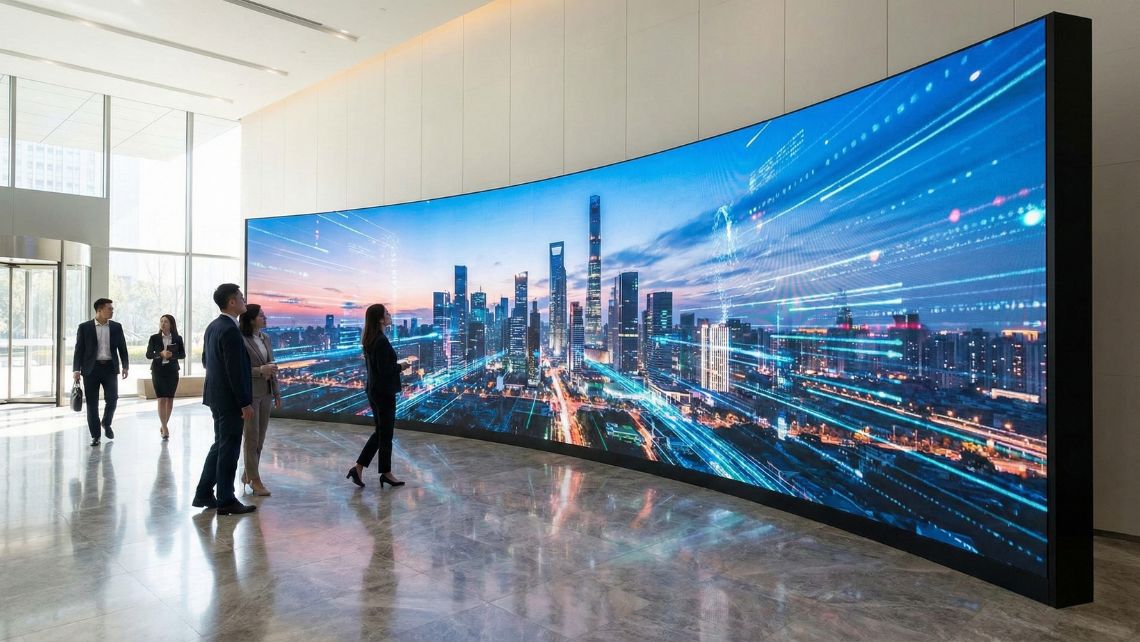
LED video wall technology has become a defining feature of modern visual communication, reshaping how audiences connect with digital content in physical spaces. As attention spans shorten and expectations rise, static visuals are no longer enough to create meaningful impact. Brands, venues, and experience designers now rely on large-format digital solutions that can captivate, adapt, and respond in real time.
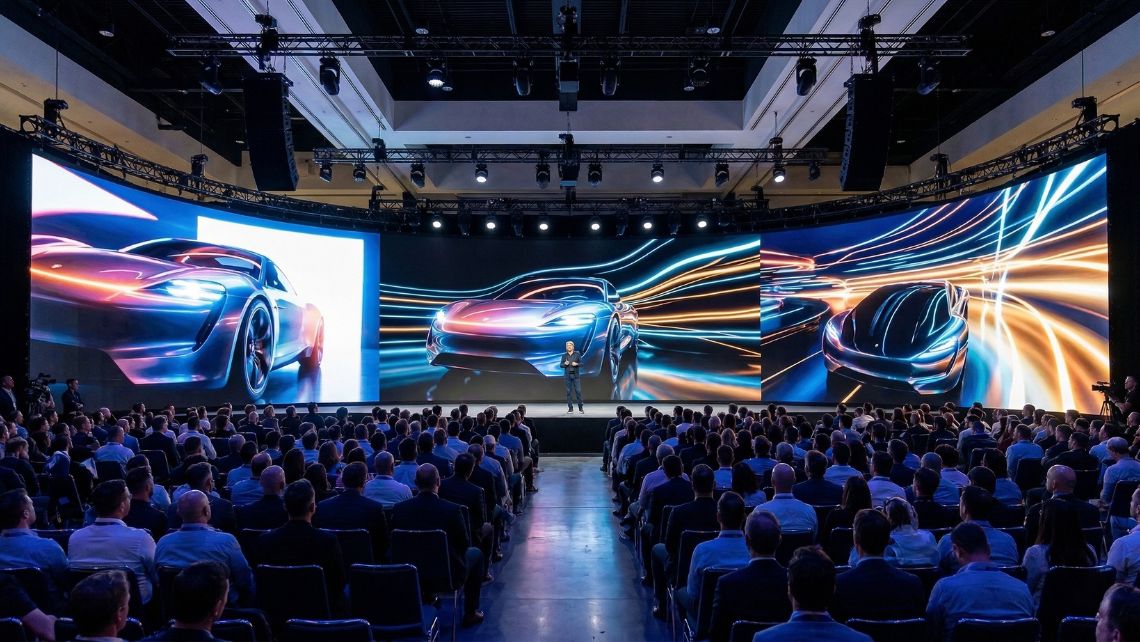
An LED video wall delivers this shift by combining scale, clarity, and flexibility into a single visual platform. Unlike conventional screens, this format allows content to dominate the environment without feeling intrusive. The visual presence feels intentional and immersive, drawing audiences in rather than competing for their attention. This is where engagement begins to move from passive viewing to active interest.
Within experiential environments, the LED video wall acts as a visual anchor. It sets the tone of the space and influences how people move, pause, and interact. When paired with responsive content and thoughtful spatial planning, the display becomes part of the experience rather than a backdrop. This approach aligns closely with how Immersive Studio designs interactive environments, where technology supports storytelling instead of distracting from it.
As expectations continue to evolve across events, retail spaces, and branded installations, the LED video wall stands out as a versatile solution. Its ability to blend motion, colour, and interaction makes it a powerful tool for creating memorable moments that audiences choose to engage with.
How an LED video wall transforms audience engagement
Visual dominance and attention capture
An LED video wall immediately establishes visual authority within a space. Its scale and brightness ensure that content remains visible even in challenging lighting conditions. This dominance does not overwhelm when designed correctly. Instead, it provides a clear focal point that guides audience attention naturally. The result is a viewing experience that feels deliberate and easy to follow.
The structure of an LED wall allows content to extend seamlessly across multiple LED wall panels. This continuity removes visual breaks and enhances immersion. When motion and transitions are carefully paced, the LED wall display encourages viewers to stay longer and absorb more information without cognitive fatigue.
From passive viewing to active engagement
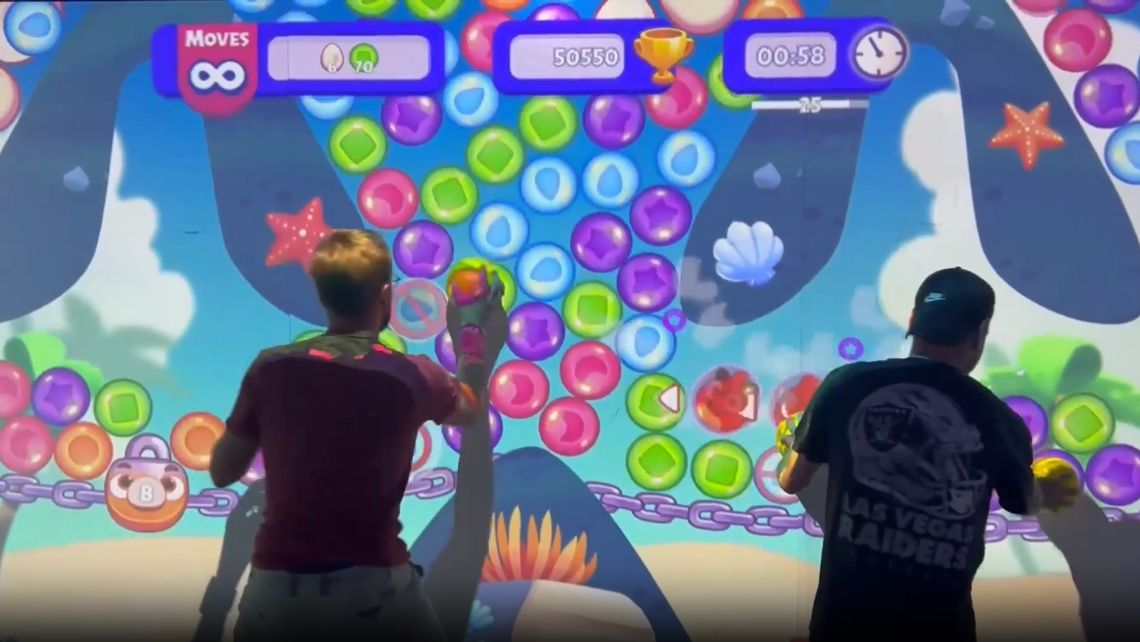
What truly elevates an LED video wall is its ability to support interaction. Through touch, motion sensing, or real-time triggers, the LED display screen can respond to audience behaviour. This responsiveness creates a sense of participation. Viewers no longer feel like observers but contributors to the experience unfolding in front of them.
An LED screen display designed with interaction in mind adapts to different audience flows and engagement levels. Subtle prompts and visual feedback reinforce curiosity and invite exploration. Immersive Studio’s interactive LED wall solutions are structured around this principle, ensuring that technology enhances human behaviour rather than interrupting it.
Sustaining engagement through content adaptability
An LED video wall also transforms engagement by allowing content to evolve throughout the day or event. Messaging can shift in tone, pace, and complexity depending on audience density and intent. This adaptability keeps the experience fresh and relevant, reducing visual fatigue.
By combining adaptable content with a cohesive LED wall display strategy, environments remain dynamic without becoming chaotic. This balance is essential for maintaining attention over time and ensuring that engagement feels natural, rewarding, and memorable.
Visual impact fundamentals behind LED wall technology
Brightness and contrast as engagement drivers
An LED video wall achieves its visual strength through high brightness and contrast ratios that maintain clarity across diverse environments. This capability ensures that visuals remain vivid whether the surrounding space is dimly lit or flooded with ambient light. The controlled luminance allows content to stand out without causing glare, which is essential for sustained viewing comfort.
Within an LED wall setup, brightness consistency across LED wall panels plays a critical role. Uneven output can break immersion and reduce perceived quality. When panels are calibrated as a unified surface, the LED wall display feels seamless and premium. This consistency reinforces trust in the visual message and encourages audiences to stay engaged rather than glance and move on.
Resolution and pixel pitch considerations
Resolution directly affects how an LED video wall is perceived at different viewing distances. Pixel pitch must be aligned with how close audiences are expected to stand or move past the display. A carefully selected pitch ensures that visuals appear smooth and detailed rather than fragmented.
An LED display screen with the correct resolution supports both bold visuals and fine details. This balance allows content to shift between impactful motion and informative elements without compromising legibility. When resolution is optimised across an LED screen display, the technology fades into the background, allowing the message itself to take centre stage.
Engagement-driven content possibilities on an LED display screen
Motion-led storytelling across large formats
An LED video wall provides a canvas that supports fluid, motion-led storytelling. Unlike smaller screens, the extended surface allows narratives to unfold spatially as well as visually. Movement can guide the eye across the LED wall display, creating a sense of progression that keeps viewers invested.
The modular nature of LED wall panels enables content to be designed with scale in mind. Visual elements can expand, contract, or transition across the surface in ways that feel natural and intentional. This approach transforms the LED wall from a display into an active storytelling medium that rewards attention.
Interactive layers that invite participation
An LED video wall reaches its highest engagement potential when interactive layers are built directly into the visual experience. Touch responsiveness, motion tracking, and proximity-based triggers allow the LED display screen to react instantly to audience behaviour, creating a sense of cause and effect that feels intuitive rather than instructional.
This level of responsiveness is delivered through interactive LED wall solutions that transform a large-format LED wall display into a participatory environment. Rather than presenting fixed visuals, the LED screen display adapts in real time, rewarding curiosity and encouraging repeated interaction.
When interaction is designed as part of the content rather than an add-on, the LED video wall becomes a shared experience. Visual cues, animation feedback, and smooth transitions guide participation naturally, ensuring that engagement feels effortless and inviting rather than overwhelming.
Content adaptability and longevity
An LED video wall also supports engagement by allowing content to evolve without changing physical infrastructure. Visuals can be refreshed, restructured, or adapted to different contexts with minimal disruption. This flexibility ensures that the LED wall remains relevant over time, supporting long-term engagement rather than one-off impact.
By aligning adaptable content with the strengths of the LED wall format, experiences remain dynamic while maintaining visual coherence. This strategic use of content ensures that the technology continues to serve both audience expectations and brand objectives effectively.
Enhancing event experiences using interactive LED wall solutions
Creating high-impact brand touchpoints
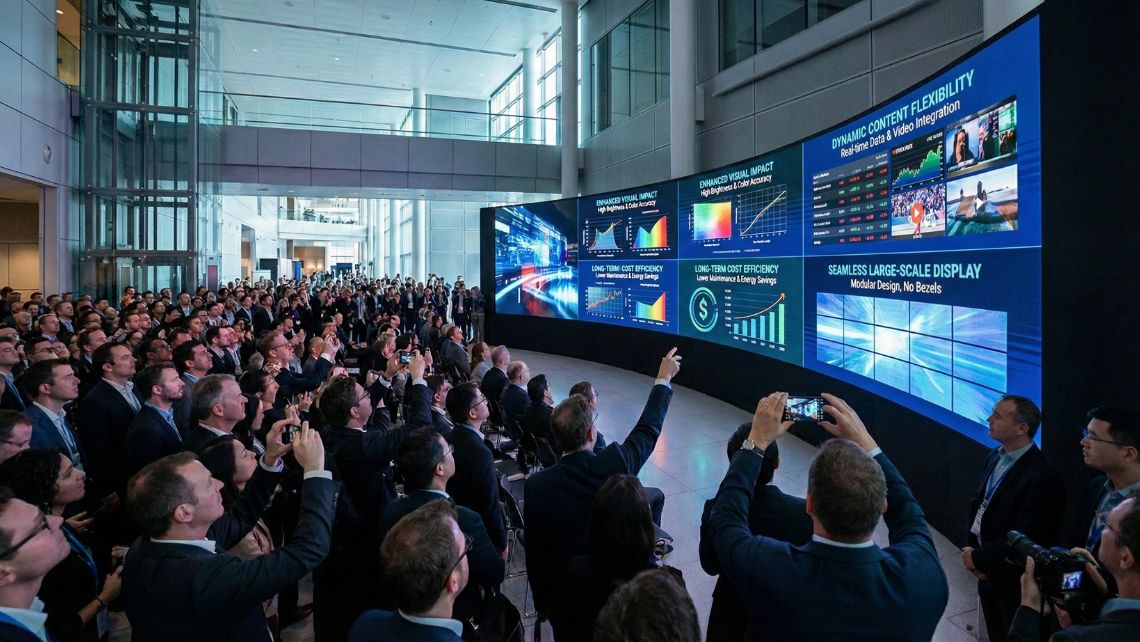
An LED video wall plays a central role in shaping how audiences experience events. From the moment attendees enter a space, the scale and clarity of the display establish a strong visual identity. This immediate impact helps brands communicate key messages quickly, even in busy environments where attention is fragmented.
Within event settings, an LED wall functions as more than a visual backdrop. When content is designed to respond to audience presence, the LED wall display becomes a point of attraction that encourages people to stop, observe, and engage. This interaction-driven approach aligns with how immersive environments are designed to feel responsive rather than static.
Supporting modular and flexible event builds
An LED video wall is particularly effective in event environments because of its modular nature. LED wall panels can be configured to suit different spatial layouts, ceiling heights, and audience flows without compromising visual quality. This flexibility allows the same LED wall display to adapt across multiple event formats while maintaining a consistent brand presence.
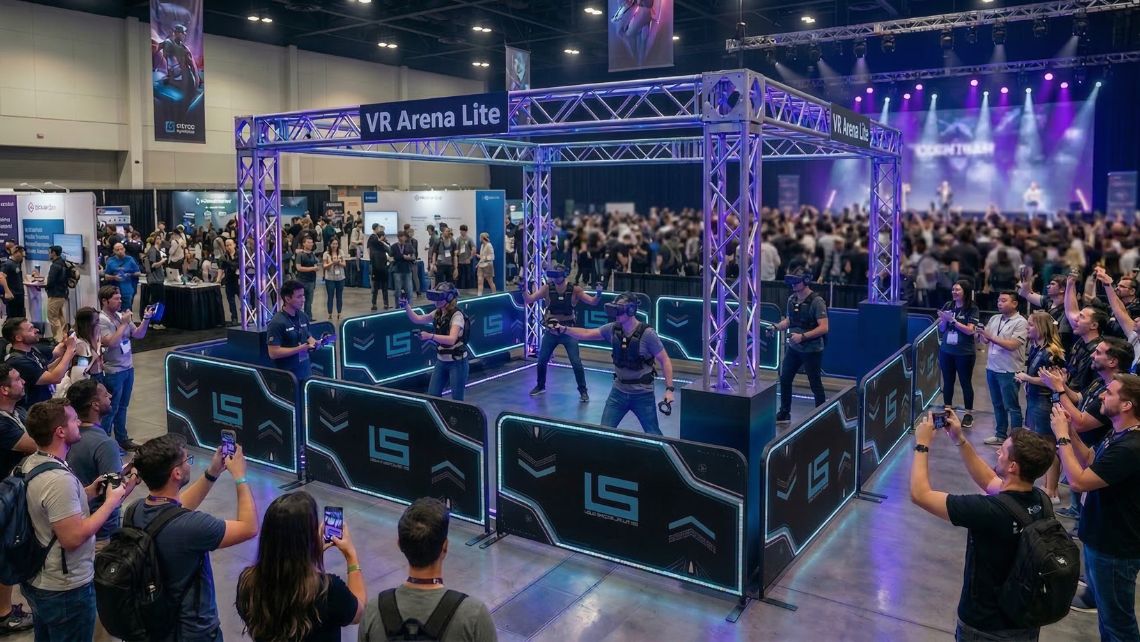
This adaptability becomes even more impactful when combined with interactive LED booth solutions for events, where the LED video wall forms the centrepiece of a self-contained engagement space. Within these environments, the LED display screen is not just visible from a distance but actively draws attendees into the experience.
By integrating structure, content, and interaction, the LED screen display supports fluid movement and natural audience clustering. This ensures the LED wall display enhances the event environment rather than competing with it, sustaining engagement throughout the experience.
Encouraging participation in shared environments
An LED video wall enhances events further by enabling shared interaction. Multiple participants can engage simultaneously, creating collective moments that feel dynamic and memorable. When an LED screen display responds to group behaviour, the experience becomes social rather than solitary.
This shared engagement reinforces emotional connection and increases dwell time. Audiences are more likely to remain involved when they see others participating, turning the LED wall display into a focal point that sustains energy throughout the event.
Using LED video wall installations in retail and brand spaces
Driving footfall and visual curiosity
An LED video wall positioned within a retail or brand environment naturally draws attention from a distance. Movement, colour, and scale combine to create visual curiosity that encourages people to approach the space. This initial attraction is critical in environments where multiple visual stimuli compete for attention.
Once viewers are closer, the clarity of the LED wall display ensures that messaging remains sharp and engaging. An LED display screen can shift content subtly to maintain interest, guiding visitors deeper into the space without overwhelming them.
Increasing dwell time through immersive visuals
An LED video wall plays a key role in extending dwell time within retail and brand environments. Movement, colour depth, and scale work together to encourage audiences to pause and explore rather than pass through. When visuals respond subtly to proximity or interaction, the LED wall display feels alive and inviting.
This exploration-driven behaviour closely reflects how interactive play walls encourage longer dwell time, using responsive digital experiences to turn initial curiosity into sustained engagement. The LED display screen supports this by maintaining visual clarity and responsiveness throughout prolonged interaction.
By designing the LED screen display to evolve rather than repeat, environments remain engaging without becoming visually exhausting. This balance helps transform casual interest into meaningful time spent within the space.
Aligning digital engagement with physical spaces
An LED video wall is most effective when it feels embedded within the physical environment rather than added as a standalone feature. Alignment with architectural lines, spatial flow, and material finishes allows the LED wall display to complement its surroundings while still commanding attention.
In these environments, interactive play wall installations can sit alongside an LED video wall, creating layered engagement where large-scale visuals and physical interaction reinforce one another. This combination strengthens the connection between digital content and physical movement.
When digital engagement mirrors how people naturally explore a space, the LED display screen becomes part of the environment’s rhythm. The LED screen display supports intuitive interaction, improving comfort, immersion, and long-term engagement.
Content strategy considerations for LED wall displays
Designing content specifically for scale
An LED video wall demands a different content approach compared to smaller digital screens. Scale amplifies every design decision, from typography size to animation speed. Content must be created with viewing distance and audience movement in mind, ensuring that visuals remain clear and impactful whether someone is passing by or standing close to the display.
When designing for an LED wall, layouts should embrace negative space and controlled motion. Overcrowded visuals can feel overwhelming on a large LED wall display, reducing comprehension rather than enhancing it. By allowing content to breathe across LED wall panels, the message becomes easier to process and more visually engaging.
Balancing motion, clarity, and message retention
An LED video wall is highly effective at capturing attention, but sustaining that attention requires balance. Motion should guide the viewer’s eye, not distract it. Subtle transitions and intentional pacing help audiences absorb information without fatigue.
On an LED display screen, clarity is directly linked to engagement. Text, graphics, and interactive elements must remain legible at all times. A well-structured LED screen display supports both short attention moments and longer interactions, reinforcing message retention while maintaining visual appeal.
Aligning content with brand intent
An LED video wall should always reflect the tone and purpose of the brand environment it inhabits. Content that feels disconnected from the surrounding space can break immersion. When visuals are aligned with brand identity, the LED wall display becomes a cohesive storytelling tool rather than a standalone feature.
Consistency across content cycles also matters. By updating visuals strategically while maintaining a recognisable structure, the LED wall continues to feel fresh without losing familiarity. This approach supports long-term engagement and reinforces brand recall.
Technical planning for successful LED video wall deployment
Spatial planning and audience flow
An LED video wall performs best when its placement is guided by how audiences move through a space. Sightlines, viewing angles, and distances all influence how content is perceived. Proper spatial planning ensures that the LED wall display remains visible and effective without obstructing movement or overwhelming the environment.
LED wall panels must be positioned to maintain uniform brightness and alignment across the surface. Even minor inconsistencies can disrupt immersion. A carefully planned LED wall integrates seamlessly into its surroundings, enhancing the space rather than dominating it unnecessarily.
Structural and environmental considerations
An LED video wall relies on stable structural support and suitable environmental conditions. Ventilation, power distribution, and heat management all contribute to performance and longevity. These factors are especially important for installations that operate for extended periods.
An LED display screen designed for reliability ensures consistent output without degradation. When environmental factors are addressed early, the LED screen display maintains visual quality and reduces the risk of downtime, supporting uninterrupted engagement.
Control systems and long-term performance
An LED video wall reaches its full potential when paired with robust control systems. Content management, scheduling, and real-time updates allow the LED wall display to adapt to different scenarios effortlessly. This flexibility supports both planned campaigns and responsive interactions.
Long-term performance depends on thoughtful planning and maintenance. By selecting appropriate LED wall panels and managing content intelligently, the LED wall remains a dependable engagement platform that continues to deliver value well beyond initial deployment.
Wrapping Up
The role of immersive visuals in modern engagement
An LED video wall has evolved into far more than a large digital screen. It is now a strategic engagement tool that shapes how audiences perceive, interact with, and remember a space. By combining scale, clarity, and adaptability, the LED wall display creates moments that feel intentional and immersive rather than purely informational.
Across events, retail environments, and branded installations, the LED video wall supports deeper engagement by responding to audience behaviour and spatial context. When LED wall panels, content strategy, and technical planning work together, the result is an experience that holds attention and encourages participation. This cohesion is what transforms visual impact into lasting engagement.
Building long-term value through thoughtful deployment
An LED video wall delivers the greatest value when it is planned as part of a wider experiential strategy. From content design to placement and interaction, every decision contributes to how the LED display screen performs over time. When these elements are aligned, the LED screen display remains relevant, flexible, and effective long after its initial launch.
By treating the LED wall display as an evolving platform rather than a static installation, brands and venues can continue to refresh engagement without reinventing their infrastructure. This approach ensures that the LED video wall remains a powerful asset for storytelling, interaction, and audience connection.
Frequently Asked Questions - LED Video Wall
What is an LED video wall and how does it work?
An LED video wall is a large-format digital display made up of multiple LED wall panels that operate together as a single visual surface. Each panel contains light-emitting diodes that produce brightness and colour independently, allowing the LED wall display to deliver vivid visuals at scale. Content is managed through control systems that synchronise imagery across the entire LED display screen, ensuring seamless playback and consistent quality.
How is an LED wall different from a traditional screen?
An LED video wall differs from traditional screens by offering modular scalability and higher brightness levels. Unlike fixed-size displays, an LED wall can be configured to fit custom dimensions using LED wall panels. This flexibility allows the LED screen display to adapt to architectural features and large spaces while maintaining clarity and impact.
Are LED video walls suitable for interactive experiences?
An LED video wall is highly suitable for interactive experiences when paired with the right technology. Touch overlays, motion sensors, and real-time triggers can be integrated into the LED wall display to respond to audience input. This interaction transforms the LED display screen into a participatory platform rather than a passive visual element.
What resolution is best for an LED display screen?
The ideal resolution for an LED video wall depends on viewing distance and content type. Pixel pitch determines how detailed visuals appear up close or from afar. Selecting the correct configuration ensures that the LED screen display remains sharp and comfortable to view, supporting both bold visuals and finer details across the LED wall display.
How long do LED wall panels typically last?
An LED video wall is designed for long-term use when installed and maintained correctly. LED wall panels generally offer extended operational lifespans, maintaining brightness and colour consistency over years of use. Proper ventilation, power management, and content control help preserve the performance of the LED wall display over time.
Can content on an LED video wall be updated easily?
An LED video wall allows content to be updated quickly through centralised control systems. Visuals, interactive elements, and schedules can be adjusted without altering the physical LED wall panels. This flexibility ensures that the LED display screen remains current and aligned with changing engagement goals.
What factors influence the cost of an LED wall display?
The cost of an LED video wall is influenced by factors such as size, resolution, pixel pitch, and technical complexity. Additional considerations include installation requirements, content development, and interactivity. A well-planned LED wall display balances performance and budget while delivering meaningful engagement.
Where are LED screen displays most effective?
An LED video wall is most effective in environments where visual impact and engagement are priorities. Events, retail spaces, and brand environments benefit from the scale and adaptability of LED screen displays. When integrated thoughtfully, the LED wall display enhances how audiences interact with both the space and the message.