Immersive Projection Mapping Trends Shaping Events in 2026
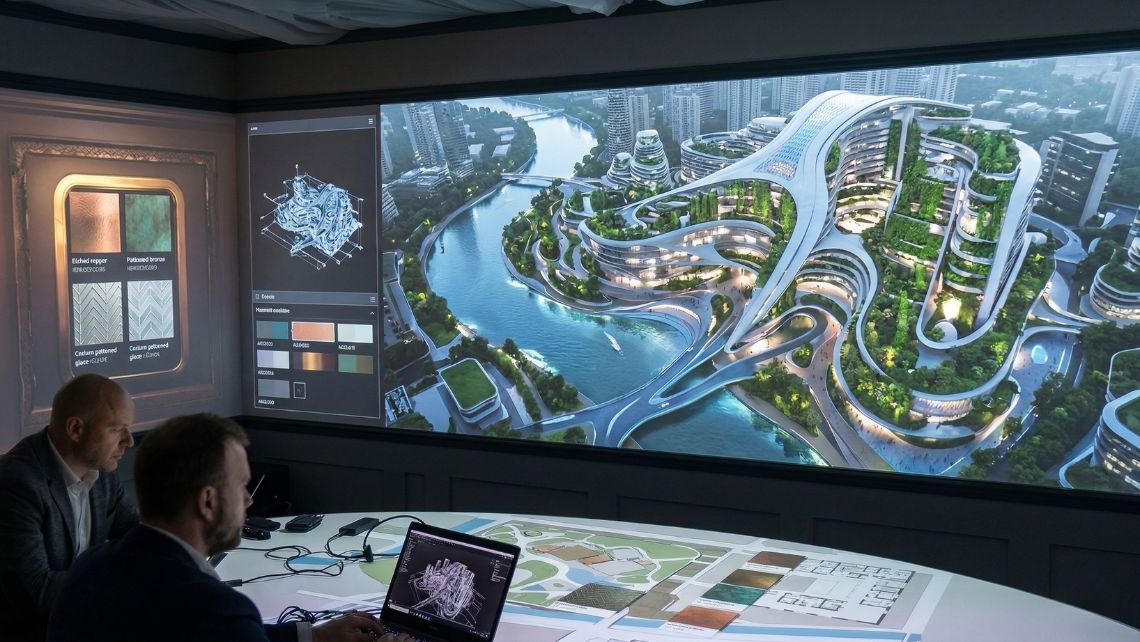
Immersive projection mapping is transforming how events are designed and experienced in 2026, moving beyond visual enhancement into a core storytelling medium. It enables organisers to turn ordinary spaces into dynamic environments that shift, react, and engage audiences in real time.
Expectations have changed significantly. Attendees are no longer satisfied with static displays or linear presentations. They look for experiences that feel fluid and responsive, where the environment itself becomes part of the narrative. This is where immersive projection mapping plays a critical role, blending digital content seamlessly with physical surroundings.
Advancements in technologies such as 3D projection mapping and 3D video mapping are making these experiences more refined and accessible. Surfaces can now carry depth, motion, and continuity, allowing events to communicate ideas in a more impactful way. Even a single projection mapping wall can transform how audiences interact with a space.
This article explores the key trends shaping immersive projection mapping in 2026, focusing on how evolving expectations and technological progress are influencing modern event experiences.
Immersive Projection Mapping: The Foundation of Modern Event Experiences
What Defines Immersive Projection Mapping in 2026
In 2026, immersive projection mapping is defined by its ability to create cohesive environments where digital visuals and physical structures work together as one. It is no longer about adding visuals to a space, but about designing the space itself as an experience.
Precision and Spatial Awareness
A key element behind immersive projection mapping is accurate spatial calibration. Every surface is carefully mapped so that visuals align perfectly, allowing structures to appear animated or transformed without physical changes. This precision ensures that the experience feels believable rather than artificial.
The Role of Depth and Structure
3D projection mapping enhances realism by adding depth to flat or irregular surfaces. It enables environments to feel more dimensional, which strengthens the visual impact and supports more immersive storytelling.
Motion-Led Visual Narratives
3D video mapping introduces movement and continuity, allowing visuals to evolve over time rather than remain static. This approach helps guide audiences through a sequence of moments, making the overall experience feel intentional and connected.
Interactive Surfaces Within the Experience
A projection mapping wall adds another layer by enabling interaction. Instead of simply displaying content, it can respond to gestures or movement, encouraging audiences to engage directly with the environment.
How Audience Expectations Have Evolved
Audience expectations have grown alongside digital innovation. Experiences are now judged not only on how they look, but on how they feel and respond in real time.
From Observation to Engagement
People increasingly expect to take part in what they experience. Environments that react to presence or input create a stronger sense of involvement, which is why immersive projection mapping continues to gain importance in event design.
Invisible Technology, Seamless Experience
Technology is expected to work in the background. When executed well, immersive projection mapping feels like a natural extension of the space, rather than a visible layer added on top.
Personalisation Within Shared Spaces
Even in large-scale environments, there is a growing demand for experiences that feel relevant on an individual level. Visuals can now adapt subtly based on behaviour or interaction, making the experience more meaningful without disrupting the collective setting.
Delivering Consistency Through Expertise
Achieving this level of execution requires both creative direction and technical precision. Through specialised 3D projection mapping services, it becomes possible to deliver experiences that are not only visually compelling but also strategically aligned with event objectives.
Trend 1: Hyper-Realistic 3D Projection Mapping Environments
Advancements in Visual Depth and Illusion
Immersive projection mapping is becoming increasingly defined by how convincingly it can replicate depth, movement, and realism. In 2026, the focus is no longer just on scale, but on precision and believability.
Enhanced Surface Accuracy
Advancements in calibration techniques allow visuals to align more accurately with complex structures. This means even irregular surfaces can appear fluid, as if they are physically shifting or evolving. The result is a more convincing illusion that holds audience attention for longer.
Layered Visual Composition
3D projection mapping now supports multiple visual layers working simultaneously. Foreground and background elements can move independently, creating a sense of depth that mimics real-world environments. This layered approach strengthens storytelling by making scenes feel more immersive rather than flat.
Real-Time Rendering Improvements
With faster processing capabilities, environments can now adapt visuals in real time without compromising quality. This allows transitions to feel seamless, helping immersive projection mapping maintain continuity throughout an event rather than appearing as segmented visual moments.
Creating Fully Transformative Event Spaces
The goal is no longer to decorate a venue, but to redefine it entirely. Spaces are being designed to feel as though they transform around the audience.
From Static Venues to Living Environments
Instead of relying on physical set builds, environments can shift visually from one theme to another within seconds. Walls can appear to expand, collapse, or morph, creating a sense of constant movement without physical intervention.
Consistency Across the Entire Space
A key development is the ability to maintain visual consistency across multiple surfaces. Rather than isolated projections, the entire venue can operate as one cohesive visual system, reinforcing immersion from every angle.
Strategic Execution Through Specialist Delivery
To achieve this level of transformation, both creative planning and technical execution must align. Through tailored 3D projection mapping services, environments can be designed to deliver consistent, high-impact results while supporting broader event objectives.
Trend 2: Interactive Projection Mapping Wall Experiences
Real-Time Audience Interaction Through Motion and Touch
Immersive projection mapping is increasingly moving towards interaction, where audiences influence what they see rather than simply observe it. This shift is particularly evident in the use of interactive surfaces.
Gesture and Motion-Based Interaction
A projection mapping wall can respond to movement, allowing individuals to trigger changes in visuals through simple gestures. This creates a direct connection between the audience and the environment, making the experience feel more engaging and responsive.
Touch-Responsive Visual Feedback
In more controlled environments, touch interaction can be introduced to provide immediate visual feedback. This adds a tactile dimension to digital content, reinforcing engagement and encouraging exploration.
Synchronous Multi-User Interaction
Modern systems can handle multiple interactions simultaneously, ensuring that large groups can engage without disrupting the experience. This scalability makes interactive environments suitable for a wide range of event formats.
Personalised Engagement at Scale
Beyond interaction, the focus is shifting towards creating experiences that feel individually relevant while still operating within a shared space.
Adaptive Visual Responses
Visuals can adapt based on behaviour, movement patterns, or engagement levels. This allows different sections of an audience to experience variations of the same environment without breaking overall consistency.
Blending Interaction with Narrative
Interactivity is no longer treated as a separate feature. Instead, it is integrated into the storytelling process, ensuring that every interaction contributes meaningfully to the overall experience.
Expanding the Role of 3D Video Mapping
3D video mapping supports this evolution by enabling dynamic content that reacts fluidly to input. It ensures that interactive elements feel smooth and intentional, rather than reactive or disconnected.
As expectations continue to rise, immersive projection mapping is evolving into a medium where interaction, narrative, and environment work together seamlessly to shape how events are experienced.
Trend 3: AI-Driven Content Adaptation in 3D Video Mapping
Dynamic Visual Content Based on Audience Behaviour
Immersive projection mapping is entering a phase where content is no longer fixed. Instead, it adapts in real time based on how audiences move, interact, and respond within a space.
Behaviour-Responsive Visual Systems
Advanced tracking systems allow environments to interpret movement patterns and adjust visuals accordingly. This means content can shift subtly depending on where attention is focused, creating a more fluid and responsive experience without requiring direct interaction.
Context-Aware Scene Transitions
Rather than relying on pre-set timelines, transitions can now respond to audience presence. Visual sequences may extend, accelerate, or change direction based on engagement levels, helping maintain interest throughout the experience.
Integration with 3D Video Mapping
3D video mapping plays a key role in enabling this flexibility. Its ability to handle continuous motion and evolving sequences ensures that adaptive content feels smooth and intentional rather than fragmented.
Intelligent Automation in Event Storytelling
Beyond responsiveness, automation is shaping how narratives are delivered within immersive environments.
Pre-Programmed Logic with Real-Time Flexibility
Content can be built with multiple pathways, allowing the system to select the most relevant visual direction based on live inputs. This creates a balance between creative control and adaptability.
Reducing Manual Intervention
Automated systems reduce the need for constant manual control during events. This ensures consistency in delivery while allowing teams to focus on the overall experience rather than technical adjustments.
Elevating Narrative Consistency
By combining automation with responsive design, immersive projection mapping can maintain a coherent narrative even as visuals adapt. This ensures that flexibility does not compromise storytelling quality.
Trend 4: Multi-Surface and 360° Projection Mapping Integration
Beyond Flat Surfaces: Floors, Ceilings, and Objects
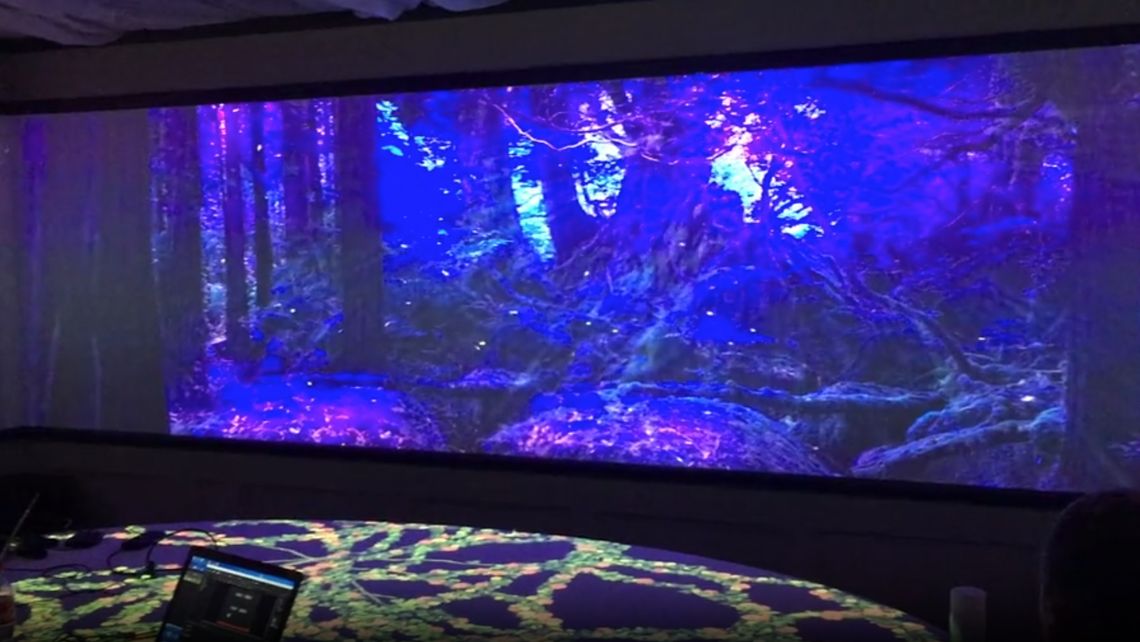
Immersive projection mapping is no longer confined to walls or single focal points. In 2026, entire environments are being utilised as canvases, expanding how audiences perceive space.
Full Spatial Coverage
Surfaces such as floors, ceilings, and three-dimensional objects are now integrated into a unified visual system. This creates a continuous environment where visuals flow naturally across different planes.
Eliminating Visual Boundaries
By extending projections beyond a single surface, the experience feels less segmented. Audiences are surrounded by content, which strengthens immersion and reduces the sense of separation between physical and digital elements.
Enhanced Depth Through 3D Projection Mapping
3D projection mapping supports this expansion by ensuring visuals remain aligned across complex geometries. It allows multiple surfaces to work together without breaking the illusion of depth or continuity.
Seamless Spatial Storytelling Across Environments
As environments become more interconnected, storytelling approaches are evolving to match.
Coordinated Visual Narratives
Instead of isolated moments, visuals can move across surfaces in a coordinated way. A sequence might begin on one plane and continue across others, guiding attention naturally through the space.
Immersive Flow and Continuity
Maintaining flow is essential in multi-surface environments. Transitions must feel smooth and intentional, ensuring that audiences remain engaged without distraction.
Strategic Design and Technical Precision
Delivering this level of integration requires careful planning and execution. Through expert-led 3D projection mapping services, it becomes possible to design environments where every surface contributes to a cohesive and immersive experience.
As these approaches continue to evolve, immersive projection mapping is becoming less about individual visuals and more about shaping entire environments that audiences can explore and experience from every angle.
Trend 5: Sustainable and Efficient Projection Mapping Solutions
Energy-Efficient Technologies in Event Production
Immersive projection mapping is increasingly aligning with sustainability goals, as event organisers look for ways to reduce environmental impact without compromising visual quality.
Reduced Reliance on Physical Builds
Digital environments are replacing large-scale physical set constructions. Instead of producing materials that are used once and discarded, visuals can be projected onto existing structures, significantly lowering waste.
Optimised Power Consumption
Modern systems are designed to deliver high brightness and clarity while consuming less energy. This makes immersive projection mapping a more efficient option for large-scale productions where power usage is a key consideration.
Long-Term Reusability of Content
Visual assets can be adapted and reused across multiple events. This reduces the need for repeated production cycles, supporting both cost efficiency and sustainability objectives.
Reducing Physical Set Dependencies with Digital Environments
The shift towards digital-first environments is changing how events are planned and executed.
Flexible Environment Design
Spaces can be transformed without structural changes, allowing organisers to experiment with different themes or layouts using only visual content. This flexibility makes it easier to adapt environments for different audiences or objectives.
Faster Setup and Breakdown
With fewer physical elements involved, production timelines become more efficient. This not only reduces labour requirements but also minimises logistical complexity.
Sustainable Delivery Through Expert Planning
Careful planning ensures that immersive projection mapping delivers both creative and operational benefits. Through specialised 3D projection mapping services, digital environments can be designed to maximise impact while reducing unnecessary resource use.
Trend 6: Data-Driven Experiences Through Immersive Projection Mapping
Using Data to Shape Visual Narratives
Immersive projection mapping is becoming more intelligent through the integration of data, allowing experiences to be shaped dynamically rather than remaining fixed.
Real-Time Data Integration
Visuals can respond to live inputs such as audience movement, environmental conditions, or engagement levels. This creates a more adaptive experience that evolves throughout the event.
Contextual Storytelling
Data allows content to become more relevant to the moment. Instead of following a rigid sequence, narratives can adjust based on what is happening within the space, making the experience feel more connected and purposeful.
Supporting Technologies Like 3D Video Mapping
3D video mapping enables these data-driven changes to appear smooth and continuous. It ensures that adjustments happen seamlessly, maintaining immersion without disrupting the visual flow.
Measuring Engagement and Optimising Experiences
Beyond shaping content, data is also transforming how success is measured.
Tracking Interaction and Behaviour
Systems can capture how audiences move and interact within a space, providing valuable insights into engagement levels. This information helps refine future experiences and improve overall effectiveness.
Continuous Experience Optimisation
By analysing data during and after events, organisers can identify what works and what needs adjustment. This creates a cycle of continuous improvement, where each experience builds on the last.
Aligning Creative Execution with Measurable Outcomes
Combining data with immersive projection mapping allows experiences to be both visually compelling and strategically effective. It ensures that creative decisions are supported by insights, leading to more impactful and consistent results.
As data capabilities continue to evolve, immersive projection mapping is becoming a tool not just for visual storytelling, but for delivering measurable, insight-driven experiences that align closely with event objectives.
Wrapping Up
Immersive projection mapping is no longer an emerging feature in event design; it has become a defining element of how experiences are created and delivered in 2026. As audience expectations continue to evolve, the demand for environments that feel dynamic, responsive, and meaningful will only increase.
The trends explored throughout this article highlight a clear direction. Experiences are becoming more adaptive, more interactive, and more efficient to deliver. From hyper-realistic visuals to data-driven storytelling, immersive projection mapping is enabling events to move beyond presentation and into participation.
At the same time, the shift towards sustainable production and multi-surface integration shows that innovation is not limited to creativity alone. It also extends to how experiences are planned, executed, and optimised over time.
For brands and organisers, the opportunity lies in using immersive projection mapping strategically rather than decoratively. When executed with the right balance of creative vision and technical precision, it becomes a powerful tool for delivering memorable and measurable experiences.
Frequently Asked Questions - Immersive Projection Mapping
What is immersive projection mapping and how does it work?
Immersive projection mapping is a technique that uses advanced projection technology to transform physical surfaces into dynamic visual environments. It works by mapping digital content precisely onto structures so that visuals align with their shape and dimensions. This creates the illusion that surfaces are moving, changing, or interacting in real time. In modern event settings, immersive projection mapping goes beyond simple visuals by integrating motion, interactivity, and spatial design. With the right execution, such as through professionally delivered solutions, it can turn any venue into a fully engaging experience without requiring permanent physical alterations.
What is the difference between 3D projection mapping and 3D video mapping?
3D projection mapping focuses on aligning visuals with the physical contours of objects or surfaces to create depth and realism. It is primarily concerned with spatial accuracy and illusion. In contrast, 3D video mapping builds on this by introducing motion and continuous storytelling through animated sequences. While both are often used together, the distinction lies in function. One establishes structure and depth, while the other delivers movement and narrative. When combined effectively within immersive projection mapping, they create experiences that feel both visually convincing and engaging over time.
How does a projection mapping wall enhance event engagement?
A projection mapping wall enhances engagement by turning a passive surface into an interactive experience. Instead of simply displaying content, it can respond to gestures, movement, or touch, allowing audiences to influence what they see. This creates a stronger connection between the user and the environment, making the experience more memorable. Within immersive projection mapping, this type of interaction adds a layer of participation that encourages exploration and increases the time people spend engaging with the installation.
What types of events benefit most from immersive projection mapping?
Immersive projection mapping is highly versatile and can be adapted to a wide range of events. Corporate launches, exhibitions, brand activations, and experiential installations all benefit from its ability to transform environments. It is particularly effective in scenarios where storytelling, engagement, and visual impact are priorities. By integrating immersive projection mapping into event design, organisers can create experiences that stand out while maintaining flexibility in how spaces are used and adapted.
Is immersive projection mapping suitable for small venues?
Yes, immersive projection mapping can be effectively used in small venues. It does not require large spaces to create impact, as even compact environments can be transformed through precise visual design. In smaller settings, the experience often feels more intense because audiences are closer to the visuals. With careful planning and execution, immersive projection mapping can maximise the potential of limited space while maintaining a high level of engagement and immersion.
How expensive is immersive projection mapping for events?
The cost of immersive projection mapping varies depending on factors such as scale, complexity, and level of interaction. Larger environments with multiple surfaces and advanced features will require more resources, while smaller installations can be more cost-efficient. However, it often reduces the need for physical set construction, which can offset costs in other areas. By working with experienced teams that specialise in solutions like 3D projection mapping services, organisations can achieve a balance between creative ambition and budget control.
Can immersive projection mapping be interactive in real time?
Yes, immersive projection mapping can be fully interactive in real time. Modern systems can detect movement, gestures, and other inputs, allowing visuals to respond instantly. This creates a dynamic environment where audiences feel directly connected to the experience. Real-time interaction is particularly effective in increasing engagement, as it encourages active participation rather than passive observation. When implemented correctly, it enhances both the emotional and experiential impact of an event.
What technology is required to create immersive projection mapping experiences?
Creating immersive projection mapping experiences requires a combination of hardware and software working together. This typically includes high-performance projectors, media servers, content creation tools, and tracking systems for interaction. The exact setup depends on the scale and complexity of the project. More advanced installations may also incorporate data integration and real-time processing capabilities. To ensure everything functions seamlessly, it is essential to approach immersive projection mapping with both technical expertise and strategic planning.