How a 360 Virtual Tour Company Elevates Brand Experience
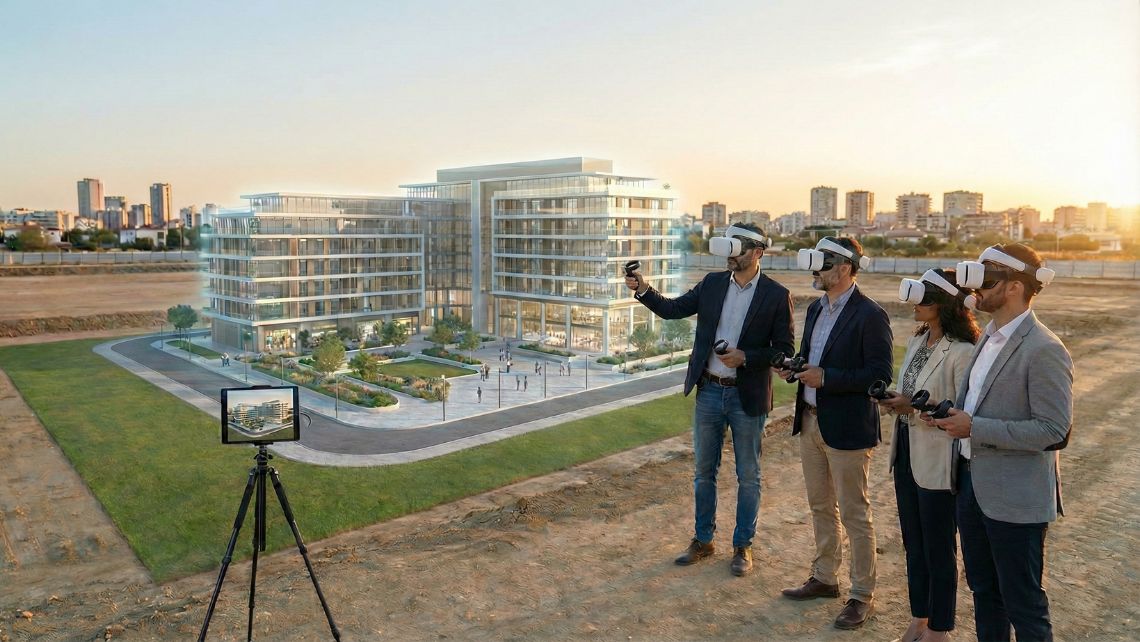
360 virtual tour company partnerships are rapidly becoming central to how commercial property developers present and position their schemes. In a market where buyers, investors and tenants expect clarity before commitment, static brochures and rendered images no longer deliver the persuasive impact required to secure confidence. Immersive presentation allows stakeholders to move through a development, understand spatial relationships and visualise how a space will function long before construction is complete.
For commercial property and large-scale developments, brand experience is inseparable from spatial experience. When launching a mixed-use scheme, office building or retail destination, every interaction shapes perception. This is where a 360 virtual tour company elevates more than marketing output. It strengthens clarity, builds credibility and enhances emotional connection to the development itself.
Rather than simply producing attractive visuals, a strategically aligned 360 virtual tour company transforms architectural intent into immersive storytelling. Through carefully designed virtual reality tours and interactive VR tours, developers can demonstrate scale, ambience and design quality in ways that feel tangible and persuasive. These experiences help potential occupiers and investors make faster, more informed decisions.
As expectations evolve, working with a specialist 360 virtual tour company becomes less about novelty and more about competitive positioning. Developers investing in professional virtual tour services are not just showcasing property; they are shaping how their brand is experienced from the first digital touchpoint.
How a 360 Virtual Tour Company Transforms Brand Experience in Commercial Property
Moving Beyond Static Visualisation
Traditional CGI imagery still plays a role in property marketing, but it presents only one fixed viewpoint at a time. A 360 virtual tour company changes this dynamic by shifting the experience from passive viewing to active exploration. Instead of showing a single curated angle, immersive environments allow stakeholders to navigate freely, examine details and experience scale in a way that mirrors physical presence.
This autonomy significantly influences perception. When prospective tenants can virtually stand in a reception area, turn toward natural light sources and assess the relationship between shared amenities and private offices, the development feels credible rather than conceptual. A professional 360 virtual tour company carefully structures navigation pathways, camera positioning and interaction points to ensure spatial logic remains intuitive.
For developers marketing complex, multi-phase schemes, clarity is critical. A 360 virtual tour company enables the presentation of masterplans, unit variations and communal areas in a coherent, digestible format. Instead of overwhelming stakeholders with technical drawings, virtual reality tours translate architectural complexity into an accessible experience that supports confident decision-making.
Creating Emotional Engagement Through Immersion
Brand experience is built on emotion as much as information. A 360 virtual tour company understands that immersive environments influence how a development feels long before it becomes physically accessible. Spatial storytelling plays a direct role in shaping perception of quality, innovation and value.
Consider a commercial office development targeting premium occupiers. Through strategically crafted VR tours, decision-makers can sense openness, material finishes and flow between collaborative zones. A skilled 360 virtual tour company ensures lighting, movement and interactive elements reflect the intended brand positioning, whether that is contemporary, sustainable or community-focused.
This is where the difference between a generic virtual tour company and true virtual tour experts becomes evident. Effective virtual tour services are not simply technical outputs. They are brand assets. Every interaction point and navigational choice contributes to narrative consistency. A strategically minded 360 virtual tour company aligns immersive design with the broader marketing message to create cohesion across campaigns.
Bridging the Gap Between Concept and Reality
Off-plan sales and early-stage marketing present a persistent challenge: establishing trust before completion. A 360 virtual tour company addresses this by transforming architectural plans into navigable, full-scale environments that reduce uncertainty.
Instead of interpreting floorplans abstractly, stakeholders can explore layouts spatially through immersive virtual reality tours. They can assess proportions, transitions between spaces and the relationship between private and shared areas in context. A professionally delivered experience by a 360 virtual tour company strengthens credibility and minimises hesitation.
For commercial developers, this clarity also supports internal alignment. Sales teams, marketing departments and external stakeholders can rely on the same immersive asset to communicate value consistently. By integrating VR tours into presentations, showrooms and digital platforms, a 360 virtual tour company ensures that a development is not just presented attractively but understood comprehensively.
When implemented strategically, virtual tour services become more than a visual enhancement. A 360 virtual tour company turns digital space into a persuasive, brand-defining environment that elevates how commercial property is experienced at every stage of the development lifecycle.
The Strategic Role of a 360 Virtual Tour Company in Property Development Marketing
Supporting Off-Plan Sales and Pre-Launch Campaigns
For commercial property developers, momentum before completion is critical. A 360 virtual tour company plays a strategic role in generating that momentum by transforming architectural plans into immersive, navigable environments that can be deployed months before physical access is possible. Instead of relying solely on brochures or floorplans, developers can introduce prospective buyers and tenants to spatial experiences that feel concrete and measurable.
During a pre-launch phase, a 360 virtual tour company enables marketing teams to build anticipation while reducing ambiguity. Virtual reality tours allow stakeholders to explore reception areas, communal spaces and individual units in context. This early access builds confidence, especially when investment decisions must be made off-plan. The presence of high-quality VR tours signals professionalism and forward-thinking brand positioning.
A strategically aligned 360 virtual tour company ensures these assets are not isolated pieces of content. They are integrated into digital campaigns, presentations and sales environments, reinforcing consistency across all messaging. By embedding immersive experiences into pre-launch strategy, virtual tour services become a conversion tool rather than a visual add-on.
Enabling Remote Investor and Buyer Engagement
Modern commercial property marketing increasingly targets international investors and geographically dispersed decision-makers. A 360 virtual tour company removes location barriers by providing realistic, immersive access to developments from anywhere in the world. This accessibility significantly expands reach without diluting brand control.
Through professionally designed virtual reality tours, investors can assess spatial layout, building flow and amenity integration remotely. A 360 virtual tour company ensures that navigation mirrors real-world movement, making digital exploration intuitive rather than disorienting. This precision supports informed decision-making and reduces friction in early-stage discussions.
When executed by experienced virtual tour experts, these immersive assets also support live guided sessions. Sales teams can walk remote stakeholders through key features using VR tours, highlighting unique selling points in real time. In this way, a 360 virtual tour company becomes an enabler of dialogue, not just a content provider. The immersive environment strengthens communication, shortens sales cycles and reinforces the credibility of the development brand.
Aligning Sales, Marketing and Stakeholder Communication
Large-scale developments often involve multiple stakeholders, including architects, marketing teams, investors and leasing agents. A 360 virtual tour company helps unify communication by providing a single, immersive reference point that reflects the approved vision of the scheme.
Instead of relying on fragmented materials, teams can present consistent messaging through integrated virtual tour services. A 360 virtual tour company structures the environment to highlight key commercial features, such as flexible floorplates, premium finishes or sustainability elements, ensuring that every stakeholder communicates the same value proposition.
This alignment strengthens internal confidence as well as external perception. When sales teams present VR tours that clearly articulate design intent, they project authority and preparedness. A strategic 360 virtual tour company therefore contributes not only to outward-facing marketing but also to internal cohesion. The result is a development brand that feels coordinated, deliberate and persuasive at every touchpoint.
From Visual Asset to Brand Environment: How Virtual Reality Tours Shape Perception
Positioning Developments as Premium Experiences
Brand perception in commercial property is shaped by how space is experienced. A 360 virtual tour company transforms digital visualisation into a branded environment that communicates quality, scale and ambition. Rather than presenting isolated images, immersive spaces allow audiences to interpret atmosphere and functionality holistically.
When a high-specification office or mixed-use scheme is presented through immersive VR tours, design features gain context. A 360 virtual tour company can emphasise ceiling heights, material finishes and spatial openness through controlled navigation and perspective. These details reinforce premium positioning in ways static imagery cannot achieve.
By working with a specialist virtual tour company that understands brand objectives, developers ensure that immersive environments align with tone and target audience. Virtual reality tours become an extension of the brand itself, projecting innovation and sophistication while maintaining clarity and realism.
Reinforcing Brand Identity Across Multiple Touchpoints
Consistency is essential in property marketing. A 360 virtual tour company ensures that immersive content reflects the same visual identity and messaging used across brochures, websites and physical showrooms. When virtual tour services are strategically integrated, brand experience remains cohesive from digital discovery to in-person engagement.
For example, a development targeting technology firms may emphasise collaborative workspaces and dynamic circulation routes within its VR tours. A 360 virtual tour company structures the experience to guide viewers through these areas in a deliberate sequence, reinforcing the narrative of innovation and flexibility. This sequencing supports the wider marketing message rather than competing with it.
Experienced virtual tour experts also consider usability across platforms. Whether deployed on a website, in a sales suite or via a headset, a 360 virtual tour company ensures that the immersive environment maintains performance and visual integrity. This adaptability strengthens brand reliability and demonstrates technical competence.
Enhancing Trust Through Transparency and Spatial Clarity
Trust is built when audiences feel informed rather than persuaded. A 360 virtual tour company enhances transparency by allowing viewers to explore spaces independently. Instead of relying on selective framing, stakeholders can assess layout, circulation and proportions on their own terms.
This openness is particularly valuable for commercial tenants evaluating suitability. Virtual reality tours provide clarity on how departments may be arranged, how communal spaces connect and how natural light interacts with interior layouts. A 360 virtual tour company carefully calibrates these elements to reflect realistic scale and design intent, reinforcing authenticity.
By reducing uncertainty, a 360 virtual tour company strengthens long-term brand equity. Developments presented with spatial clarity are more likely to inspire confidence and encourage commitment. When immersive environments are designed as strategic brand assets rather than standalone visuals, virtual tour services elevate perception, credibility and commercial impact across the entire property lifecycle.
Integrating Virtual Tour Services Into the Full Property Marketing Funnel
A 360 virtual tour company delivers the greatest impact when immersive experiences are embedded across the entire property marketing funnel rather than treated as a single campaign asset. From early-stage concept development through to final leasing conversations, a strategically deployed immersive environment strengthens continuity, clarity and brand authority. By aligning virtual tour services with every stage of engagement, developers create a seamless journey that mirrors how stakeholders evaluate commercial space.
Early-Stage Concept Visualisation
In the earliest stages of a development, communication is often limited to architectural drawings and design statements. A 360 virtual tour company translates these abstract materials into immersive virtual reality tours that allow stakeholders to step inside the vision before construction begins. This transformation improves internal alignment between design teams, investors and marketing departments.
Through carefully structured VR tours, spatial relationships become easier to understand. Circulation routes, entry sequences and amenity placement can be explored interactively, reducing ambiguity and strengthening confidence in the scheme’s direction. A 360 virtual tour company ensures that scale, proportion and material intent are presented with accuracy, reinforcing credibility from the outset.
For commercial developers pitching to funding partners or planning stakeholders, this clarity is invaluable. A specialist virtual tour company does not merely replicate drawings in three dimensions. Instead, virtual tour experts craft navigable experiences that communicate ambition and practicality simultaneously. By introducing immersive assets at concept stage, a 360 virtual tour company sets a professional tone that carries forward into every subsequent phase.
Developers seeking tailored immersive solutions can explore Immersive Studio’s approach as a virtual reality tours development company, where strategic thinking and technical precision combine to produce commercially aligned virtual reality tours designed specifically for commercial property and large-scale developments.
Sales Suite and Showroom Integration
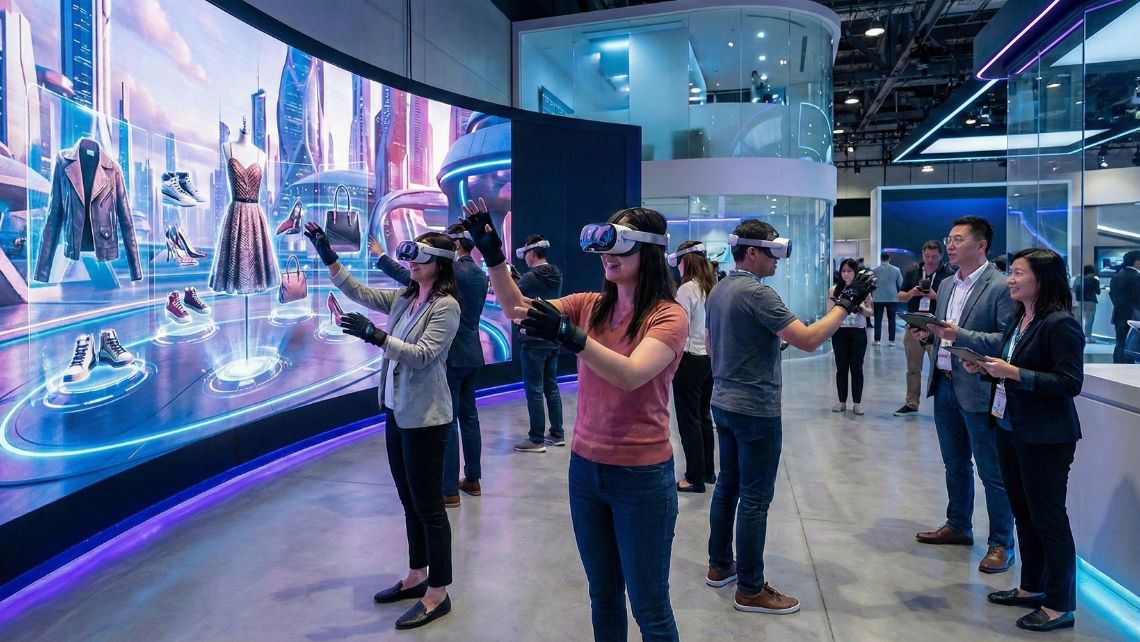
Once marketing moves into active promotion, the sales environment becomes a critical touchpoint. A 360 virtual tour company enhances physical sales suites by integrating VR tours into interactive displays and headset-based demonstrations. Instead of relying solely on printed materials or static screens, developers can invite prospects to walk through the development in real time.
This integration elevates the perceived sophistication of the brand. When visitors enter a showroom and immediately engage with immersive virtual reality tours, the development feels innovative and forward-thinking. A 360 virtual tour company structures these experiences to highlight key selling points in a logical sequence, guiding attention without restricting exploration.
Virtual tour services can also be synchronised with large-format displays or tablets, enabling sales consultants to navigate environments collaboratively with clients. This interactive dynamic strengthens dialogue and encourages questions grounded in spatial understanding. By embedding immersive assets directly into the sales suite, a 360 virtual tour company transforms passive viewing into participatory engagement.
These applications sit within a broader ecosystem of immersive delivery, supported by Immersive Studio’s wider virtual reality services, which ensure performance, usability and visual consistency across headsets, interactive displays and web-based deployments.
Website, Campaign and Event Deployment
Digital presence plays an increasingly influential role in commercial property marketing. A 360 virtual tour company ensures that immersive experiences are optimised for seamless website integration, allowing prospective tenants and investors to explore developments remotely. When virtual reality tours are embedded strategically, they increase dwell time and deepen engagement.
Beyond website deployment, VR tours can anchor digital campaigns, email marketing initiatives and online presentations. A 360 virtual tour company structures content so that immersive experiences complement messaging rather than overwhelm it. Navigation design, loading performance and visual clarity are carefully balanced to protect user experience.
Events and property exhibitions also benefit significantly. By deploying portable VR setups or interactive displays, developers can offer immersive previews to audiences who may not yet have visited the site. A skilled 360 virtual tour company ensures that these experiences remain consistent with the brand narrative established online and in physical environments.
As immersive content becomes a central marketing asset rather than a supplementary feature, a 360 virtual tour company strengthens continuity across every channel. The development is experienced consistently, whether accessed through a browser, headset or showroom installation, reinforcing trust and memorability.
Why Commercial Property Developers Need Virtual Tour Experts
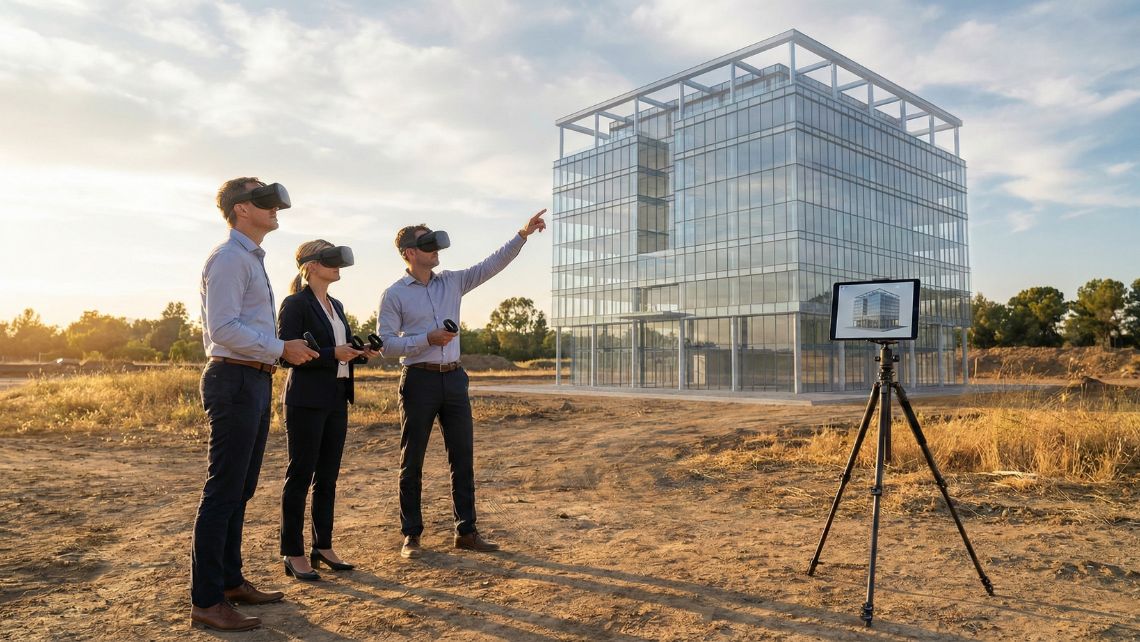
A 360 virtual tour company delivers more than technical production. For commercial property developers operating in competitive markets, expertise, precision and strategic integration determine whether immersive content elevates brand perception or simply adds visual complexity. Choosing experienced virtual tour experts ensures that immersive environments support long-term commercial objectives rather than short-term novelty.
Technical Precision and Spatial Accuracy
Accuracy is fundamental in commercial property marketing. A 360 virtual tour company must translate architectural data into immersive environments that reflect true proportions and intended design features. When virtual reality tours are misaligned or visually inconsistent, credibility suffers.
Professional virtual tour experts understand how to manage lighting, scale calibration and navigational flow to preserve realism. A 360 virtual tour company applies technical rigour at every stage, from modelling to deployment, ensuring that VR tours accurately represent floorplates, communal areas and circulation routes. This attention to detail supports informed decision-making among tenants and investors.
Spatial clarity also reduces friction during negotiations. When stakeholders have already explored a development through high-quality virtual tour services, fewer uncertainties remain. A 360 virtual tour company therefore contributes directly to smoother discussions and more confident commitments.
Interactive Features That Influence Decision-Making
Beyond visual immersion, interactivity shapes user experience. A 360 virtual tour company designs interactive elements that encourage exploration while subtly reinforcing key commercial messages. These may include navigational prompts, contextual information overlays or guided pathways through priority spaces.
The difference between a generic virtual tour company and specialised virtual tour experts lies in this strategic layering. Rather than overwhelming viewers with excessive hotspots, a 360 virtual tour company curates interaction to support narrative flow. Prospective occupiers can focus on features most relevant to their operational needs without losing overall context.
Interactive VR tours can also simulate variations in layout or highlight alternative configurations, helping decision-makers visualise adaptability. By embedding thoughtful interaction into immersive environments, a 360 virtual tour company strengthens both engagement and clarity.
Scalability Across Multi-Phase Developments
Commercial developments often unfold in stages. A 360 virtual tour company must design immersive assets that can evolve alongside the project. Scalability ensures that early-stage virtual reality tours remain relevant as additional phases launch or design refinements occur.
Experienced virtual tour experts structure projects with long-term adaptability in mind. A 360 virtual tour company can expand environments, update visual elements and integrate new spaces without compromising consistency. This approach protects investment and maintains brand coherence across extended timelines.
For developers managing complex portfolios, scalability is essential. When virtual tour services are built on a strategic foundation, they can support multiple buildings, phases or future expansions. A forward-thinking 360 virtual tour company therefore becomes an ongoing creative and technical partner, ensuring that immersive brand experiences remain aligned with commercial ambition at every stage of growth.
Measuring the Impact of VR Tours on Brand Experience and Conversions
A 360 virtual tour company delivers measurable value when immersive content is evaluated not just for visual appeal, but for commercial performance. For property developers, brand experience must ultimately support leasing velocity, investor confidence and long-term perception. By analysing engagement and behavioural signals, a 360 virtual tour company helps demonstrate how immersive environments influence decision-making.
Increased Dwell Time and Engagement
One of the clearest indicators of impact is engagement duration. When prospects interact with virtual reality tours, they typically spend significantly longer exploring a development than they would viewing static images. A 360 virtual tour company structures immersive navigation to encourage natural exploration, increasing time spent within the brand environment.
Longer dwell time strengthens familiarity, reinforcing what is already evident in how immersive experiences are reshaping audience engagement across industries, as explored in our insights on how immersive experiences are reshaping audience engagement.
As users move through VR tours, they begin to understand spatial flow, amenity placement and architectural intent. A 360 virtual tour company designs these experiences so that key selling points are encountered organically rather than forced into view. This measured exposure reinforces memorability without creating friction.
For developers analysing website performance, immersive content often correlates with deeper engagement across related pages. When virtual tour services are integrated thoughtfully, visitors move between immersive environments and specification details with greater intent. A strategically aligned 360 virtual tour company therefore contributes to measurable improvements in digital interaction quality.
Improved Sales Confidence and Reduced Friction
Conversions in commercial property are rarely impulsive. They rely on confidence. A 360 virtual tour company strengthens this confidence by reducing ambiguity before in-person visits occur. When tenants or investors have already navigated immersive virtual reality tours, initial meetings become more focused and productive.
Sales teams often report more informed questions and clearer preferences after prospects experience VR tours. A 360 virtual tour company enables this shift by presenting accurate scale and layout, allowing stakeholders to pre-evaluate suitability. As a result, discussions centre on refinement rather than clarification.
Virtual tour experts also structure immersive journeys to anticipate common decision points. For example, navigation might guide users from communal spaces to private units in a sequence that mirrors how leasing discussions unfold. A 360 virtual tour company thus reduces friction across the sales cycle, supporting faster progression from enquiry to agreement.
Stronger Investor and Stakeholder Alignment
Brand experience extends beyond tenants. Investors and internal stakeholders must also feel aligned with a development’s positioning. A 360 virtual tour company provides a shared visual reference that simplifies communication during presentations and funding discussions.
When immersive virtual reality tours are used in boardroom settings or digital investor briefings, spatial intent becomes immediately clear. A 360 virtual tour company ensures that technical accuracy supports financial storytelling, reinforcing the viability and ambition of the scheme. This clarity reduces misinterpretation and builds trust.
Over time, immersive assets become part of the developer’s brand identity. A consistent partnership with a 360 virtual tour company allows future projects to maintain visual continuity, strengthening long-term brand equity. Measuring impact, therefore, is not limited to immediate conversions. It includes perception, confidence and the credibility associated with high-quality virtual tour services.
Choosing the Right Virtual Tour Company for Long-Term Brand Value
Selecting the right 360 virtual tour company is a strategic decision for commercial property developers. Immersive assets influence how developments are perceived for years, making expertise and alignment essential. Not all immersive outputs are equal, and understanding the distinction between surface-level production and strategic integration is critical.
Creative Strategy vs. Technical Execution
A capable 360 virtual tour company combines creative direction with technical precision. While modelling and rendering are fundamental, they must be guided by a clear understanding of brand positioning and target audience. Without this strategic layer, immersive environments risk becoming visually impressive but commercially disconnected.
Virtual tour experts begin by analysing the development’s objectives. Is the goal to attract premium corporate tenants, position a retail space as experiential, or communicate sustainability credentials? A 360 virtual tour company translates these objectives into design decisions within virtual reality tours, from lighting ambience to navigational flow.
This balance between artistry and functionality distinguishes a specialist virtual tour company from a purely technical provider. Developers who prioritise long-term brand value benefit from immersive experiences that are conceptually aligned as well as visually accurate. A 360 virtual tour company should therefore be evaluated on strategic thinking as much as on software capability.
Custom-Built Virtual Reality Tours vs. Template Solutions
Commercial developments are rarely uniform. Each scheme carries unique architectural features and branding priorities. A 360 virtual tour company focused on bespoke delivery ensures that immersive content reflects these distinctions rather than conforming to rigid templates.
Custom-built VR tours allow developers to highlight specific spatial narratives, such as flexible floorplates or integrated amenities. A 360 virtual tour company tailors interaction, sequencing and visual emphasis to match the development’s identity. This level of customisation strengthens authenticity and differentiation.
Template-driven approaches may appear efficient initially, but they can limit storytelling depth. Experienced virtual tour experts understand that long-term brand value depends on originality and precision. By partnering with a 360 virtual tour company that prioritises tailored virtual tour services, developers protect their positioning in competitive markets.
Future-Proofing Assets for Evolving Platforms
Technology continues to evolve, influencing how audiences access immersive content. A forward-thinking 360 virtual tour company designs assets that remain adaptable across devices, platforms and future updates. This foresight protects investment and extends the lifespan of immersive environments.
Virtual reality tours may be deployed through websites, headsets or interactive displays. A 360 virtual tour company ensures performance remains consistent regardless of medium, maintaining visual quality and usability. As expectations shift, scalable design allows VR tours to evolve without requiring complete redevelopment.
Future-proofing also involves maintaining data integrity and update flexibility. Commercial developments may undergo refinements or phased expansions. A reliable 360 virtual tour company structures projects so that modifications can be implemented efficiently, preserving continuity across the portfolio.
By carefully evaluating strategic capability, customisation depth and technical foresight, commercial property developers can select a 360 virtual tour company that delivers enduring brand value. The right partnership transforms immersive content from a marketing enhancement into a long-term asset that strengthens perception, confidence and commercial success.
Wrapping Up
For commercial property developers, brand experience is no longer shaped solely by architecture or marketing copy. It is shaped by how effectively space can be understood before it exists physically. A 360 virtual tour company enables that understanding by transforming design intent into immersive, navigable environments that communicate clarity, confidence and ambition.
Throughout the property lifecycle, from concept visualisation to final leasing conversations, a 360 virtual tour company supports alignment between brand positioning and spatial presentation. Rather than relying on static imagery, developers can deploy virtual reality tours that allow investors, tenants and stakeholders to experience layout, scale and atmosphere first-hand. This immersive approach reduces uncertainty and strengthens decision-making.
When immersive content is developed strategically, it becomes more than a visual enhancement. A 360 virtual tour company helps embed VR tours into digital campaigns, sales suites and investor presentations, ensuring consistent messaging across every touchpoint. This integration elevates perception and demonstrates forward-thinking brand leadership.
Commercial property markets remain competitive, and differentiation often depends on how clearly value is communicated. By partnering with experienced virtual tour experts, developers can ensure that virtual tour services are aligned with long-term objectives rather than short-term trends. A capable 360 virtual tour company turns immersive environments into persuasive brand assets that support engagement, trust and commercial momentum.
Ultimately, investing in the right virtual tour company is an investment in how a development is experienced. When executed with technical precision and strategic clarity, a 360 virtual tour company elevates brand experience in a way that resonates long before a physical key is handed over.
Frequently Asked Questions - 360 Virtual Tour Company
What Is a 360 Virtual Tour Company and How Does It Work?
A 360 virtual tour company creates immersive digital environments that allow users to explore commercial spaces interactively instead of relying on static images or floorplans. By converting architectural data into navigable virtual reality tours, a 360 virtual tour company enables stakeholders to experience layout, scale and atmosphere before construction is complete. Virtual tour experts manage spatial accuracy, lighting and user interaction to ensure realism and brand alignment. For commercial property developers, these virtual tour services become strategic marketing tools that improve clarity, strengthen trust and support more confident investment and leasing decisions.
How Do Virtual Reality Tours Help Sell Commercial Property Developments?
Virtual reality tours help sell commercial property by reducing uncertainty and increasing buyer confidence early in the sales journey. A 360 virtual tour company allows investors and tenants to explore floorplates, amenities and circulation routes in realistic detail, making complex designs easier to understand. Through immersive VR tours, a 360 virtual tour company strengthens emotional engagement while improving spatial clarity. When virtual tour services are aligned with marketing strategy, they support more informed conversations, shorten decision cycles and enhance overall brand perception across commercial developments.
What Is the Difference Between VR Tours and Standard 360 Virtual Tours?
The difference lies mainly in immersion and interactivity. A 360 virtual tour company may produce browser-based 360-degree experiences with defined navigation points, while advanced VR tours can be accessed through headsets for deeper presence and intuitive movement. A specialist 360 virtual tour company evaluates project goals before recommending the right approach, ensuring usability and brand alignment. Virtual tour experts design both formats to maintain accuracy and narrative clarity, but fully immersive virtual reality tours typically create a stronger emotional and spatial connection for commercial property audiences.
Are Virtual Tour Services Effective for Off-Plan Property Sales?
Virtual tour services are highly effective for off-plan sales because they transform architectural plans into immersive, navigable environments. A 360 virtual tour company enables stakeholders to explore developments at full scale before construction finishes, improving understanding of proportions and layout flow. By delivering realistic virtual reality tours, a 360 virtual tour company reduces ambiguity and strengthens trust during early marketing stages. For commercial developers, VR tours create transparency that accelerates commitments and reinforces brand credibility in competitive property markets.
How Much Does It Cost to Hire a Virtual Tour Company in the UK?
The cost of hiring a virtual tour company in the UK depends on development size, complexity and required interactivity. A 360 virtual tour company assesses modelling scope, integration needs and deployment platforms before determining investment levels. While pricing varies, developers should consider long-term value rather than upfront cost alone. A strategically aligned 360 virtual tour company produces immersive virtual reality tours that can be reused across marketing, sales and investor presentations, making virtual tour services a commercially valuable asset rather than a one-off expense.
Can Virtual Reality Tours Be Integrated Into a Property Developer’s Website?
Yes, virtual reality tours can be seamlessly integrated into a property developer’s website when developed by an experienced 360 virtual tour company. Immersive environments are optimised for performance while maintaining visual quality, ensuring accessibility across devices. A 360 virtual tour company structures VR tours to complement existing branding and user journeys, encouraging deeper engagement rather than distraction. Properly implemented virtual tour services increase dwell time, improve user understanding and strengthen digital conversion pathways for commercial property developments.
How Long Does It Take to Create Professional VR Tours?
The timeline for professional VR tours depends on project scale and complexity. A 360 virtual tour company typically works through stages including data interpretation, environment modelling, interaction design and optimisation. Larger commercial schemes with multiple units may require several weeks to complete. An experienced 360 virtual tour company balances efficiency with precision to ensure virtual reality tours accurately reflect architectural intent. Well-managed virtual tour services deliver reliable, high-quality immersive assets within realistic project timelines.
Why Should Property Developers Work With Virtual Tour Experts Instead of Using DIY Platforms?
DIY platforms often lack the strategic depth required for commercial property marketing. A 360 virtual tour company provides bespoke development aligned with architectural intent and brand positioning, ensuring immersive environments communicate value clearly. Virtual tour experts focus on spatial accuracy, interaction flow and scalability, elements that generic tools rarely address effectively. By partnering with a professional 360 virtual tour company, developers gain virtual reality tours designed for long-term use across campaigns and sales channels, elevating brand experience beyond basic visual presentation.