How AR Developers Enhance User Engagement in Mobile Apps
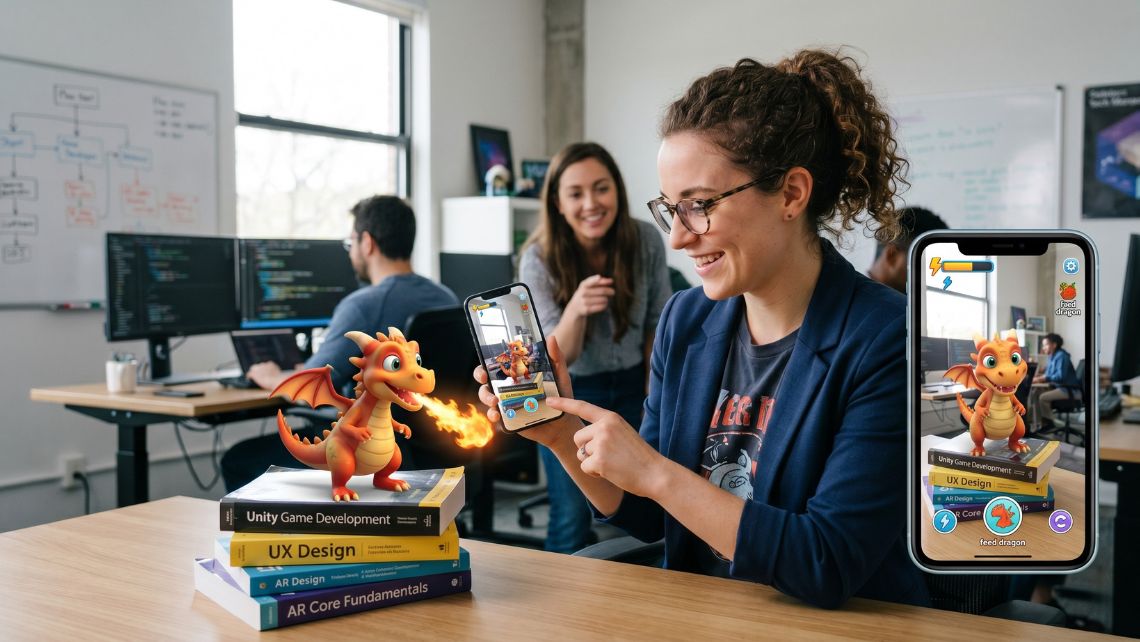
AR developers are changing how people experience mobile apps by turning them into places to explore, not just screens to tap through. As attention becomes harder to hold, meaningful engagement comes from experiences that feel active and personal. Augmented reality helps bring that sense of participation into everyday digital products.
Today’s apps are expected to feel connected to the real world. Rather than sitting apart from a user’s surroundings, AR allows content to blend into them — adding digital layers that make sense in the moment. This can be as simple and powerful as letting someone see how a sofa would look in their living room, or virtually try on an item of clothing or jewellery before deciding whether it’s right for them. These moments remove uncertainty and help users feel more confident in their choices.
Alongside this, advances in VR app development and VR software development are complementing AR capabilities to help shape a wider approach to immersive experiences. Together, AR and VR support more connected journeys across platforms, where users aren’t just following a fixed path but interacting with content in their own way. The experience becomes something you take part in, rather than something you look at.
Through interactive spaces, thoughtful design and spatial content, AR developers help shape how digital experiences feel. Their work influences how long users stay, how often they return and how memorable an experience becomes — keeping engagement natural, intuitive and genuinely meaningful.
Understanding the Role of AR Developers in Mobile App Engagement
What AR Developers Actually Do
AR developers are responsible for designing, building, and optimising augmented reality experiences that function seamlessly within mobile applications. Their work goes beyond visual overlays; it involves creating interactive systems that respond intelligently to user behaviour and environmental inputs.
Core Development Responsibilities
At the foundation, AR developers work with frameworks such as unity AR development to build spatial experiences that align with device capabilities. This includes implementing motion tracking, environmental understanding, and real-time rendering. An Augmented Reality developer ensures that digital elements are not only visually accurate but also contextually relevant, enhancing how users perceive and interact with the app.
They also collaborate across disciplines, aligning development with UX strategy to ensure that engagement is not just immersive but intuitive. This is particularly important when integrating features derived from VR app development, where user immersion must be balanced with usability in a mobile-first environment.
Integration with Broader Immersive Technologies
The role of AR developers increasingly overlaps with VR software development, especially as businesses seek unified immersive experiences. While AR enhances real-world interaction, VR introduces fully digital environments, and together they create a spectrum of engagement possibilities.
By leveraging unity Augmented Reality alongside VR frameworks, AR developers can build hybrid experiences that transition smoothly between augmented and virtual environments. This integrated approach allows mobile apps to deliver richer, more layered user journeys without compromising performance or accessibility.
How AR Developers Shape User Behaviour in Apps
The influence of AR developers extends beyond technical execution; they actively shape how users think, behave, and engage within an app environment.
Creating Interaction-Driven Engagement Models
Traditional apps rely heavily on taps and swipes, but AR developers introduce spatial interaction as a core engagement mechanism. By using unity AR development techniques, they enable users to move, explore, and interact with digital content in physical space. This shift transforms engagement from a passive activity into an active experience.
An Augmented Reality developer carefully designs these interactions to feel natural and rewarding. Every movement, gesture, or visual response is engineered to encourage continued exploration, increasing session duration and user retention.
Personalisation Through Contextual Experiences
One of the most powerful ways AR developers enhance engagement is through contextual personalisation. By understanding a user’s surroundings, location or behaviour, an app can adapt its content in real time, making the experience feel relevant rather than generic. When content responds to what the user is doing or where they are, it naturally feels more useful and intuitive.
For example, a home‑furnishing brand might use AR to let users place virtual furniture directly into their own living space using their phone camera. Instead of browsing static product images, the app recognises the size and layout of the room and shows how a sofa, table or lamp would look in that specific environment. Similarly, fashion brands can allow users to virtually try on clothing, with the experience adjusting to their movement and perspective. In both cases, the content is shaped around the user’s context, not delivered as a one‑size‑fits‑all solution.
This level of personalisation helps users feel understood rather than marketed to. The app responds to their situation in the moment, reducing uncertainty and creating a stronger sense of connection. As a result, engagement increases because the experience feels purposeful, relevant and directly tied to the user’s real world.
When combined with insights from VR app development and VR software development, AR developers can extend this personalisation across multiple touchpoints, creating a consistent and immersive user journey. The result is an experience that feels less like using an app and more like interacting with a responsive digital layer integrated into everyday life.
Why User Engagement is the Core Metric for Mobile App Success
Defining Engagement in Modern Mobile Apps
User engagement has evolved into the most critical performance indicator for any mobile application, and AR developers are at the centre of this transformation. Engagement today is no longer limited to time spent within an app; it reflects how deeply users interact, how frequently they return, and how meaningful their experiences feel. AR developers design these engagement layers by introducing interaction models that go beyond static content.
From Functional Usage to Experiential Interaction
In traditional mobile ecosystems, apps were built to complete tasks. However, AR developers now focus on creating environments where users actively participate rather than simply consume. An Augmented Reality developer achieves this by embedding interactive elements powered by unity AR development, allowing users to engage with digital objects as if they were part of their physical surroundings.
An example would be delivering an AR wayfinding app for a museum or gallery setting, that guides visitors intuitively through the space. By recognising a visitor’s location, the app layers subtle directional cues directly onto the gallery environment through the phone’s camera, without disrupting the atmosphere of the space. This can be further enhanced by overlaying detailed information about displays and artwork that can be overlayed onto the displays and interacted with through the app.
This shift is further reinforced by the influence of VR app development, where immersion has long been a defining factor. By integrating principles from VR software development, AR developers bring similar depth into mobile experiences without removing users from their real-world context. The result is a more compelling interaction model that encourages longer sessions and repeat usage.
Measuring Engagement Beyond Traditional Metrics
AR developers redefine how engagement is measured by focusing on behavioural signals rather than surface-level metrics. Instead of relying solely on clicks or session counts, they analyse interaction depth, spatial movement, and user responsiveness within AR environments.
Through unity Augmented Reality frameworks, AR developers can track how users interact with digital overlays in real time. An Augmented Reality developer uses this data to refine experiences continuously, ensuring that each interaction feels intuitive and rewarding. The integration of insights from VR app development and VR software development further enhances these measurement strategies, enabling more accurate evaluation of immersive engagement.
The Shift from Passive to Interactive Experiences
The transition from passive consumption to active participation is one of the most significant changes in mobile app design, and AR developers are driving this evolution.
Designing for Active Participation
AR developers replace traditional user flows with interaction-driven journeys. Instead of scrolling through content, users explore, manipulate, and engage with digital elements in real space. This transformation is made possible through unity AR development, where spatial awareness and real-time responsiveness become central to the user experience.
An Augmented Reality developer carefully engineers these environments to encourage exploration. Each interaction is designed to trigger curiosity and maintain engagement, ensuring users remain involved for longer periods. By incorporating techniques from VR app development, AR developers enhance immersion while maintaining the accessibility of mobile platforms.
Emotional and Cognitive Engagement Through Immersion
Beyond interaction, AR developers influence how users feel and think while using an app. Immersive experiences created through unity Augmented Reality stimulate both emotional and cognitive engagement, making interactions more memorable.
By applying concepts from VR software development, AR developers create layered experiences that adapt to user behaviour and context. An Augmented Reality developer ensures that these experiences remain fluid and responsive, reducing friction and increasing satisfaction. This deeper level of engagement not only improves retention but also strengthens the overall connection between the user and the application.
How AR Developers Transform User Interaction Through Immersive Experiences
Real-Time Interaction and Context-Aware Content
AR developers enable mobile apps to respond instantly to user actions and environmental inputs, creating a level of interactivity that traditional interfaces cannot achieve.
Dynamic Content Based on User Environment
One of the defining capabilities AR developers bring to mobile apps is context awareness. By leveraging unity AR development, they create systems that analyse surroundings and adapt digital content accordingly. This allows an Augmented Reality developer to deliver highly relevant experiences that feel personalised and immediate.
For instance, digital elements can adjust in real time based on location, movement, or user input, creating a seamless blend between physical and digital spaces. Insights drawn from VR app development further enhance these capabilities, enabling AR developers to create more responsive and immersive environments.
Instant Feedback Loops That Drive Engagement
Immediate feedback is essential for maintaining user interest, and AR developers design systems that respond without delay. Whether it is visual, spatial, or interactive feedback, every action triggers a reaction that reinforces user engagement.
Using unity Augmented Reality, AR developers ensure that these feedback loops feel natural and intuitive. An Augmented Reality developer fine-tunes these interactions to eliminate lag and friction, which are critical factors in user retention. Techniques derived from VR software development also contribute to smoother and more consistent performance across devices.
Blending Digital and Physical Environments Seamlessly
The ability to merge digital content with the real world is what sets AR apart, and AR developers are responsible for making this integration feel effortless.
Creating Natural User Interfaces in Real Space
AR developers move beyond traditional screen-based interfaces by designing interactions that exist within the user’s physical environment. Through unity AR development, they create intuitive systems where users can engage with digital elements as naturally as they would with physical objects.
An Augmented Reality developer ensures that these interactions are not only visually aligned but also behaviourally consistent. This approach reduces the learning curve and allows users to engage more confidently. By incorporating principles from VR app development, AR developers further enhance realism and immersion.
Building Continuous and Immersive User Journeys
Seamless integration is not just about visuals; it is about creating a continuous experience that keeps users engaged from start to finish. AR developers design these journeys to flow naturally, without interruptions or disjointed transitions.
With the support of unity Augmented Reality and advancements in VR software development, AR developers can maintain consistency across different stages of interaction. An Augmented Reality developer ensures that each touchpoint builds upon the previous one, creating a cohesive and engaging user experience that encourages prolonged interaction and deeper involvement.

Key Technologies AR Developers Use to Boost Engagement
Unity Augmented Reality and Its Role in App Development
AR developers rely heavily on robust frameworks to deliver seamless and high-performance experiences, and unity Augmented Reality has become a foundational technology in this space. It enables AR developers to create visually rich, interactive environments that function consistently across a wide range of mobile devices.
Real-Time Rendering and Spatial Mapping
Through unity AR development, AR developers implement real-time rendering systems that allow digital content to respond instantly to user movement and environmental changes. An Augmented Reality developer uses these capabilities to ensure that virtual elements remain stable, accurate, and contextually aligned within the physical world.
This level of precision is essential for maintaining immersion. By combining spatial mapping with rendering efficiency, AR developers ensure that users experience fluid interactions without disruption. Insights from VR app development further enhance these capabilities, allowing for more advanced scene construction and depth perception.
Cross-Platform Consistency and Performance Optimisation
AR developers also depend on unity Augmented Reality to maintain consistent performance across devices with varying hardware capabilities. This ensures that engagement is not compromised by technical limitations.
An Augmented Reality developer optimises assets, interactions, and processing loads to deliver smooth experiences regardless of device specifications. Techniques derived from VR software development play a key role here, as they provide strategies for handling complex environments while maintaining responsiveness. As a result, AR developers can create scalable solutions that reach broader audiences without sacrificing quality.
Integration with VR App Development and Cross-Platform Experiences
AR developers increasingly work within a broader immersive ecosystem where AR and VR are interconnected rather than isolated.
Expanding Engagement Through Hybrid Experiences
By integrating principles from VR app development, AR developers can extend user engagement beyond augmented overlays into more immersive environments. This allows users to transition between real-world interaction and fully virtual scenarios within a single application.
An Augmented Reality developer designs these transitions carefully to ensure continuity. Using unity AR development as a foundation, AR developers create cohesive experiences that feel natural and uninterrupted. This hybrid approach significantly enhances engagement by offering multiple layers of interaction.
Enhancing User Retention Through Multi-Platform Interaction
AR developers also use cross-platform strategies to keep users engaged across different devices and contexts. By aligning AR experiences with VR software development frameworks, they ensure that users can continue their journey seamlessly, whether they are interacting through mobile AR or transitioning into more immersive environments.
This continuity strengthens user retention, as AR developers create ecosystems rather than isolated features. An Augmented Reality developer ensures that each interaction builds on previous ones, reinforcing engagement and encouraging repeated use.
Advancements in VR Software Development Supporting AR Ecosystems
The evolution of VR software development has a direct impact on how AR developers design and optimise mobile app experiences.
Improving Immersion Through Advanced Graphics and Interaction Models
AR developers leverage advancements in VR software development to enhance visual fidelity and interaction depth. These improvements allow for more realistic rendering, smoother animations, and more responsive environments.
Using unity Augmented Reality, AR developers incorporate these enhancements into mobile apps, ensuring that interactions feel natural and engaging. An Augmented Reality developer applies these techniques to create experiences that are not only visually compelling but also behaviourally intuitive.
Supporting Scalable and Future-Ready AR Solutions
Scalability is a key concern for modern mobile applications, and AR developers address this by adopting frameworks influenced by VR software development. These frameworks allow for modular development, making it easier to expand features and adapt to evolving user expectations.
Through unity AR development, AR developers build flexible architectures that support continuous updates and enhancements. An Augmented Reality developer ensures that these systems remain adaptable, enabling businesses to evolve their engagement strategies without rebuilding from scratch.
Practical Applications of AR in Mobile Apps That Drive Engagement
Personalised User Journeys Through AR Layers
AR developers use augmented reality to create personalised experiences that adapt to individual users, significantly increasing engagement.
Contextual Content Tailored to User Behaviour
By leveraging unity AR development, AR developers design systems that respond to user preferences, location, and interaction history. An Augmented Reality developer ensures that content is delivered in a way that feels relevant and timely, enhancing the overall user experience.
These personalised layers transform mobile apps into dynamic environments where each interaction feels unique. Techniques from VR app development further support this by enabling deeper immersion and more complex interaction patterns.
Adaptive Interfaces That Evolve with User Interaction
AR developers also create interfaces that evolve based on how users engage with the app. Using unity Augmented Reality, they design systems that adjust in real time, offering new interactions and content as users explore.
An Augmented Reality developer ensures that these adaptations remain intuitive, preventing overwhelm while maintaining engagement. Insights from VR software development help refine these systems, ensuring smooth transitions and consistent performance.
Interactive Product Visualisation and Exploration
One of the most impactful applications AR developers bring to mobile apps is interactive visualisation, which transforms how users explore digital content.
Real-World Placement and Exploration
AR developers enable users to place and interact with digital objects within their physical environment. Through unity AR development, they create accurate spatial representations that allow users to explore content from multiple angles.
An Augmented Reality developer ensures that these interactions feel realistic and responsive, enhancing user confidence and engagement. By incorporating elements from VR app development, AR developers can add depth and interactivity, making the experience more immersive.
Enhancing Decision-Making Through Immersive Interaction
Interactive visualisation also supports better decision-making by allowing users to engage with content in a meaningful way. AR developers design these experiences to provide clarity and context, reducing uncertainty.
Using unity Augmented Reality, AR developers ensure that interactions are smooth and informative. An Augmented Reality developer applies techniques from VR software development to create detailed and responsive environments, further enhancing user engagement.
Gamification Through AR Mechanics
Gamification is a powerful engagement strategy, and AR developers use it to transform routine interactions into engaging experiences.
Introducing Game-Like Elements into Everyday Interactions
AR developers incorporate game mechanics such as challenges, rewards, and progression systems into mobile apps. Through unity AR development, they create interactive scenarios that encourage users to explore and engage more deeply.
An Augmented Reality developer ensures that these elements are seamlessly integrated into the app experience, rather than feeling separate or forced. By drawing on VR app development principles, AR developers enhance immersion and make interactions more compelling.
Sustaining Long-Term Engagement Through Reward Systems
To maintain user interest over time, AR developers design reward systems that incentivise continued interaction. Using unity Augmented Reality, they create dynamic environments where users are motivated to return and engage repeatedly.
An Augmented Reality developer carefully balances challenge and reward to keep users invested without causing fatigue. Insights from VR software development help optimise these systems, ensuring that engagement remains consistent and enjoyable over the long term.
How Immersive Studio Approaches AR-Driven Engagement Solutions
Interactive Product Visualisation and Exploration
AR developers at Immersive Studio focus on building scalable, high-impact mobile experiences that prioritise user engagement from the ground up. Rather than treating augmented reality as an isolated feature, AR developers integrate it as a core component of the overall application strategy. This ensures that engagement is not temporary but sustained across the entire user journey.
Strategic Use of AR, VR, and MR Capabilities
Through its dedicated AR, VR, and MR solutions, Immersive Studio enables AR developers to create experiences that extend beyond basic interaction. An Augmented Reality developer working within this framework combines unity AR development with advanced immersive techniques to deliver highly responsive and context-aware applications.
By aligning AR experiences with VR app development principles, AR developers ensure that engagement remains consistent across different levels of immersion. This integration allows users to transition smoothly between interaction modes while maintaining continuity. Additionally, the influence of VR software development ensures that performance, scalability, and visual quality remain uncompromised.
Building Engagement Around Business Objectives
AR developers at Immersive Studio do not design experiences in isolation; they align every interaction with clear business goals. An Augmented Reality developer ensures that each feature contributes to measurable engagement outcomes such as increased session duration, improved retention, and deeper interaction levels.
Using unity Augmented Reality, AR developers craft tailored solutions that respond to specific user behaviours and business requirements. By incorporating insights from VR app development and VR software development, they create holistic systems that support long-term engagement strategies rather than short-term novelty.
Aligning Business Goals with User-Centric AR Experiences
The effectiveness of AR developers lies in their ability to balance technical innovation with user needs.
Designing Experiences That Prioritise User Intent
AR developers begin by understanding how users interact with mobile apps and what drives their engagement. An Augmented Reality developer translates these insights into interactive environments that feel intuitive and purposeful.
Through unity AR development, AR developers create experiences that respond naturally to user input, reducing friction and increasing satisfaction. The integration of VR app development concepts allows for deeper immersion, while VR software development ensures that these experiences remain stable and scalable.
Continuous Optimisation Through Data and Interaction Insights
AR developers continuously refine experiences based on real-world usage data. By analysing how users interact with AR features, an Augmented Reality developer can identify areas for improvement and enhance engagement over time.
Using unity Augmented Reality frameworks, AR developers implement adaptive systems that evolve alongside user behaviour. Insights from VR software development further support this process by enabling more sophisticated performance optimisation and interaction modelling. This iterative approach ensures that engagement remains strong as user expectations continue to evolve.
Future Trends AR Developers Are Using to Enhance Mobile Engagement
Increasing Personalisation Through AI-Driven AR
AR developers are moving towards highly personalised experiences powered by intelligent systems that adapt in real time.
Real-Time Data Integration for Personalised Experiences
By combining AI capabilities with unity AR development, AR developers can analyse user behaviour and environmental data simultaneously. An Augmented Reality developer uses this information to deliver content that is uniquely tailored to each user.
This level of personalisation enhances engagement by making interactions more relevant and meaningful. Drawing from VR app development, AR developers create immersive environments that respond dynamically, while VR software development ensures that these systems operate efficiently at scale.
Predictive Interaction Models for Enhanced Engagement
AR developers are also exploring predictive models that anticipate user actions before they occur. Using unity Augmented Reality, they design systems that adapt proactively, creating smoother and more intuitive experiences.
An Augmented Reality developer leverages insights from VR software development to refine these predictive systems, ensuring accuracy and responsiveness. This forward-thinking approach allows AR developers to maintain high levels of engagement by staying ahead of user expectations.
Persistent AR and Always-On Experiences
The concept of persistent AR is transforming how users interact with mobile applications over time.
Continuous Interaction Beyond Single Sessions
AR developers are creating experiences that persist beyond individual sessions, allowing users to return to the same augmented environment and continue their journey. Through unity AR development, they ensure that digital elements remain consistent and accessible.
An Augmented Reality developer designs these persistent systems to encourage repeat engagement, as users can build upon previous interactions. Techniques from VR app development enhance immersion, while VR software development supports the technical infrastructure required for continuity.
Strengthening User Retention Through Long-Term Engagement
Persistent experiences enable AR developers to move from short-term interaction to long-term engagement strategies. By maintaining continuity, users are more likely to return and explore further.
Using unity Augmented Reality, AR developers create environments that evolve over time, offering new content and interactions. An Augmented Reality developer ensures that these updates feel natural and engaging, supported by robust frameworks derived from VR software development.
Enhanced Cross-Platform Integration
Future-focused AR developers are prioritising seamless experiences across multiple platforms and devices.
Unified Experiences Across AR and VR Environments
By integrating unity AR development with VR app development frameworks, AR developers create unified ecosystems where users can transition between augmented and virtual environments effortlessly. This approach enhances engagement by offering diverse interaction modes within a single experience.
An Augmented Reality developer ensures that these transitions are smooth and intuitive, maintaining consistency across platforms. VR software development plays a crucial role in supporting these integrations, enabling high-performance experiences across devices.
Expanding Engagement Through Device Agnostic Solutions
AR developers are also focusing on making experiences accessible across a wide range of devices. Using unity Augmented Reality, they design solutions that adapt to different hardware capabilities without compromising quality.
An Augmented Reality developer applies strategies from VR software development to optimise performance and scalability. This ensures that engagement remains consistent regardless of how users access the app, allowing AR developers to reach broader audiences while maintaining immersive quality.
Wrapping Up
AR developers continue to play a defining role in shaping how users engage with mobile applications, moving far beyond traditional interaction models into immersive, experience-driven ecosystems. As user expectations evolve, AR developers are not simply enhancing interfaces; they are redesigning the entire relationship between users and digital platforms.
The Strategic Impact of AR on Mobile Engagement
From Feature Integration to Experience Design
AR developers are shifting the focus from adding isolated features to building complete engagement frameworks. An Augmented Reality developer ensures that every interaction is purposeful, aligning with both user intent and business outcomes. By leveraging unity AR development, AR developers create fluid and responsive environments that encourage deeper and more sustained interaction.
The integration of VR app development principles allows AR developers to introduce layers of immersion that keep users engaged for longer periods. At the same time, advancements in VR software development ensure that these experiences remain scalable and technically robust. This combination positions AR developers as key drivers of long-term user engagement rather than short-term novelty.
Creating Future-Ready Mobile Experiences
As mobile ecosystems continue to evolve, AR developers are building solutions that are adaptable and forward-looking. Using unity Augmented Reality, they design systems that can scale, evolve, and integrate with emerging technologies.
An Augmented Reality developer ensures that these experiences remain relevant by continuously refining interaction models and performance. With the support of VR app development and VR software development, AR developers create mobile applications that are not only engaging today but also prepared for future advancements in immersive technology.
Frequently Asked Questions - AR Developers
What do AR developers do in mobile app development?
AR developers design and implement augmented reality features that enhance how users interact with mobile applications by overlaying digital content onto the real world. They work with technologies such as unity AR development to build responsive, real-time environments that adapt to user behaviour and surroundings. An Augmented Reality developer ensures that interactions are intuitive, engaging, and aligned with user expectations, while also integrating insights from VR app development and VR software development to create scalable, immersive experiences that function seamlessly across devices.
How does augmented reality improve user engagement in apps?
AR developers improve user engagement by transforming static interfaces into interactive experiences where users actively participate rather than passively consume content. Using unity Augmented Reality, they create context-aware environments that respond instantly to user input, making interactions more immersive and meaningful. An Augmented Reality developer enhances this further by applying concepts from VR app development and VR software development, ensuring deeper immersion and smoother performance, which ultimately increases session duration, retention, and overall user satisfaction.
What industries benefit most from AR mobile apps?
AR developers create solutions that benefit industries where interaction, visualisation, and engagement are critical, including retail, education, real estate, and entertainment. By using unity AR development, they enable users to interact with digital elements in real-world contexts, improving understanding and decision-making. An Augmented Reality developer tailors these experiences to specific industry needs while leveraging techniques from VR app development and VR software development to ensure scalability and consistency, making AR developers valuable across multiple sectors seeking enhanced user engagement.
What tools do AR developers use for building mobile apps?
AR developers use advanced tools and frameworks to build immersive mobile applications, with unity Augmented Reality being one of the most widely adopted due to its flexibility and performance capabilities. These tools allow AR developers to implement spatial tracking, real-time rendering, and interactive environments efficiently. An Augmented Reality developer also incorporates techniques from VR app development and VR software development to enhance immersion and optimise performance, ensuring that applications remain engaging, responsive, and scalable across different devices.
Is Unity good for AR app development?
Unity is highly effective for AR app development and is widely used by AR developers because of its ability to support cross-platform experiences and handle complex rendering tasks. Through unity AR development, AR developers can create interactive environments that function smoothly across various devices. An Augmented Reality developer benefits from Unity’s flexibility and integration capabilities, while insights from VR app development and VR software development further enhance immersion and scalability, making it a powerful choice for delivering high-quality user engagement.
How is AR different from VR in mobile applications?
AR developers focus on enhancing the real world by adding digital overlays, whereas VR app development creates fully immersive virtual environments that replace the physical world entirely. This makes AR more accessible for mobile users, as it allows interaction with both digital and physical elements simultaneously. An Augmented Reality developer uses unity Augmented Reality to blend these environments seamlessly, while VR software development supports the creation of deeper immersive experiences, and AR developers often combine both approaches to deliver richer, more engaging user journeys.
What are the costs involved in developing an AR mobile app?
The cost of developing an AR mobile app depends on factors such as complexity, features, level of interactivity, and integration requirements, all of which AR developers carefully evaluate during the planning stage. Using unity AR development, AR developers can optimise workflows to balance performance and cost-effectiveness. An Augmented Reality developer also considers elements from VR app development and VR software development when building scalable solutions, ensuring that the investment aligns with long-term engagement goals and delivers measurable value.
What future trends will impact AR developers in mobile app development?
AR developers are being shaped by trends such as AI-driven personalisation, persistent AR environments, and enhanced cross-platform integration, all of which are redefining user engagement in mobile apps. By leveraging unity Augmented Reality, AR developers create adaptive experiences that evolve with user behaviour and expectations. An Augmented Reality developer also incorporates advancements from VR app development and VR software development to improve immersion and performance, ensuring that AR developers remain at the forefront of innovation in mobile engagement.