Using VR Arenas to Create Memorable Event Experiences
VR arenas are redefining how modern events capture attention, spark interaction, and leave lasting impressions. As audiences grow accustomed to digital experiences, expectations at live events have shifted dramatically. Attendees no longer want to simply watch a presentation or observe entertainment from the sidelines. They want to step inside the action.
This is where immersive environments transform the landscape. Whether at corporate gatherings, exhibitions, product launches or private celebrations, interactive formats now outperform passive attractions. Instead of standing around a stage, guests move, collaborate, compete and communicate inside shared virtual worlds. The result is higher engagement, stronger emotional impact, and greater memorability.
For event planners, the challenge is clear: how do you deliver something that feels innovative without becoming technically complex or logistically overwhelming? The answer lies in structured, scalable immersive systems designed specifically for live deployment. When designed correctly, these environments integrate seamlessly into event schedules while accommodating high guest throughput.
By combining wireless VR headset games, physical movement, and shared multiplayer storytelling, immersive arenas create moments people talk about long after the event ends. In a market where experience is currency, that level of impact matters.
Why VR Arenas Are Transforming Event Experiences
The Experience Economy and Demand for Immersion
Events have evolved from information-sharing platforms into experiential destinations. Guests expect to participate, not just observe. VR arenas align perfectly with this shift because they place attendees at the centre of the action. Instead of watching a demonstration, participants step into a fully interactive environment where their decisions and movements directly influence outcomes.
This active involvement increases dwell time, boosts energy within the venue, and creates natural social interaction. People remember what they do far more than what they watch. That behavioural principle is precisely why immersive formats outperform traditional event entertainment.
From Spectators to Participants
Traditional entertainment keeps audiences seated or stationary. In contrast, VR arenas encourage physical movement and real-time collaboration. Players navigate mapped spaces using wireless headsets, communicating with teammates and reacting dynamically to unfolding scenarios.
This shift from spectator to participant changes event psychology. When guests collaborate to complete a mission or compete in teams, barriers dissolve. Conversations continue after sessions end. Networking becomes more natural. The immersive challenge becomes a shared reference point that strengthens relationships throughout the event.
Why Structured Arena Solutions Deliver Greater Impact
Not all immersive setups are built for live environments. Seated VR headset games may work in isolation, but they lack the shared energy that large-scale spaces create. Professionally designed VR arenas, particularly modular systems built for events, enable safe free-roam interaction within controlled footprints.
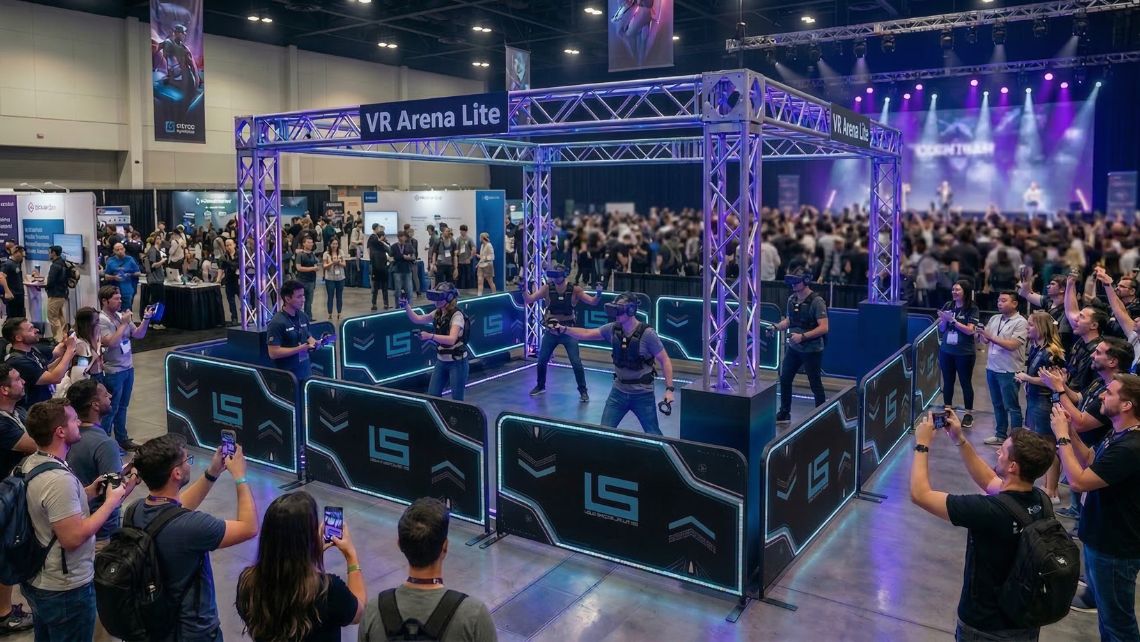
For example, Immersive Studio’s VR Arena Lite – Spawnpoint Free Roam VR demonstrates how arena-based experiences can be deployed efficiently within event venues. Designed for scalability, it supports multiplayer engagement while maintaining operational reliability and guest flow control. This approach allows organisers to integrate immersive gameplay without disrupting wider event programming.
As demand for experiential formats continues to grow, VR arenas provide a practical, high-impact solution that balances spectacle with structure. They are not simply a novelty feature. They are becoming a strategic tool for delivering memorable, participation-led events.
What Are VR Arenas and How Do They Work?
Defining VR Arenas in the Event Context
VR arenas are structured, multi-player immersive environments where participants move freely within a mapped physical space while interacting inside a shared virtual world. Unlike single-user headsets or seated demonstrations, these systems are designed for group participation, making them ideal for live events where engagement and throughput matter.
At their core, VR arenas combine spatial tracking technology, wireless hardware and synchronised software to create a seamless connection between real-world movement and digital interaction. Participants can walk, turn, duck and collaborate naturally, without cables restricting mobility. The physical environment is carefully calibrated to mirror the virtual layout, ensuring safe and intuitive navigation.
For event planners, this means the technology becomes part of the experience rather than a visible complication. Guests step into a clearly defined zone, receive a headset, and immediately enter a shared scenario that encourages communication and teamwork.
The Role of VR Headset Games in Multi-Player Environments
The success of immersive events depends heavily on the quality of the VR headset games themselves. In an arena setting, content must be designed specifically for multiplayer interaction rather than isolated gameplay. Missions are typically collaborative or competitive, structured around shared objectives that require coordination.
In practical terms, this transforms gameplay into a social catalyst. Players rely on verbal communication, spatial awareness and strategy. Observers watch large displays or live feeds, adding a spectator dimension that increases excitement across the venue. This layered engagement ensures the attraction draws attention even from those waiting to participate.
Well-designed VR arenas balance entertainment with accessibility. Controls are intuitive, onboarding is efficient, and experiences are structured to accommodate varying skill levels. That balance is essential when hosting corporate audiences or mixed demographic groups at live events.
How Free Roam VR Creates Full Physical Immersion
Free roam VR is the defining feature that separates arena-based experiences from traditional VR setups. Rather than standing in one place or using handheld controllers to simulate movement, participants physically walk within the arena. Their real-world movement translates directly into the virtual space.
This physicality increases immersion significantly. When guests instinctively step aside to avoid a virtual obstacle or move together as a team, the experience feels tangible. That heightened realism amplifies emotional engagement, making the session more memorable and impactful.
For event organisers, free roam VR also improves energy levels within the venue. Movement generates visible excitement. Team dynamics become theatrical. Spectators react in real time. This synergy between digital immersion and physical presence is precisely why VR arenas outperform static installations at live events.
Using VR Arenas for Corporate and Brand Events
Team-Based Competitive Formats
Corporate events increasingly prioritise interaction over presentation. VR arenas provide a structured environment where teams can compete in fast-paced missions that demand coordination and strategic thinking. Whether divided into departments or mixed groups, participants must communicate clearly and make decisions under pressure.
This dynamic encourages collaboration in ways that traditional icebreakers rarely achieve. Shared challenges build rapport quickly. Friendly competition energises the room. Most importantly, the immersive nature of the experience levels hierarchies, allowing individuals from different roles or seniority levels to interact naturally.
Because sessions are time-bound and repeatable, VR arenas for events can accommodate large guest lists through rotational play formats. This makes them suitable for conferences, annual gatherings and incentive programmes where schedule efficiency is critical.
Collaborative Mission Design for Team Building
Beyond competition, VR arenas can be structured around cooperative missions that emphasise problem-solving and communication. Teams might need to defend a virtual objective, complete timed tasks or navigate complex environments together. Success depends on coordination rather than individual performance.
This type of immersive challenge mirrors workplace dynamics in a controlled environment. Participants experience real-time feedback on how effectively they share information and support one another. The result is a memorable activity that aligns with organisational goals while remaining engaging and enjoyable.
Free roam VR enhances this further by requiring physical awareness alongside digital strategy. Movement, positioning and spatial decision-making all play a role, deepening the collaborative element.
Product Launches and Branded Virtual Environments
For brands seeking differentiation, VR arenas offer more than entertainment. They create opportunities to build immersive narratives around products or services. Virtual environments can reflect brand themes, incorporate messaging, or simulate scenarios aligned with campaign objectives.
Instead of a static exhibition stand, guests step into an interactive story. Engagement becomes experiential rather than informational. Participants spend more time within the branded environment, increasing message retention and emotional connection.
When implemented correctly, VR arenas for events become a central attraction that drives footfall, conversation and social sharing. They transform a brand presence into an immersive destination, ensuring the experience stands out within crowded event spaces.
Designing a Memorable VR Arenas Event Journey
Structuring Guest Flow and Rotational Play
A successful immersive activation is not just about the technology inside the arena. It is about how the entire experience is structured from arrival to exit. When integrating VR arenas into live events, guest flow must be carefully planned to maintain momentum while preventing congestion.
Rotational play formats are particularly effective. Small groups enter the arena at scheduled intervals, ensuring consistent throughput without overwhelming staff or participants. While one group is immersed in gameplay, others can watch live screens, network nearby or engage with complementary activities. This staggered approach maximises engagement across the venue rather than concentrating attention in one corner.
Clear onboarding processes also matter. Briefings must be concise yet informative, helping guests understand both safety guidelines and gameplay objectives. Efficient transitions between sessions allow VR arenas to operate as a reliable centrepiece attraction without disrupting the wider event schedule.
Creating Anticipation Before Gameplay
Memorable event moments begin before participants even put on a headset. Visual staging, branded environments and clear signage can build anticipation as guests observe others playing. The visible energy of free roam VR naturally draws attention, but thoughtful presentation enhances this effect.
For example, countdown timers, team announcements or live leaderboards can heighten excitement. Guests waiting for their turn feel involved rather than idle. The immersive zone becomes a focal point that generates conversation throughout the venue.
This pre-game engagement ensures VR arenas function not only as an activity but as a dynamic performance space. Anticipation strengthens emotional investment, which in turn amplifies the impact of the experience itself.
Spectator Engagement and Social Amplification
An often-overlooked advantage of VR arenas is their spectator value. Unlike individual VR headset games, arena-based experiences create visible movement and teamwork that audiences can watch in real time. External screens can display player perspectives, scores or mission progress, turning each session into a shared spectacle.
This layered engagement is crucial at larger events. Even those not actively participating remain connected to the action. Applause, laughter and competitive banter ripple through the space, increasing overall energy.
When designed strategically, these moments also encourage organic content creation. Guests capture reactions, share highlights and extend the event’s reach beyond the venue. The immersive nature of VR arenas provides visually compelling scenes that naturally attract social attention.
Why Free Roam VR Elevates Social Interaction
Physical Movement and Real-World Collaboration
Free roam VR fundamentally changes how participants interact with one another. Instead of standing in isolated positions, players move through a shared physical space that mirrors the virtual world. This mobility encourages natural communication, positioning and teamwork.
When colleagues must physically regroup to complete an objective or reposition strategically within the arena, collaboration becomes instinctive rather than forced. The combination of movement and immersion creates a heightened sense of presence that strengthens interpersonal dynamics.
In event settings, this physical engagement generates visible energy. Observers see teammates gesturing, reacting and coordinating in real time. That authenticity reinforces the credibility of the experience and makes VR arenas feel dynamic rather than staged.
Communication Under Pressure in Shared Spaces
High-engagement activities often reveal how individuals communicate under time constraints. Within VR arenas, participants must relay information quickly, adapt strategies and respond collectively to changing scenarios. This shared pressure strengthens bonds and creates memorable shared achievements.
For corporate events, this dynamic mirrors workplace collaboration in an engaging format. Teams navigate challenges together, celebrate victories and learn from setbacks. The immersive context removes everyday distractions, allowing participants to focus fully on the task at hand.
Because free roam VR integrates physical awareness with digital interaction, communication becomes multi-dimensional. Players rely on both verbal coordination and spatial positioning, adding depth to the collaborative experience.
Competitive Energy That Drives Engagement
Healthy competition can transform the atmosphere of an event. VR arenas amplify this effect by enabling structured team-versus-team formats or timed mission challenges. Leaderboards, score comparisons and rapid session turnover sustain excitement throughout the day.
Unlike traditional games confined to a small footprint, free roam VR creates a stage-like environment where competitive moments are visible and shared. Victories feel public. Team spirit becomes tangible. The energy spreads beyond the arena itself.
This competitive layer, combined with immersive storytelling and physical interaction, is what makes VR arenas particularly effective for events. They do not simply entertain individuals; they energise entire venues, creating shared moments that attendees remember long after the experience ends.
Scalability: From Private Functions to Large-Scale Installations
Adapting VR Arenas for Events of Different Sizes
One of the strongest advantages of VR arenas is their adaptability. Whether integrated into a private corporate function or positioned as a headline attraction at a major exhibition, the core format can be scaled to suit the available space and audience size.
For smaller gatherings, a compact arena footprint can deliver high-intensity multiplayer sessions with structured rotations. For larger conferences or trade shows, expanded configurations allow continuous throughput across extended hours. This flexibility ensures the immersive experience enhances the event rather than overwhelming it.
Because VR arenas operate within clearly defined physical zones, planners retain control over layout, safety and scheduling. The immersive component becomes a strategic feature rather than a logistical risk.
Modular Arena Configurations
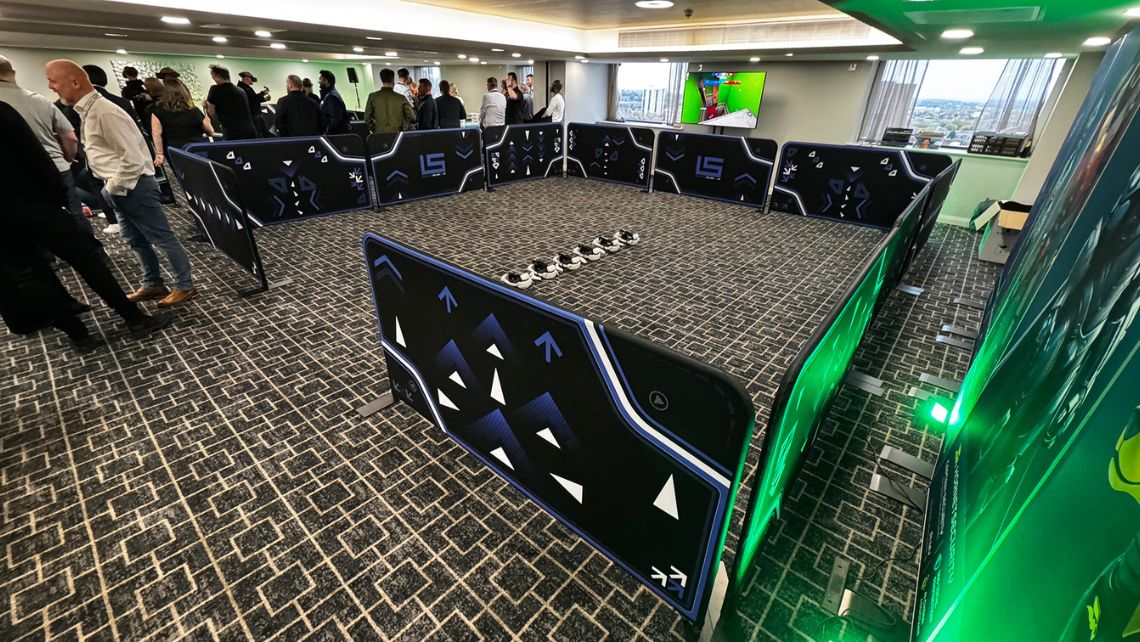
Modern free roam VR systems are designed with modularity in mind. Arena boundaries, tracking infrastructure and hardware setups can be configured to align with venue constraints. This makes them suitable for hotels, exhibition halls, conference centres and even unconventional event spaces.
For organisers seeking a proven deployment model, Immersive Studio’s VR Arena Lite – Spawnpoint Free Roam VR demonstrates how modular design enables efficient installation and operation. Built specifically for controlled multiplayer engagement, the system supports consistent gameplay while maintaining the flexibility required for live environments.
This modular approach ensures VR arenas for events remain practical as well as impressive. Setup times, staffing requirements and technical calibration are streamlined to support professional execution.
Temporary Installations in Dynamic Event Spaces
Temporary immersive installations demand reliability. Event schedules are tight, and downtime is not an option. Professionally deployed VR arenas are engineered for rapid setup and stable performance, ensuring sessions run smoothly throughout the day.
In large venues, the arena often becomes a visual anchor that draws footfall. In more intimate settings, it acts as a high-value focal experience that encourages interaction among guests. Because the system operates within defined boundaries, it integrates seamlessly with staging, catering and networking areas.
This scalability is a major reason why VR arenas continue to gain traction within the events sector. They provide spectacle without sacrificing operational control.
Why Businesses Search for “VR Arenas Near Me” for Events
The Demand for Local, Turnkey Deployment
When organisers search for “VR arenas near me,” they are typically looking for more than proximity. They are seeking reliability, technical expertise and a partner capable of handling end-to-end delivery. Immersive installations must function flawlessly within time-sensitive event environments.
A localised deployment partner understands venue access requirements, power considerations and staffing logistics. This reduces risk and ensures the immersive feature enhances the event rather than introducing complications. For corporate planners, that reassurance is critical.
What Event Planners Should Look For
Choosing the right provider involves evaluating several key factors. First, the quality and scalability of the VR headset games should support multiplayer participation without complexity. Second, the free roam VR system must prioritise safety and intuitive onboarding. Finally, operational support must include trained staff who manage sessions efficiently.
Professional VR arenas are not simply entertainment rentals. They are structured immersive environments requiring strategic planning and technical oversight. Organisers should look for solutions designed specifically for events rather than adapted from consumer gaming setups.
Technical Reliability, Staffing and Ongoing Support
Live events leave no room for technical uncertainty. High-performance hardware, stable tracking systems and streamlined session management are essential. Equally important is on-site staffing to guide participants, manage equipment and maintain throughput.
When delivered professionally, VR arenas for events become seamless components of the overall programme. Guests experience smooth transitions, clear instructions and uninterrupted gameplay. This operational reliability strengthens confidence in immersive technology and ensures the attraction delivers measurable engagement.
As more organisers prioritise experiential impact, searches for VR arenas near me will continue to grow. The key differentiator lies not just in availability, but in the ability to execute immersive experiences with precision, scalability and strategic intent.
Wrapping Up
Memorable events are built on participation, emotion and shared moments. VR arenas bring all three together within a structured, scalable format that suits modern corporate gatherings, exhibitions and brand activations. Instead of relying on passive entertainment, organisers can create environments where guests actively collaborate, compete and communicate.
By combining multiplayer VR headset games with physically immersive free roam VR, these installations transform standard venues into interactive destinations. The result is stronger engagement, higher dwell time and conversations that continue long after the event concludes.
From compact setups to modular arena deployments, professionally delivered VR arenas for events offer both spectacle and operational control. They allow planners to integrate cutting-edge immersion without sacrificing reliability or guest flow. As demand grows for more experiential formats, immersive arenas are becoming a strategic tool rather than a novelty feature.
For organisations aiming to stand out in competitive event environments, VR arenas provide a powerful way to create impact that feels innovative, inclusive and unforgettable.
Frequently Asked Questions - VR Arenas
What are VR arenas and how do they work at events?
VR arenas are dedicated immersive spaces where multiple participants enter a shared virtual environment while physically moving within a mapped real-world area. Wireless headsets, spatial tracking and synchronised multiplayer software allow players to see and interact with one another in real time. At events, sessions are run in structured rotations, ensuring smooth guest flow and consistent engagement. Because VR arenas are purpose-built for live deployment, they combine immersion with operational control, making them suitable for corporate gatherings, exhibitions and branded experiences.
How many players can participate in VR arenas at the same time?
The number of participants depends on the arena size and configuration. Smaller setups accommodate compact teams, while modular VR arenas can support larger multiplayer groups within safe movement boundaries. For events, sessions are typically organised in timed rotations to maximise throughput without overcrowding. This structure ensures each participant has enough physical space to move freely while still engaging collaboratively inside the shared virtual world.
Are VR headset games suitable for corporate team-building events?
Yes, multiplayer VR headset games within VR arenas are highly effective for team-building because they require communication, coordination and quick decision-making. Participants collaborate or compete in shared missions that naturally encourage interaction. The immersive environment removes distractions and creates focused engagement, helping teams strengthen rapport in a memorable, high-energy setting aligned with corporate objectives.
How much space is needed for a VR arenas event setup?
Space requirements vary based on the configuration, but VR arenas are designed to adapt to different venues, from conference rooms to exhibition halls. The footprint must allow safe free movement and include areas for briefing and equipment management. Modular systems enable planners to scale the arena according to guest numbers while maintaining operational efficiency within the overall event layout.
What is free roam VR and why is it popular at events?
Free roam VR allows participants to physically walk within the arena, with real-world movement mirrored in the virtual environment. This increases realism and immersion compared to stationary setups. At events, it generates visible energy as guests move, react and collaborate in real time. The combination of physical interaction and digital immersion makes VR arenas more engaging for both players and spectators.
Can VR arenas for events be customised with branding?
Yes, VR arenas for events can incorporate branded visual elements within the virtual environment and surrounding physical space. Themes, mission narratives and visual assets can align with campaign messaging, creating a cohesive immersive experience. This approach increases message retention because participants actively engage within the branded environment rather than simply observing static promotional materials.
Are VR arenas safe for large corporate events?
Professionally deployed VR arenas are designed with safety as a priority. Clearly defined boundaries, calibrated tracking systems and supervised sessions reduce risk during gameplay. Participants receive guidance before entering the arena, and staff manage rotations to prevent overcrowding. When implemented correctly, immersive experiences operate smoothly within busy corporate environments.
How do I choose the best VR arenas near me for an event?
When evaluating VR arenas near me, organisers should prioritise scalability, multiplayer capability and event-specific deployment experience. Reliable hardware, efficient onboarding and trained staff are essential for seamless execution. A professional provider will ensure the immersive setup integrates with venue logistics while delivering consistent performance throughout the event.