Creative Uses of Projection Mapping at Modern Live Events
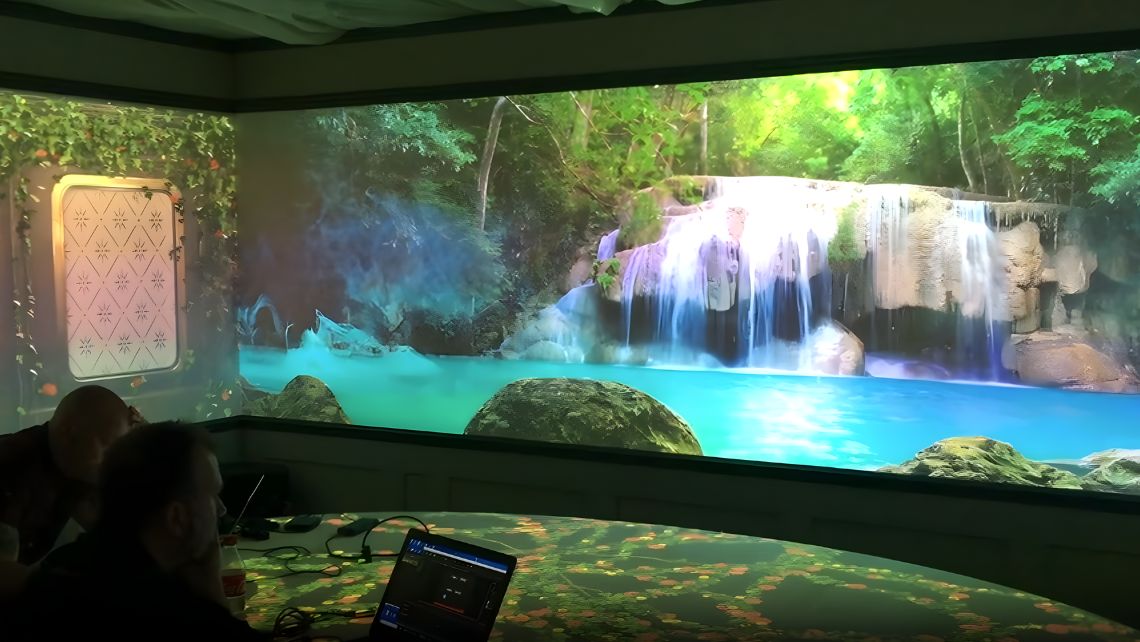
Projection mapping is redefining how modern live events are designed, experienced and remembered. Event environments are no longer treated as neutral spaces filled with staging and screens. They are increasingly shaped as immersive storytelling platforms where architecture, light and motion work together to deliver impact. Audiences expect more than presentations; they expect transformation, immersion and emotional resonance.
At its core, 3D projection mapping allows physical surfaces to become dynamic visual canvases. Walls shift, stages evolve and structural features appear to move with precision and purpose. Rather than relying solely on traditional display formats, event producers can use existing architecture as part of the narrative, creating a cohesive environment that feels intentional rather than decorative.
This evolution has elevated interactive projection mapping from a technical enhancement to a strategic creative tool. When engineered correctly, it delivers both spectacle and storytelling clarity. The result is not simply visual content, but spatial experience that surrounds attendees and guides their attention naturally through a curated journey.
As expectations around immersion continue to rise, projection mapping is becoming central to how brands communicate in live settings. When executed with technical precision and creative direction, it transforms ordinary spaces into unforgettable environments.
What Makes Projection Mapping Essential at Modern Live Events
The Shift from Static Staging to Immersive Surfaces
Live events have evolved significantly over the past decade. Traditional staging once relied on printed backdrops, static scenic builds and front-facing screens. While functional, these approaches limited the ability to create dynamic spatial narratives. Audiences remained observers rather than participants within the environment.
Projection mapping changes that dynamic by using the venue itself as part of the storytelling framework. Instead of masking structural features, designers can integrate them directly into the visual concept. Structural elements can be animated to reveal layered content, simulate architectural movement or amplify key messaging moments without physical reconstruction.
This shift enables greater flexibility in creative direction. Flat surfaces can appear sculptural, and layered stage builds can be visually extended beyond their physical limits. By carefully aligning content with geometry, the illusion of depth and motion becomes seamless, enhancing perceived production scale without excessive physical build costs.
When systems are precisely configured and calibrated, imagery remains crisp and accurately aligned even across complex surfaces. Brightness levels, lens selection and environmental factors all influence how effectively the environment transforms. When these elements are coordinated correctly, the result is a cohesive visual narrative rather than disconnected effects.
Why Audiences Expect Experiential Visual Storytelling
Modern audiences are immersed in high-quality visual media daily. Cinematic graphics, interactive apps and immersive gaming environments have shaped expectations around movement, responsiveness and realism. Live events must now compete with these standards to capture attention meaningfully.
Projection mapping addresses this expectation by extending storytelling beyond traditional display boundaries. Instead of confining visuals to rectangular formats, entire spaces can be animated in synchronisation with lighting and sound. This creates moments where the environment itself feels alive, reinforcing emotional peaks and guiding audience focus.
In experiential zones, responsive installations introduce an additional layer of engagement. Movement, gestures or presence can trigger visual responses, allowing attendees to influence the environment in real time. This participatory dimension increases dwell time and strengthens memory retention, particularly in brand-led installations.
To achieve this effectively, technical planning is critical. Output power, positioning and calibration must be calculated precisely to avoid distortion or brightness inconsistency. When creative direction and engineering work together, transitions between narrative phases feel smooth and intentional, moving from subtle ambience to high-impact reveals without visual disruption.
The Strategic Role of Projection Mapping in Brand Impact
In competitive event landscapes, differentiation depends on how successfully a brand controls spatial perception. Static environments struggle to command sustained attention, particularly in large venues where visual noise is constant.
Projection mapping provides a solution by redefining the entire visual hierarchy of a space. Instead of competing with surrounding stimuli, it transforms surfaces into focal points that naturally draw the eye. Animated architectural features, synchronised content sequences and controlled lighting shifts create structured visual journeys.
A carefully designed installation can guide attention step by step, revealing messaging progressively rather than overwhelming audiences at once. By integrating multiple calibrated systems with seamless blending, large-scale surfaces can appear unified and uninterrupted, reinforcing professionalism and technical sophistication.
From a brand positioning perspective, projection mapping signals innovation without explicitly stating it. The environment itself communicates technological capability and creative ambition. When audiences witness spaces respond, evolve and transform around them, the experience feels forward-thinking and memorable.
As live events continue to prioritise immersion and measurable engagement, projection mapping is no longer an optional enhancement. It is a strategic design decision that shapes how brands are perceived within physical space.
Transforming Architectural Surfaces into Storytelling Canvases
Reinventing Physical Structures Through Visual Design
Modern venues are filled with untapped creative potential. Columns, facades, stage builds and interior features often exist as static elements, supporting the event but not contributing to its narrative. With the right creative and technical strategy, these structures can become central to the experience.
Projection mapping enables designers to reinterpret architecture as part of the story rather than a background element. Instead of concealing structural details, content is precisely aligned to them, enhancing depth and amplifying scale. A plain surface can appear to fragment, expand or reveal layered visuals that unfold in synchronisation with music and lighting cues.
This approach allows organisers to maximise what already exists within a space. Rather than constructing elaborate physical sets, digital transformation reshapes perception. The environment feels purpose-built for the brand message, even when the underlying structure remains unchanged.
At Immersive Studio, this process begins with detailed spatial analysis and 3D modelling to ensure visual accuracy. Through our dedicated 3D projection mapping services, architectural features are measured, mapped and translated into digital canvases. Every line, curve and edge is accounted for before content production begins, ensuring the final execution feels seamless rather than imposed.
Creating Depth, Illusion and Movement
One of the most powerful aspects of projection mapping is its ability to simulate depth on flat surfaces. Carefully constructed animation sequences can create the illusion of recession, expansion or transformation, giving the impression that solid structures are moving in real time.
This technique enhances emotional engagement by surprising audiences with unexpected visual shifts. A stage backdrop might appear to open into a new environment. A branded feature wall could visually collapse and rebuild around a product reveal. These controlled illusions guide attention and create memorable moments that static staging cannot replicate.
Precision remains critical. Every visual element must align perfectly with the physical geometry to maintain credibility. Even minor misalignment can break the illusion. That is why projection mapping requires both creative vision and meticulous calibration on site, ensuring that digital content interacts convincingly with tangible surfaces.
When executed correctly, the environment feels alive. Surfaces no longer simply hold visuals; they perform as part of the narrative.
Designing Multi-Surface Experiences
Large-scale events often involve multiple focal points. Instead of concentrating visuals on a single backdrop, organisers can extend projection mapping across ceilings, side walls and scenic builds to create a fully immersive envelope.
By synchronising these surfaces, designers establish visual continuity throughout the venue. Transitions can travel across the room, linking different architectural elements into one cohesive story. This spatial choreography elevates audience perception, making the event feel expansive and intentionally designed.
Such integration requires careful technical planning, from projector positioning to environmental lighting control. When coordinated effectively, projection mapping turns an entire venue into a responsive storytelling system rather than a collection of disconnected screens.
Interactive Environments and Audience Participation
Moving Beyond Passive Viewing
Engagement at live events increasingly depends on participation. Attendees want to feel involved rather than simply present. Static visuals, no matter how striking, eventually fade into the background if they do not respond to the audience.
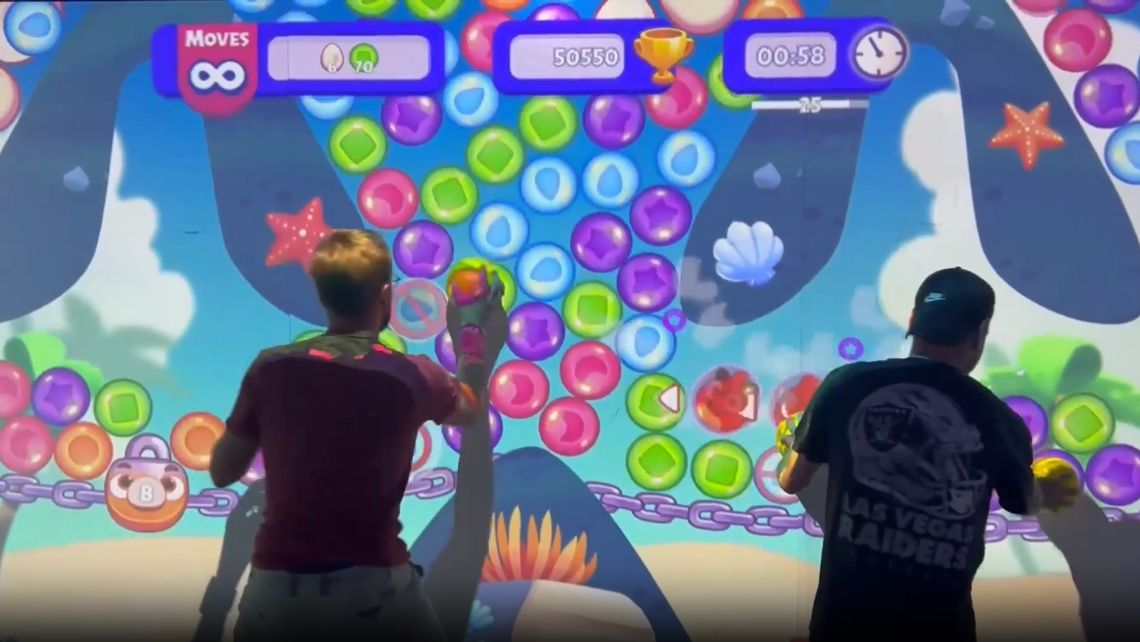
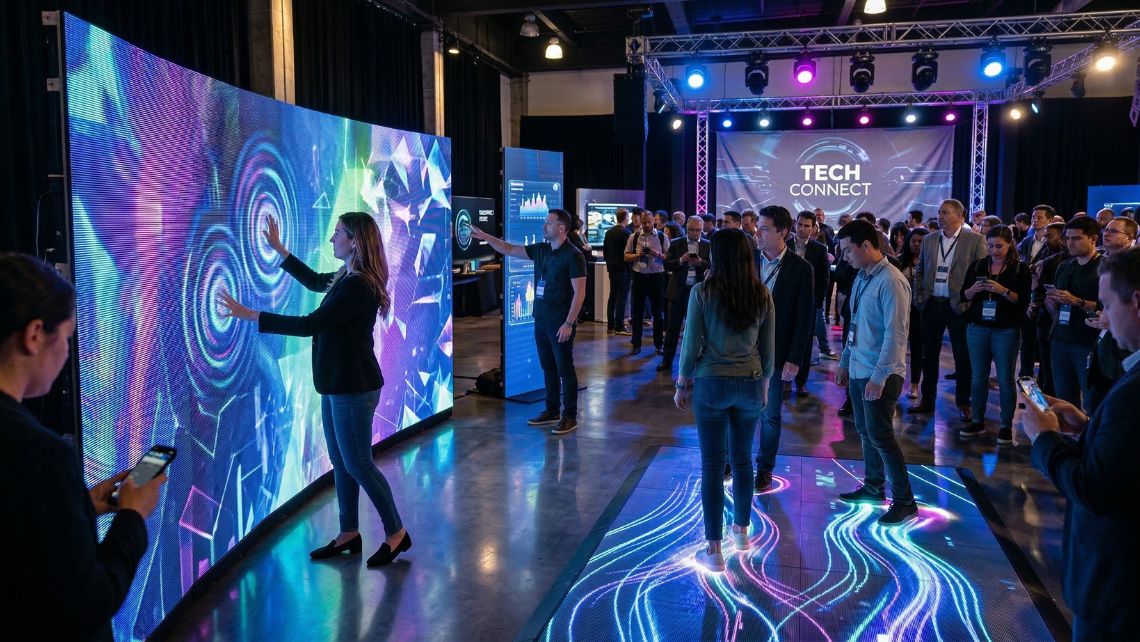
Projection mapping can be integrated with sensors and tracking technologies to create environments that react in real time. Movement across a floor may trigger rippling light effects. Gestures near a wall can activate animated sequences. These responsive elements transform spectators into contributors within the experience.
This shift from passive viewing to active participation increases dwell time and encourages social sharing. When attendees see their actions influencing the environment, the experience becomes personal and memorable.
Designing Controlled Interactivity
While responsiveness adds excitement, it must remain strategically designed. Too much unpredictability can disrupt narrative flow or dilute key messaging. Effective projection mapping balances interactivity with structured storytelling, ensuring audience input enhances rather than distracts.
Designers often create defined interaction zones where participation triggers specific visual outcomes. This approach maintains creative control while still delivering surprise and engagement. Lighting, sound and motion graphics are synchronised to ensure that every response feels intentional and aligned with the broader concept.
At Immersive Studio, interactive environments are developed through careful testing and calibration. Each trigger is refined to respond accurately and consistently, preventing latency or visual inconsistency during live operation.
Enhancing Brand Memory Through Participation
Participation strengthens emotional connection. When audiences influence their surroundings, they develop a sense of ownership over the experience. This emotional investment translates into stronger brand recall and more meaningful engagement.
Projection mapping plays a pivotal role in enabling this transformation. By blending responsive technology with spatial design, it turns physical venues into immersive ecosystems where content adapts to human presence. Instead of observing a campaign message, attendees become part of it.
As modern live events continue to prioritise immersion, projection mapping provides the flexibility to merge storytelling, architecture and audience interaction into one cohesive environment. The result is not simply visual impact, but experiential depth that resonates long after the event concludes.

Immersive Product Launches and Experiential Reveals
Building Anticipation Through Environmental Transformation
Product launches are high-stakes moments. The objective is not only to introduce something new, but to shape how it is perceived from the very first second. Atmosphere, timing and visual storytelling all contribute to that perception.
Projection mapping enables organisers to control anticipation by gradually transforming the environment before the reveal. Instead of unveiling a product on a static stage, the entire venue can evolve in phases. Surfaces may shift visually, lighting may tighten around focal points and motion graphics can build narrative tension before the key moment lands.
This structured transformation heightens emotional engagement. Attendees sense progression rather than abrupt change, which makes the final reveal feel earned and impactful. By aligning content precisely to the physical stage design, projection mapping ensures that every visual transition reinforces the product’s positioning.
Integrating Physical Set Builds with Digital Illusion
Many launches combine tangible scenic elements with digital enhancement. Physical builds provide presence and scale, while projected visuals extend and animate those structures beyond their physical limits.
Projection mapping allows designers to blur the boundary between what is real and what is simulated. A central structure might appear to disassemble before reconfiguring into a new visual form that frames the product. A branded installation can visually expand, suggesting innovation and forward momentum.
The key lies in precision. Content must be modelled accurately against the built environment to maintain realism. At Immersive Studio, detailed surface mapping and on-site calibration ensure that projected visuals interact naturally with physical structures. This approach preserves credibility while amplifying spectacle.
When digital and physical layers operate in harmony, projection mapping transforms a simple unveiling into a multi-sensory narrative moment.
Extending the Experience Beyond the Main Stage
Modern launches often include multiple engagement zones, from entrance areas to demonstration spaces. Instead of concentrating visual impact in one location, organisers can distribute immersive moments throughout the venue.
Projection mapping can unify these zones with consistent visual language. Animated motifs may travel from one surface to another, guiding attendees through a curated journey. This continuity reinforces messaging and ensures the product story is experienced holistically rather than in fragments.
By designing the environment as an interconnected system, brands create stronger emotional coherence. Attendees do not simply witness a reveal; they move through a carefully orchestrated narrative space shaped by projection mapping.
Elevating Conferences and Corporate Events
Enhancing Speaker Presence and Stage Authority
Corporate events often prioritise clarity and professionalism. However, visual restraint does not need to mean creative limitation. Strategic environmental design can elevate speaker presence without overwhelming the core message.
Projection mapping allows stages to adapt dynamically to different segments of a conference. Subtle visual transitions can distinguish keynote sessions from panel discussions or award segments. Background environments may shift tone and depth to support the content being delivered, reinforcing focus without distraction.
By shaping spatial perception around the speaker, projection mapping enhances authority and visual polish. The stage feels purposeful and technically refined, strengthening audience confidence in the brand behind the event.
Visualising Complex Information at Scale
Large conferences frequently involve data-heavy presentations. Charts, statistics and performance metrics can lose impact when confined to flat screens, particularly in expansive venues.
Projection mapping offers an alternative by distributing content across architectural surfaces. Instead of a single focal screen, information can appear layered within the environment, increasing visibility and perceived scale. Visual transitions between topics feel smoother when the surrounding space evolves in parallel with the presentation.
This approach helps maintain engagement during detailed segments. Rather than overwhelming attendees with static slides, the environment subtly adapts, reinforcing structure and pacing. When carefully designed, projection mapping enhances clarity rather than complicating it.
Creating Cohesive Brand Environments Across Multi-Day Events
Corporate conferences often span several days, incorporating different themes and session formats. Maintaining visual consistency while avoiding repetition can be challenging.
Projection mapping enables organisers to refresh the environment daily without physically rebuilding the stage. Visual themes can shift to reflect new agendas while retaining core brand elements. This flexibility supports continuity while keeping the experience visually dynamic.
At Immersive Studio, strategic planning ensures that technical systems remain stable while creative layers evolve. Projection mapping is treated as an adaptable framework rather than a one-off visual effect. This ensures reliability across long event schedules while preserving creative versatility.
In conference settings where precision, clarity and professionalism are essential, projection mapping provides a controlled yet powerful way to enhance perception. It reinforces messaging, supports speakers and shapes brand identity across the entire venue.
Technical Strategy Behind Seamless Execution
Surface Analysis and Spatial Planning
Behind every visually striking environment lies meticulous preparation. Before any content is created, the physical space must be analysed in detail. Dimensions, textures, angles and ambient light conditions all influence how visuals will appear once deployed.
Projection mapping begins with accurate measurement and digital modelling of the venue. This process ensures that every contour and structural feature is translated into a precise virtual canvas. Without this stage, alignment errors can disrupt the illusion and reduce overall impact.
Spatial planning also considers audience sightlines. Content must remain coherent from multiple viewing angles, particularly in large venues where guests are dispersed across the room. By accounting for perspective early in the process, projection mapping maintains visual integrity throughout the event.
Calibration, Alignment and On-Site Refinement
Even the most detailed pre-production modelling requires careful on-site calibration. Environmental variables such as lighting shifts, surface reflections and equipment positioning can alter how visuals behave in real conditions.
Projection mapping relies on precise alignment to maintain realism. Projectors must be positioned to minimise distortion while achieving uniform brightness across the mapped surface. Fine adjustments are often made in real time to ensure that edges, corners and transitions align perfectly with physical structures.
This calibration phase is where technical expertise becomes essential. Small discrepancies can break immersion, so teams must combine creative awareness with engineering precision. At Immersive Studio, testing and refinement are treated as critical stages rather than afterthoughts, ensuring projection mapping performs reliably under live conditions.
Managing Environmental and Operational Factors
Live events are dynamic environments. Lighting changes, stage movement and audience interaction can all influence visual consistency. A robust technical strategy anticipates these variables rather than reacting to them.
Projection mapping systems are configured with redundancy and stability in mind. Equipment selection, rigging safety and signal management are carefully coordinated to prevent disruption. During live operation, technical teams monitor performance continuously, allowing for swift adjustments if required.
By integrating creative design with operational planning, projection mapping becomes a dependable production asset rather than a risk factor. This balance between artistry and reliability is what allows immersive environments to perform confidently at scale.
Designing Memorable Brand Experiences
Creating Emotional High Points
Memorable events are built around emotional peaks. These moments might involve a reveal, a dramatic transition or a powerful visual sequence that captures collective attention. Designing such peaks requires more than visual flair; it demands timing, structure and narrative clarity.
Projection mapping enables organisers to choreograph these moments with precision. Visual transformations can be synchronised with audio cues and lighting shifts, building anticipation before delivering impact. By controlling the environment rather than just a screen, designers amplify emotional intensity.
When surfaces appear to transform in response to a key message or announcement, audiences experience surprise and immersion simultaneously. This layered response strengthens recall and reinforces brand positioning.
Aligning Creativity with Strategic Messaging
Visual spectacle alone is not enough. The most effective environments align creative expression with clear strategic objectives. Every animation, transition and transformation should support a defined narrative.
Projection mapping provides the flexibility to embed brand values directly into spatial design. Colour palettes, motion styles and structural illusions can reflect themes such as innovation, stability or forward momentum. When these elements are integrated thoughtfully, the environment communicates as powerfully as the spoken content.
At Immersive Studio, concept development begins with brand analysis and messaging goals. Projection mapping is then shaped to reinforce those objectives rather than overshadow them. This ensures that immersive design strengthens communication instead of distracting from it.
Measuring Engagement and Long-Term Impact
Modern live events increasingly demand measurable outcomes. Beyond visual appeal, organisers want to understand how environments influence engagement and perception.
Projection mapping contributes to this by encouraging longer dwell times and stronger audience focus. Immersive surroundings reduce distraction and draw attention toward curated focal points. When participation elements are incorporated, attendees are more likely to document and share their experiences, extending reach beyond the venue itself.
The true value of projection mapping lies in its ability to shape memory. When audiences recall an event, they often remember how the space felt rather than individual slides or speeches. By transforming architecture into an active storytelling medium, projection mapping creates impressions that endure long after the final cue fades.
Wrapping Up
Modern live events demand more than functional staging and well-lit speakers. They require environments that communicate, evolve and resonate emotionally with audiences. Throughout conferences, product launches and experiential activations, projection mapping has emerged as a defining tool in achieving that transformation.
By turning architecture into a dynamic canvas, projection mapping reshapes how space is perceived. It enables organisers to guide attention, build anticipation and create structured emotional peaks without excessive physical reconstruction. When integrated with thoughtful narrative design and precise technical planning, it becomes more than a visual enhancement; it becomes the framework through which the entire event is experienced.
From immersive brand storytelling to responsive audience environments, projection mapping allows creative ambition to align with operational reliability. Its value lies not only in spectacle, but in its ability to reinforce messaging, strengthen brand perception and leave a lasting imprint on attendees.
As expectations continue to rise across the events industry, projection mapping stands as a strategic investment in immersive communication. When executed with clarity, precision and purpose, it transforms venues into experiences that audiences remember long after the lights come up.
Frequently Asked Questions - Projection Mapping
What is projection mapping and how does it work at events?
Projection mapping is a technique that uses precisely aligned projected visuals to transform physical surfaces into dynamic display areas. Instead of projecting onto a flat screen alone, content is mapped to the exact dimensions and contours of walls, stages or architectural features. At live events, this allows organisers to animate structural elements so they appear to move, shift or change form in sync with sound and lighting. The process involves digital modelling of the space, content creation tailored to that geometry, and careful on-site calibration. When executed correctly, projection mapping creates the illusion that the environment itself is part of the story rather than simply hosting it.
What equipment is required for projection mapping at a live event?
A successful setup typically includes high-brightness projectors, media servers, alignment software and rigging solutions appropriate for the venue. The exact configuration depends on surface size, ambient lighting and viewing distance. In addition to hardware, detailed pre-production planning is essential. Surfaces must be measured accurately, and content must be designed to match those dimensions precisely. On-site calibration tools are then used to align visuals seamlessly. Professional execution ensures projection mapping performs reliably throughout the event without distortion, misalignment or brightness inconsistency.
How is projection mapping different from standard projection?
Standard projection displays content onto flat surfaces without accounting for architectural detail. The image remains rectangular and independent of its surroundings. Projection mapping, by contrast, integrates visuals with the physical structure itself. Content is shaped and warped to align with edges, curves and textures, creating the illusion that the surface is transforming. This allows designers to simulate depth, movement and structural change. In live event environments, this difference dramatically increases immersion, as the audience perceives the entire space as animated rather than simply watching a screen.
How much does projection mapping cost for an event?
Costs vary depending on scale, complexity and venue conditions. Factors influencing budget include projector brightness requirements, number of surfaces being mapped, content production complexity and technical crew needs. Smaller installations in controlled environments will typically require fewer resources than large-scale multi-surface transformations. Because projection mapping combines creative development with precise technical execution, pricing reflects both design and engineering expertise. Early planning and accurate venue assessments help ensure cost efficiency while maintaining high production standards.
Can projection mapping be interactive?
Yes, projection mapping can be integrated with sensors and tracking systems to respond to audience movement or gestures. This enables environments to react in real time, creating participatory experiences rather than passive displays. For example, motion within a defined area may trigger visual transitions or animated effects across mapped surfaces. Designing interactive elements requires careful calibration to ensure responsiveness without disrupting the overall narrative. When implemented thoughtfully, interactive projection mapping deepens engagement and encourages audiences to spend longer within the experience.
What types of surfaces can projection mapping be used on?
Projection mapping can be applied to a wide range of surfaces, including interior walls, stage builds, sculptural installations and exterior facades. The key requirement is that the surface can be measured and modelled accurately. Texture, colour and reflectivity all influence how visuals will appear, so these factors must be assessed during planning. Smooth, light-coloured surfaces generally provide optimal clarity, but more complex materials can also be used with appropriate calibration. The versatility of projection mapping makes it suitable for diverse event formats, from corporate conferences to experiential brand activations.
Is projection mapping suitable for outdoor events?
Projection mapping can be highly effective outdoors, provided environmental conditions are carefully managed. Ambient light levels, weather exposure and surface stability must all be considered. High-brightness projectors are typically required to maintain visibility against external lighting conditions. Structural assessments ensure safe equipment placement and reliable alignment. With detailed planning and robust technical setup, outdoor projection mapping can transform building exteriors and open-air stages into immersive storytelling platforms.
How long does it take to plan and deliver projection mapping for an event?
Timelines depend on project scale and complexity. Smaller installations may require only a few weeks of preparation, while large-scale environments can involve several months of planning, modelling and content production. The process typically includes site analysis, digital modelling, creative development, technical specification and on-site calibration. Early engagement with experienced specialists helps streamline this workflow and reduce last-minute adjustments. Because projection mapping relies on precision at every stage, allowing sufficient time for design and testing ensures the final result performs flawlessly during the live event.