How Interactive LED Displays Transform Live Event Engagement
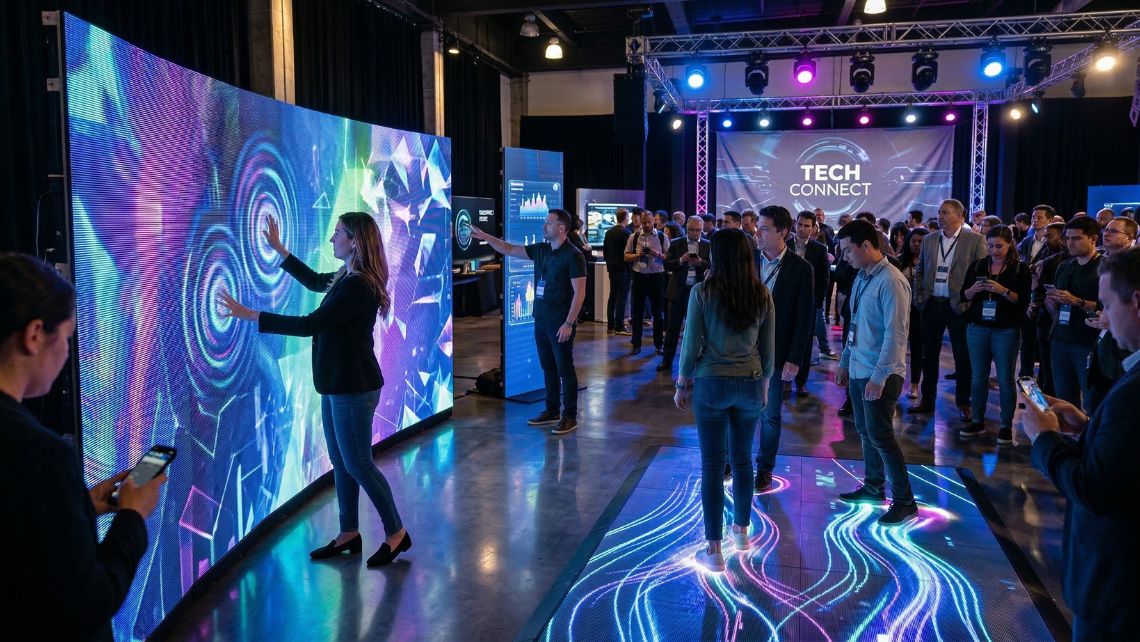
Interactive LED displays are redefining how audiences experience live events by turning passive viewing into active participation. Instead of simply broadcasting visuals, interactive LED displays respond to movement, touch, and behaviour, transforming event spaces into immersive environments that encourage exploration, interaction, and emotional connection.
Across exhibitions, brand activations, corporate showcases and experiential marketing spaces, expectations have shifted. Attendees no longer want to stand and watch; they want to engage. This shift has accelerated demand for interactive LED displays that merge creative storytelling with real-time technology. When integrated strategically, they become more than digital backdrops. They become living, responsive environments that adapt to each participant.
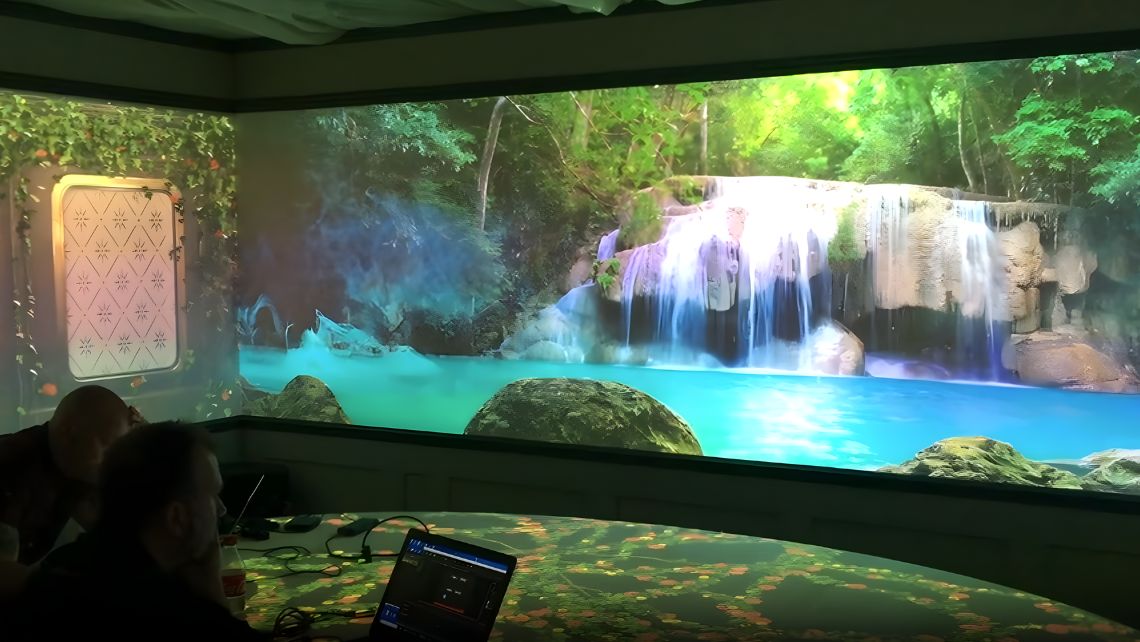
At Immersive Studio, the focus is not just on installing technology, but on engineering experiences. Through tailored builds such as an interactive LED screen spanning a feature wall, a dynamic LED booth designed for product discovery, or an interactive LED floor screen that reacts underfoot, environments are crafted to stimulate curiosity and extend dwell time. These systems are often integrated into interactive booths or a purpose-built LED light booth to create high-impact brand moments that feel intuitive rather than intrusive.
The real transformation lies in how interactive LED displays blend hardware, software and creative direction into one cohesive experience. When executed correctly, they elevate engagement metrics, increase memorability, and turn physical spaces into immersive storytelling platforms.
How Interactive LED Displays Redefine Audience Participation
The Shift from Passive Viewing to Active Engagement
Traditional event screens were designed to be watched. Content played on a loop while audiences observed from a distance. Interactive LED displays change this dynamic entirely by inviting audiences to influence what they see.
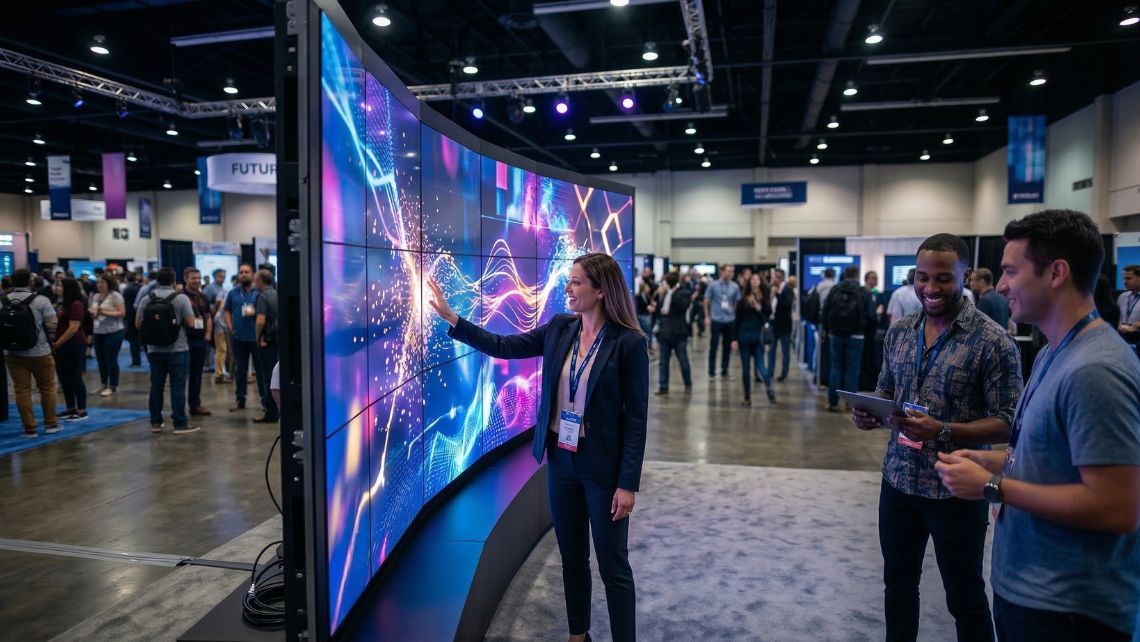
When a visitor approaches an interactive LED screen, their movement can trigger animations, reveal product layers, or unlock digital experiences. In a retail activation setting, a responsive LED booth may adapt its content depending on where a participant stands. This type of interaction transforms the screen from a communication tool into a two-way engagement platform.
Because interactive LED displays respond in real time, they create a sense of agency. Attendees feel involved rather than marketed to. This psychological shift increases emotional investment and significantly improves recall long after the event ends.
Creating Immersive Spatial Experiences
The power of interactive LED displays extends beyond vertical walls. Event environments can be designed so that every surface contributes to the experience.
Interactive LED Floor Screen Integration
An interactive LED floor screen introduces movement-driven storytelling directly beneath the audience. As participants walk across the surface, visuals can ripple, animate or respond dynamically. In an exhibition context, this could guide foot traffic through a branded journey. In a product launch environment, it might simulate immersive environments that evolve with every step.
Unlike static flooring solutions, an interactive LED floor screen transforms circulation areas into engagement zones. When synchronised with surrounding interactive LED displays, the result is a fully connected spatial narrative.
LED Booth Environments
An LED booth acts as a contained immersive hub within a larger venue. By combining modular LED structures with responsive content systems, brands can create defined spaces that command attention without relying on traditional printed graphics.
When an LED booth integrates sensor-triggered content, lighting synchronisation and interactive surfaces, visitors are naturally drawn inside. This increases dwell time and encourages meaningful interaction. Repeated strategic deployment of an LED booth format across different activations ensures consistency while allowing customisation for specific campaigns.
Interactive Booths as Experience Hubs
Interactive booths take the concept further by merging architecture, lighting and digital responsiveness into a cohesive environment. Within these spaces, interactive LED displays can respond to gestures, proximity or touch, delivering personalised content pathways.
For example, a visitor entering one zone of the booth may see different messaging compared to someone exploring another area. This segmentation increases relevance and engagement depth. When interactive booths incorporate multiple interactive LED displays across walls and structural elements, the entire structure becomes a responsive storytelling device.
LED Light Booth Installations
A LED light booth combines immersive lighting design with digital display technology to heighten sensory impact. By synchronising reactive lighting effects with interactive LED displays, event spaces can amplify emotional response and visual drama.
An LED light booth can be engineered so that colour shifts, brightness variations and motion graphics align with audience behaviour. When deployed repeatedly across different event formats, the LED light booth becomes a recognisable yet adaptable engagement asset.
Measuring Engagement Through Interaction
One of the most powerful aspects of interactive LED displays is their ability to generate measurable engagement data. Unlike static installations, responsive environments provide insight into how audiences behave within a space.
Interaction frequency, dwell duration and movement patterns can all inform future campaign optimisation. For event organisers, this means design decisions are no longer based on guesswork. Instead, interactive LED displays become both engagement tools and performance indicators.
When an interactive LED screen is strategically positioned at an entry point, it can attract footfall and set the tone for the experience ahead. When an interactive LED floor screen extends the journey deeper into the environment, it sustains momentum. When interactive booths and a LED light booth work together within a unified design, the space feels intentional and immersive rather than fragmented.
The transformation is not just visual. Interactive LED displays fundamentally alter how audiences participate, explore and connect within live event environments. By turning spectators into active contributors, they reshape engagement from something observed into something experienced.
The Technology Behind Interactive LED Displays
Interactive LED displays are powered by a fusion of display engineering, sensor technology and real-time content systems. Their ability to transform live environments relies on how seamlessly these components communicate with one another. When designed strategically, the technology becomes invisible, allowing the audience to focus purely on the experience.
Sensor Integration and Real-Time Responsiveness
At the core of interactive LED displays is responsive technology that detects presence, movement or touch and translates it into visual output. This can include motion tracking cameras, proximity sensors, pressure-sensitive surfaces and gesture-recognition systems.
When integrated into an interactive LED screen, these technologies allow content to shift dynamically as visitors move across a space. A product reveal might activate as someone approaches, or layered information could appear when a participant gestures towards a particular area. The immediacy of response is critical. Even minor latency can disrupt immersion, which is why system calibration and processing speed are fundamental considerations.
In more immersive installations, an interactive LED floor screen uses embedded pressure or movement detection to trigger animations beneath each step. Rather than functioning as a simple display surface, the floor becomes a live canvas. This real-time responsiveness transforms transitional areas into experiential zones and ensures that interactive LED displays feel intuitive rather than mechanical.
Modular LED Architecture for Flexible Event Design
Flexibility is another defining characteristic of interactive LED displays. Modular panel systems allow structures to be configured into walls, columns, ceilings or enclosed environments. This adaptability makes it possible to design a fully integrated LED booth that feels bespoke to the brand while remaining technically scalable.
An interactive LED screen can span a feature wall at one event and then be reconfigured into a segmented LED booth layout at another. The same applies to an interactive LED floor screen, which can be installed as a central activation point or expanded to create an immersive walkway.
Interactive booths benefit particularly from modular architecture. Structural frameworks can house LED panels, sensor arrays and concealed cabling, ensuring a clean finish without exposed hardware. When combined with a synchronised LED light booth, lighting layers can be programmed to complement on-screen content, enhancing depth and atmosphere.
The engineering precision behind interactive LED displays ensures visual clarity, seamless panel alignment and colour consistency across surfaces. Without this technical foundation, even the most creative concept would struggle to deliver true immersion.
Transforming Event Spaces with Immersive LED Installations
Interactive LED displays do more than deliver content. They redefine spatial perception. By activating walls, floors and enclosed structures, they turn ordinary venues into immersive environments that encourage exploration and participation.
Reimagining Entrances and Feature Zones
An event entrance sets the tone for everything that follows. Positioning interactive LED displays at key entry points instantly establishes energy and anticipation. As guests walk towards an interactive LED screen, visuals can respond to their approach, building curiosity before they even step inside.
Within feature zones, a large-format interactive LED screen can serve as the centrepiece of storytelling. Rather than presenting a linear narrative, it can adapt to user behaviour, presenting layered content that unfolds differently for each participant. This variability encourages repeat interaction and prolongs engagement.
Elevating Engagement with Interactive LED Floor Screen Installations
The floor is often underutilised in event design. Integrating an interactive LED floor screen changes that dynamic entirely. By responding to footsteps or directional movement, the surface becomes part of the narrative journey.
In a product-focused environment, the interactive LED floor screen might simulate environments that evolve as participants move forward. In a brand activation space, it could guide visitors towards an LED booth or interactive booths positioned deeper within the venue. Because interactive LED displays can synchronise wall and floor content, the entire environment feels cohesive and intentional.
Repeated strategic use of an interactive LED floor screen ensures that engagement extends beyond eye level. It surrounds the participant, reinforcing immersion from multiple angles.
Designing High-Impact LED Booth Experiences
A LED booth provides a contained yet powerful engagement zone within larger exhibition halls. By integrating interactive LED displays across interior surfaces, the booth becomes a dynamic environment rather than a static stand.
When visitors step inside a LED booth, responsive visuals can react to their position, trigger personalised messaging or reveal layered content. This controlled environment increases dwell time and allows deeper brand storytelling. The modular nature of interactive LED displays means the booth can be scaled or reshaped depending on event requirements while maintaining consistent performance quality.
Interactive booths take this approach further by merging architecture with technology. Instead of mounting screens onto walls, the entire structure is designed around the capabilities of interactive LED displays. This ensures that every surface contributes to the narrative.
Amplifying Atmosphere with LED Light Booth Concepts
Amplifying Atmosphere with LED Light Booth Concepts
Lighting significantly influences emotional response. A LED light booth integrates reactive lighting systems with interactive LED displays to intensify impact. When colour shifts, brightness transitions and motion graphics synchronise in real time, the space feels alive.
For example, an LED light booth can respond to user interaction by altering ambient tones while the adjacent interactive LED screen updates its visuals simultaneously. This synchronisation deepens immersion and creates visually compelling moments that encourage social sharing.
When interactive booths, a LED booth and a LED light booth operate within a unified design framework, interactive LED displays become the connective tissue binding the entire environment together. The result is a live event space that no longer relies solely on messaging, but on experience-driven participation that leaves a lasting impression.
Strategic Benefits for Event Organisers and Brands
Interactive LED displays do more than enhance aesthetics. They deliver measurable commercial value by influencing behaviour, extending engagement and strengthening brand recall. When deployed with clear objectives, interactive LED displays become strategic assets rather than decorative features.
Increasing Footfall and Dwell Time
In competitive exhibition halls and large-scale venues, attracting attention is the first challenge. Interactive LED displays naturally draw audiences because movement and responsive visuals stand out in peripheral vision. When an interactive LED screen reacts to proximity or gesture, it creates a sense of curiosity that encourages attendees to approach.
Once inside the activation space, dwell time becomes the priority. A LED booth designed around interactive LED displays can guide visitors through layered content experiences rather than presenting a single static message. When combined with an interactive LED floor screen that subtly directs movement, participants are encouraged to explore further instead of exiting quickly.
Interactive booths that integrate multiple touchpoints amplify this effect. As visitors trigger different visual responses across surfaces, engagement feels personalised. This extended interaction window increases opportunities for meaningful brand communication and improves recall long after the event concludes.
Encouraging Shareable, Social-First Moments
Modern live events are inseparable from social media. Attendees frequently document and share experiences in real time. Interactive LED displays provide visually dynamic backdrops that make content creation effortless and compelling.
A LED light booth can synchronise colour transitions with animated wall visuals, creating cinematic moments ideal for photography and short-form video. When an interactive LED screen responds to a participant’s movement, the resulting footage feels unique and personalised, increasing its likelihood of being shared.
Repeated deployment of interactive LED displays within interactive booths ensures consistent brand visibility across user-generated content. Because the experience is participatory rather than passive, shared media reflects genuine interaction, which carries stronger authenticity and wider reach.
Generating Actionable Insights Through Interaction
One of the most valuable advantages of interactive LED displays is their ability to produce measurable engagement data. Unlike static installations, responsive environments can track interaction frequency, dwell duration and movement pathways.
For example, an interactive LED floor screen can reveal how visitors navigate a space, highlighting areas of high engagement or points where attention drops. An interactive LED screen integrated within a LED booth can capture which content segments are triggered most frequently.
These insights allow brands and organisers to refine future activations based on real behavioural patterns rather than assumptions. Over time, interactive LED displays evolve from visual tools into strategic intelligence platforms that inform design, messaging and spatial planning decisions.
Interactive LED Displays for Maximum Impact
Successful deployment of interactive LED displays depends on more than hardware specification. It requires a structured design process that balances creative ambition with technical precision. Without strategic planning, even advanced systems risk underperforming.
Content Strategy Before Hardware
The foundation of effective interactive LED displays is content design. Before selecting panel size or sensor type, the engagement objective must be clearly defined. Is the goal to educate, entertain, capture data or guide movement? Each objective demands a different interaction model.
When developing an interactive LED screen concept, content pathways should feel intuitive. Visual cues, motion prompts and responsive feedback must guide participants naturally. In a LED booth environment, storytelling can unfold sequentially as visitors move through zones. With an interactive LED floor screen, animations can subtly direct participants toward focal areas within interactive booths.
At Immersive Studio, interactive LED displays are approached as narrative systems rather than standalone screens. By prioritising content architecture first, technical specifications are selected to support, not dictate, the creative outcome.
Technical Planning and Venue Integration
Every venue presents structural and logistical considerations. Power availability, rigging constraints, load-bearing capacity and audience flow must be assessed early in the planning process. Interactive LED displays require precise calibration to ensure seamless panel alignment, consistent brightness and synchronised responsiveness.
In a LED light booth installation, lighting systems must integrate with display processors to maintain real-time synchronisation. For an interactive LED floor screen, surface durability and slip resistance are critical to maintaining safety without compromising visual performance.
Interactive booths often require concealed cabling and integrated sensor placement to preserve a clean aesthetic. By designing these elements into the structure from the outset, interactive LED displays operate smoothly without visible technical intrusion.
Partnering with Specialists in Interactive LED Walls
Deploying interactive LED displays at scale demands expertise in creative design, structural engineering and real-time system integration. Immersive Studio delivers bespoke solutions through its dedicated interactive LED wall services, combining modular LED systems with advanced content integration and experiential strategy.
Rather than treating each interactive LED screen as an isolated installation, the approach focuses on creating unified environments where walls, floors and enclosed LED booth structures function cohesively. Whether integrating an interactive LED floor screen into a larger spatial narrative or developing immersive interactive booths enhanced by a LED light booth, the emphasis remains on precision, performance and measurable engagement.
When creative direction and technical delivery align, interactive LED displays move beyond spectacle. They become transformative tools that redefine how live audiences connect with space, brand and story.
Future Trends Shaping Interactive LED Displays
Interactive LED displays continue to evolve as technology advances and audience expectations rise. Live events are no longer defined by scale alone, but by the depth of immersion they create. The next phase of innovation focuses on intelligence, integration and seamless multi-surface environments.
AI-Driven Responsive Content
As real-time processing becomes more sophisticated, interactive LED displays are beginning to incorporate adaptive content logic. Rather than triggering the same animation repeatedly, systems can adjust visuals based on behaviour patterns, interaction frequency or time of day.
An interactive LED screen positioned at an event entrance, for example, could adjust messaging depending on crowd density. Within a LED booth, content sequences may evolve depending on how long visitors remain inside. This type of responsiveness creates experiences that feel fluid rather than repetitive.
When integrated across interactive booths, AI-enhanced interactive LED displays can guide users through tailored content pathways. The environment becomes less linear and more exploratory, encouraging repeat engagement and deeper brand interaction.
Multi-Surface Immersion Across Walls and Floors
The future of interactive LED displays lies in total spatial immersion. Instead of isolated screens, event environments are increasingly designed so that walls, ceilings and flooring operate as one synchronised system.
An interactive LED floor screen can mirror or complement the visuals on a surrounding interactive LED screen, creating continuity from ground to eye level. When a LED light booth integrates synchronised lighting layers, colour transitions can ripple across the entire environment in response to user movement.
This unified approach ensures that interactive LED displays do not compete with each other for attention. Instead, they collaborate to build a cohesive atmosphere. Interactive booths designed with multi-surface integration allow every structural element to contribute to storytelling, strengthening immersion and emotional impact.
Hybrid Event Integration and Remote Connectivity
As hybrid events remain part of the live event landscape, interactive LED displays are increasingly bridging physical and digital participation. Content displayed on an interactive LED screen within a venue can synchronise with remote interfaces, enabling off-site audiences to influence what happens in real time.
Within a LED booth, remote participants could trigger on-site animations or contribute digital content that appears instantly across interactive LED displays. An interactive LED floor screen might visualise live data feeds, reinforcing the connection between physical and virtual engagement.
Immersive Studio continues to explore how these evolving technologies can elevate audience participation. Further insight into how LED environments enhance engagement can be explored in our analysis of LED video wall solutions that boost audience engagement, where we examine the strategic role of immersive display systems in modern events.
As innovation accelerates, interactive LED displays will become increasingly intelligent, interconnected and central to experiential design strategy.
Why Immersive Design Strategy Determines Success
While technology powers interactive LED displays, strategy determines their impact. Without a clearly defined engagement objective, even the most advanced installation risks becoming visual noise.
Aligning Experience with Brand Objectives
Effective interactive LED displays begin with understanding what the brand wants the audience to feel, learn or do. Whether the objective is education, product discovery or emotional storytelling, the design of an interactive LED screen must support that intention.
In a LED booth environment, content sequencing can guide visitors from awareness to deeper exploration. Interactive booths that integrate multiple interactive LED displays allow different layers of messaging to unfold gradually. This structure ensures that engagement builds logically rather than overwhelming participants.
A LED light booth can amplify these objectives by reinforcing tone through controlled lighting atmospheres. When colour, motion and interaction are aligned with brand identity, the environment feels purposeful and cohesive.
Seamless Integration of Structure and Technology
Successful deployment of interactive LED displays requires structural planning as much as creative vision. Panel placement, sightlines, lighting levels and audience flow all influence how an installation performs in a live environment.
An interactive LED floor screen must balance visual vibrancy with durability and safety. An interactive LED screen integrated into architectural frameworks should maintain seamless panel alignment to avoid disrupting immersion. Within interactive booths, concealed infrastructure ensures that technology enhances rather than distracts from the overall design.
When a LED booth and LED light booth operate as integrated elements within a wider spatial concept, interactive LED displays become part of the architecture itself. They stop feeling like added components and start functioning as foundational design elements.
Long-Term Value Beyond a Single Event
Interactive LED displays are most powerful when designed with scalability and adaptability in mind. Modular systems allow reconfiguration across multiple events while maintaining consistent quality and performance. An interactive LED screen used as a feature wall in one venue can be reassembled into interactive booths in another.
This adaptability maximises return on investment and ensures long-term usability. By engineering flexible systems that support evolving creative content, interactive LED displays remain relevant across campaigns, product launches and brand experiences.
Ultimately, the transformation delivered by interactive LED displays is not accidental. It is the result of deliberate design, precise engineering and a clear experiential strategy. When those elements align, live event environments move beyond presentation and become immersive spaces that actively involve every participant.
Wrapping Up
Interactive LED displays have fundamentally reshaped what audiences expect from live events. No longer limited to passive visual backdrops, interactive LED displays create environments that respond, adapt and engage in real time. By merging sensor technology, modular architecture and content strategy, they turn venues into immersive storytelling platforms.
From a strategically positioned interactive LED screen at an entrance feature, to a fully integrated LED booth designed for deep product exploration, every touchpoint can be engineered for participation. An interactive LED floor screen extends engagement beneath the audience’s feet, while interactive booths and a synchronised LED light booth unify architecture, lighting and motion into one cohesive experience.
The real power of interactive LED displays lies in their ability to blend creativity with measurable performance. They increase dwell time, encourage social sharing and generate actionable behavioural insights. More importantly, they transform how people feel within a space. Instead of observing a brand message, audiences interact with it.
When designed with clarity, technical precision and experiential intent, interactive LED displays move beyond spectacle. They become strategic assets that elevate engagement, strengthen brand recall and redefine the standard for live event environments.
Frequently Asked Questions - Interactive LED Displays
What are interactive LED displays and how do they work?
Interactive LED displays are responsive digital screen systems that react to audience movement, touch or proximity in real time. Unlike standard screens, interactive LED displays integrate sensors and media servers that trigger dynamic content changes based on user behaviour. When someone approaches an interactive LED screen or steps onto an interactive LED floor screen, the visuals instantly adapt. This creates immersive environments that feel intuitive and engaging. At Immersive Studio, interactive LED displays are designed as fully integrated systems where technology and storytelling work together to enhance live event experiences.
How can an interactive LED screen increase engagement at events?
An interactive LED screen increases engagement by turning passive viewers into active participants. When visuals respond to gestures or movement, audiences feel directly involved in the experience, which naturally extends dwell time. Interactive LED displays can reveal content in stages, encouraging exploration within a LED booth or interactive booths. Because the experience adapts in real time, it feels personalised and memorable. Immersive Studio ensures interactive LED displays are aligned with clear engagement goals so interaction supports measurable event performance.
What is the difference between an interactive LED floor screen and a standard LED floor?
A standard LED floor plays pre-set content without reacting to users, while an interactive LED floor screen responds dynamically to footsteps or motion. This responsiveness transforms the floor into an active storytelling surface rather than a decorative feature. When synchronised with surrounding interactive LED displays, it enhances immersion across the entire space. Immersive Studio designs interactive LED displays with floor integration to ensure durability, safety and seamless visual performance in high-traffic environments.
Are interactive LED displays suitable for exhibitions and trade shows?
Interactive LED displays are highly effective in exhibitions and trade shows where capturing attention quickly is essential. A responsive interactive LED screen at the front of a LED booth can draw visitors in by reacting to their presence. Within interactive booths, interactive LED displays help structure the visitor journey and maintain engagement. Their modular design allows them to adapt to different stand sizes and layouts. Immersive Studio develops interactive LED displays specifically for live event settings, balancing creative impact with practical installation requirements.
How much space is required for a LED booth with interactive features?
The required space depends on the intended experience rather than a fixed size. Even compact stands can feature an interactive LED screen, while larger environments may include multiple interactive LED displays and an interactive LED floor screen. Thoughtful planning ensures the LED booth feels immersive without overwhelming the footprint. Immersive Studio assesses layout, audience flow and objectives to configure interactive LED displays for maximum impact within available space.
Can interactive booths collect audience data?
Yes, interactive booths powered by interactive LED displays can generate valuable behavioural insights. These systems can track dwell time, interaction frequency and movement patterns, helping brands understand how visitors engage with content. An interactive LED screen may record which features attract the most attention, while an interactive LED floor screen can highlight high-traffic areas. Immersive Studio designs interactive LED displays to deliver both immersive engagement and actionable performance insights.
What content works best on interactive LED displays?
Content designed specifically for responsiveness performs best on interactive LED displays. Trigger-based animations, layered storytelling and bold motion graphics work particularly well because they clearly react to user input. An interactive LED screen can reveal product details through gesture, while an interactive LED floor screen can generate movement-based effects. Immersive Studio approaches interactive LED displays as narrative systems, ensuring content, pacing and interaction logic align with brand objectives.
How durable are interactive LED displays for high-traffic environments?
Interactive LED displays are built for demanding live environments when correctly specified and installed. Applications involving an interactive LED floor screen require reinforced panels and protective finishes to withstand heavy use. Within a LED booth or interactive booths, structural stability and calibration are essential for consistent performance. Immersive Studio ensures interactive LED displays are engineered for durability, safety compliance and long-term reusability across multiple events.