How Immersive Game Experiences Are Transforming Live Events
Immersive game formats are rapidly redefining what audiences expect from live events. Attendees no longer want to simply observe a stage, browse exhibition stands, or passively absorb information. They want to participate, compete, collaborate and influence outcomes in real time. This shift is not a trend; it is a structural change in how live experiences are valued.
As attention spans shorten and digital entertainment becomes increasingly interactive, event organisers are under pressure to create environments that feel dynamic and personalised. A well-designed immersive game does more than entertain. It transforms an event into a shared journey, where guests move through challenges, unlock progression and experience branded storytelling in a tangible way.
The result is deeper engagement, longer dwell time and stronger emotional recall. When attendees become players, the event becomes memorable rather than forgettable. That distinction is commercially powerful.
At Immersive Studio, immersive environments are designed as strategic ecosystems rather than standalone attractions. Whether integrated into exhibitions, conferences or large-scale activations, immersive game structures can turn physical space into narrative-driven experiences that deliver measurable outcomes. The transformation of live events is already underway, and interactive design is leading the shift.
The Strategic Rise of the Immersive Game in Live Events
From Passive Viewing to Participatory Design
Traditional live events were built around presentation. A stage, a speaker, an audience. Engagement was measured by attendance numbers rather than interaction quality. That model now struggles to hold attention in an era shaped by interactive apps, multiplayer platforms and immersive digital environments.
An immersive game repositions the attendee from observer to participant. Instead of watching a demonstration, guests complete a timed mission. Instead of listening to a brand message, they experience it through physical challenges and decision-making tasks. This participatory structure increases emotional investment because outcomes depend on personal involvement.
When event design shifts towards agency and progression, engagement stops being passive consumption and becomes active exploration.
The Experience Economy and Engagement Metrics
In today’s experience economy, the value of a live event is judged by impact, not just attendance. Dwell time, interaction depth and social amplification matter more than footfall alone. An immersive game experience directly influences these metrics by encouraging guests to remain within a defined space for longer periods while progressing through structured gameplay.
Longer dwell time creates more opportunities for brand messaging, product interaction and meaningful conversation. Structured game mechanics also allow performance tracking, which provides measurable insight into participation levels. Instead of guessing whether attendees engaged, organisers can analyse completion rates, challenge progression and response behaviour.
This level of measurable engagement turns experiential design into a strategic investment rather than a creative expense.
Why an Immersive Game Outperforms Static Activations
Static installations rely on visual impact. They attract attention briefly but often fail to sustain it. An immersive game, by contrast, builds anticipation and emotional tension. Competitive elements, timed challenges and collaborative objectives activate psychological triggers linked to reward and achievement.
Consider an event floor where visitors encounter a multi-stage challenge embedded within the brand environment. Participants move through zones, solve tasks and unlock access to the next stage. Spectators gather to watch progress unfold. The space becomes kinetic rather than decorative.
This is where thoughtful design becomes critical. Through carefully engineered environments and integrated storytelling, Immersive Studio develops physical and digital ecosystems that support structured gameplay rather than surface-level interaction. By combining narrative flow with spatial design, an immersive game becomes a central attraction that anchors the entire live event experience.
The rise of participatory environments signals a broader shift in expectations. Live events are no longer defined by what people see, but by what they do.
Audience Behaviour: Why the Immersive Game Experience Is Now Expected
The Influence of Immersive VR Games on Expectations
Consumer behaviour has been reshaped by interactive technology. From multiplayer platforms to immersive VR games, audiences are accustomed to environments where they control outcomes, influence narratives and collaborate in real time. This digital conditioning has raised the bar for physical events.
When attendees walk into a venue today, they subconsciously compare the experience to the interactivity they encounter elsewhere. A static stand or passive display struggles to compete with dynamic digital ecosystems. An immersive game experience bridges that gap by bringing digital-style engagement into a tangible space. Motion tracking, responsive visuals and reactive scoring systems replicate the feedback loops audiences are used to, but within a shared, physical environment.
This convergence of physical and digital expectation is driving organisers to rethink how event spaces are structured. Interaction is no longer optional; it is assumed.
The Psychology Behind Competitive Play
The popularity of game-based environments is rooted in behavioural science. Humans are motivated by progression, status and achievement. Timed challenges create urgency. Leaderboards trigger social comparison. Collaborative missions build connection. These psychological drivers make an immersive game far more compelling than passive observation.
When participants enter a challenge-based environment, they become invested in the outcome. Even spectators feel engaged as they anticipate results and observe progress. This dual-layer engagement increases energy within the space, transforming the atmosphere of a live event from static to dynamic.
Structured gameplay also creates memorable peaks. Completing a final stage, unlocking a hidden element or outperforming other teams generates emotional highs that strengthen recall. For brands and organisers, this heightened memory encoding translates into stronger post-event recognition and advocacy.
What “Immersive Gaming Near Me” Search Trends Reveal
Search behaviour provides insight into market demand. The growth of queries such as immersive gaming near me signals a strong appetite for location-based, participatory experiences. People are actively seeking environments that move beyond screens and into shared physical space.
For live event organisers, this is a clear opportunity. Instead of competing with permanent entertainment venues, events can temporarily deliver comparable interactive depth through a well-designed immersive game. By embedding gameplay into conferences, exhibitions or brand activations, organisers meet the expectations audiences are already expressing through their search behaviour.
The implication is strategic: if attendees are seeking immersive experiences locally, live events must evolve to incorporate them.
The Core Architecture of a High-Impact Immersive Game
Physical Environment Design
Spatial Zoning
Every successful immersive game begins with spatial structure. Clear zones guide participants through a defined journey: entry, briefing, challenge areas, escalation stages and climax. This progression creates narrative momentum and prevents confusion, ensuring that gameplay feels intentional rather than chaotic.
Thoughtful zoning also supports crowd management. Spectators can observe without obstructing participants, while players transition smoothly between stages. In live environments, spatial clarity is essential to maintaining energy and flow.
Environmental Storytelling
Lighting, sound design and scenic builds transform neutral venues into immersive worlds. Even subtle atmospheric shifts can change perception, turning a conference hall into a mission-based arena or a brand stand into an interactive command centre.
Rather than relying on decoration, environmental storytelling integrates brand identity directly into gameplay. Every surface, sound cue and visual element reinforces the narrative. Through its expertise in physical immersive experiences and installations, Immersive Studio develops environments where spatial design supports structured interaction rather than acting as background set dressing.
Tactile Interaction
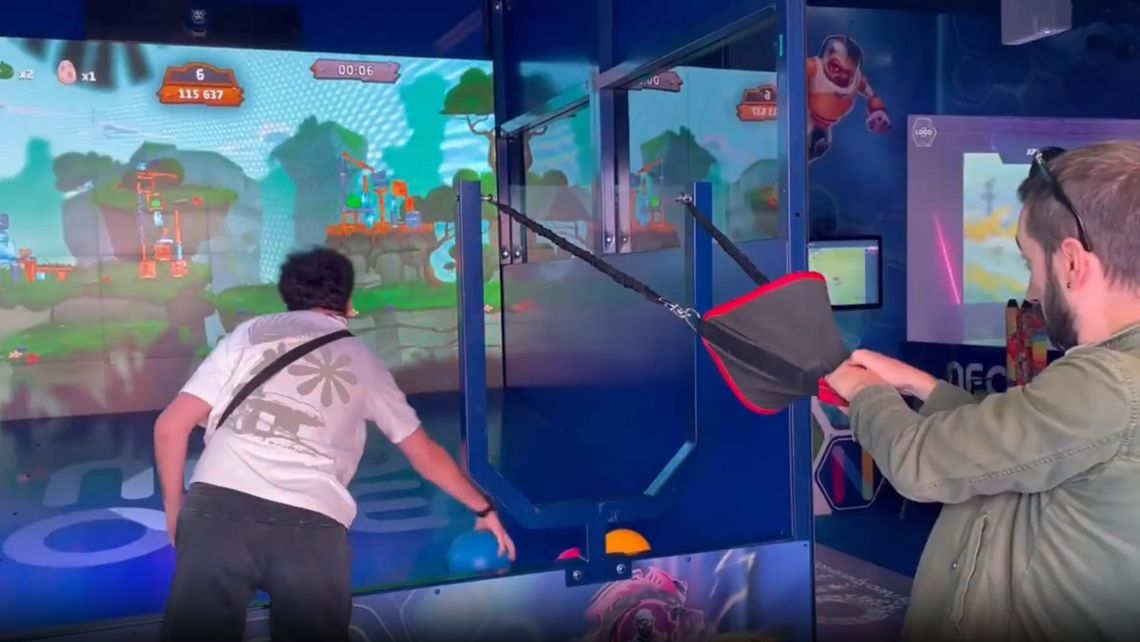
Physical interaction deepens engagement. Buttons, levers, props and tangible challenges activate multiple senses, increasing immersion and retention. When participants physically manipulate elements within the environment, the experience becomes embodied rather than observational.
This tactile layer is particularly powerful in live events, where sensory richness differentiates the space from digital-only entertainment.
Technology Integration
Immersive VR Games Within Physical Spaces
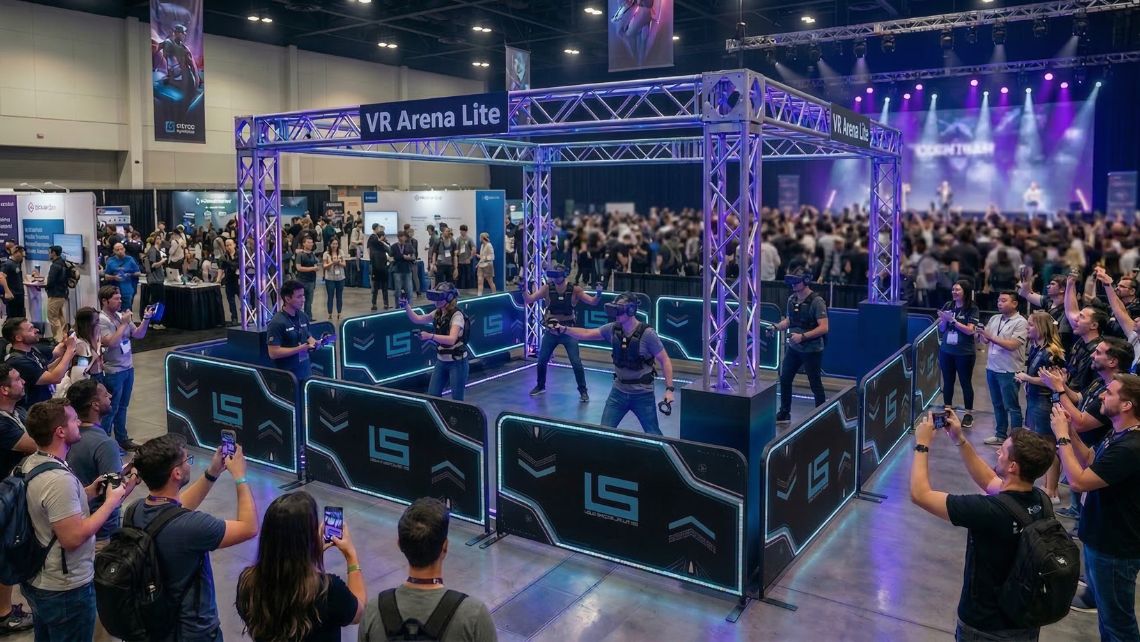
Blending immersive VR games into a live setting allows organisers to expand the perceived scale of an environment. Participants may physically move within a defined zone while experiencing an augmented or fully virtual layer that extends beyond the venue walls.
The key is synchronisation. Virtual environments must align precisely with physical boundaries to maintain safety and realism. When executed correctly, this hybrid structure amplifies immersion without disconnecting players from the shared live atmosphere.
Projection Mapping and Reactive Media
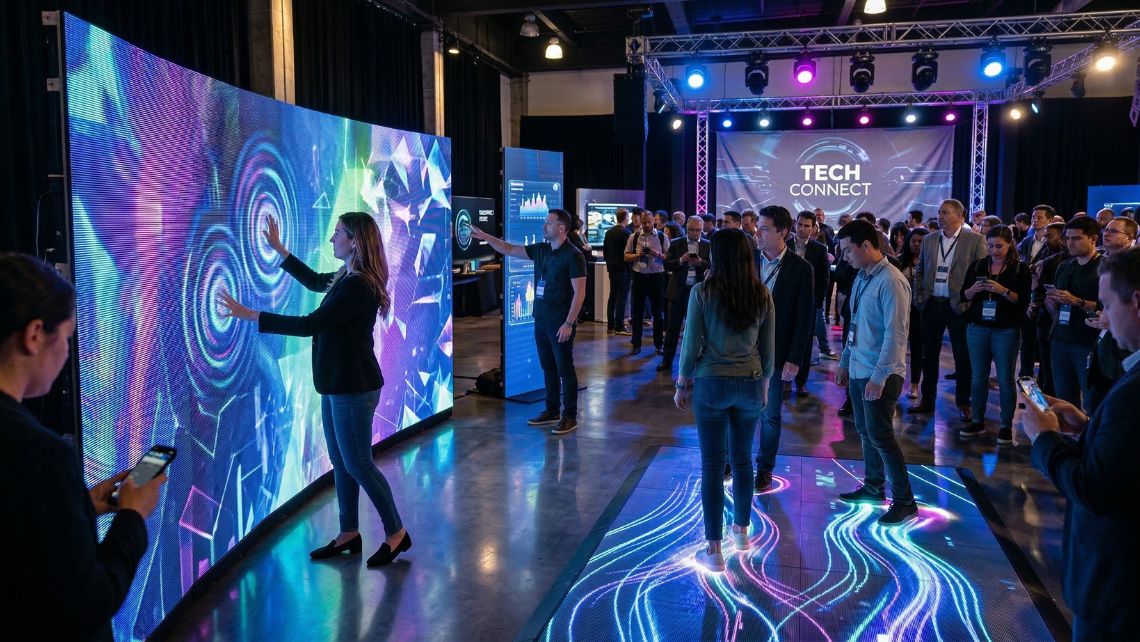
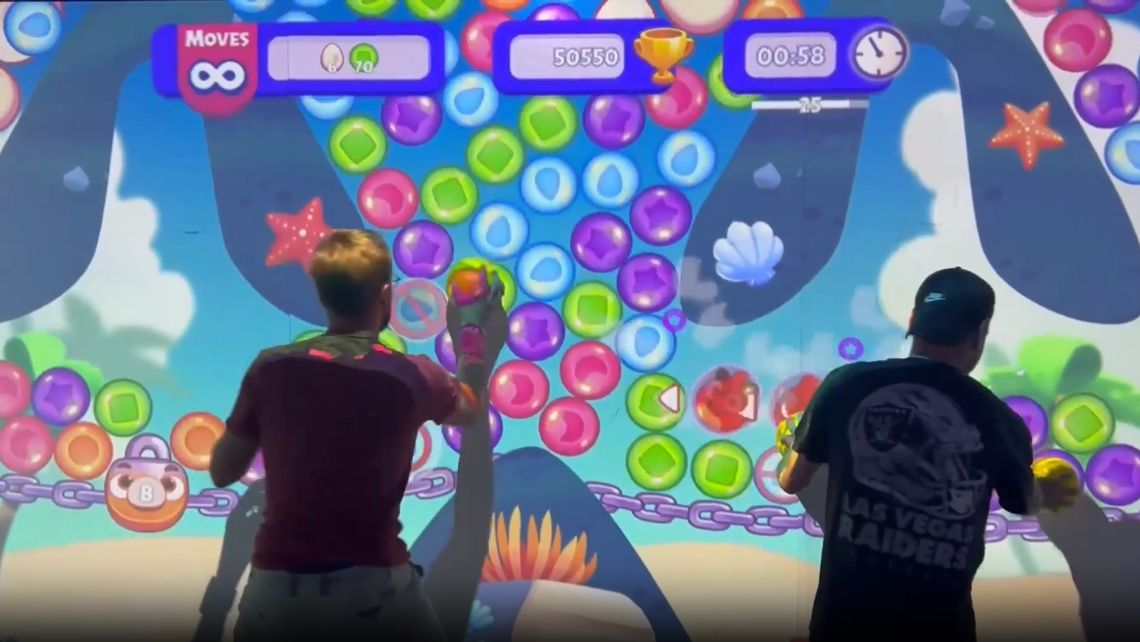
Projection mapping can transform walls, floors or scenic elements into dynamic game interfaces. Visual feedback in response to participant actions reinforces cause and effect, strengthening engagement. Scores update in real time. Obstacles shift based on player decisions. The environment appears alive.
Reactive media ensures that the immersive game evolves continuously rather than feeling static or pre-programmed.
Sensor-Based Gameplay
Motion tracking, pressure sensors and interactive triggers enable responsive gameplay. Participants may activate sequences by stepping into specific zones or completing timed tasks. Real-time data collection also supports measurable outcomes, allowing organisers to analyse engagement levels across the event.
Technology should never overshadow narrative. Instead, it should enhance flow and responsiveness. When integrated strategically, these systems transform a physical space into an adaptive, competitive environment.
Narrative & Game Mechanics
Mission-Based Progression
Clear objectives create momentum. Participants should understand their goals from the outset, with each stage building towards a defined climax. Escalating difficulty maintains challenge while preventing disengagement.
Team vs Individual Play
An immersive game can be structured around collaboration, competition or a hybrid of both. Team-based formats encourage communication and shared achievement, while individual challenges intensify personal investment. The chosen structure should align with the event’s objectives.
Elimination and Timed Challenge Formats
High-intensity formats inspired by elimination-style gameplay, similar in tone to immersive squid game concepts, can introduce urgency and spectacle without referencing specific intellectual property. Countdown timers, limited attempts and visible scoreboards heighten tension and encourage repeat participation.
When narrative, spatial design and technology operate as a cohesive system, the immersive game becomes more than an attraction. It becomes the driving force of the live event experience.
Reimagining Event Floorplans with an Immersive Game Room
Transforming Underutilised Space
Large venues often contain transitional areas that lack purpose. Corridors, corner zones and open-plan sections can feel disconnected from the core programme. Introducing an immersive game room into these spaces converts passive square footage into a high-impact engagement hub.
Rather than treating the immersive game as an add-on, strategic planners position it as an anchor point that draws movement across the floor. Attendees navigate towards visible activity, sound cues and competitive energy. This redistributes footfall more evenly and prevents congestion around main stages or headline stands.
When designed correctly, the immersive game room becomes a destination within the event, creating a focal point that sustains interest throughout the day rather than peaking only during scheduled sessions.
Designing Flow and Footfall
Spatial psychology plays a critical role in live engagement. An immersive game introduces visible progression: players enter, compete, advance and exit. Spectators gather around the perimeter, observing and anticipating outcomes. This layered participation encourages spontaneous involvement.
Queue design also becomes part of the experience. Clear entry points, visible scoreboards and real-time feedback screens maintain anticipation while reducing perceived waiting time. The immersive game operates as both performance and participation, ensuring energy remains high even for those not actively competing.
This approach transforms the event floor from a collection of isolated stands into a connected ecosystem, where gameplay drives movement and sustained interaction.
Sponsorship and Brand Visibility Opportunities
An immersive game room creates premium integration opportunities for sponsors and event partners. Instead of static logo placement, brands can become part of the challenge structure. Tasks, objectives and environmental design can subtly reinforce messaging without disrupting immersion.
For example, a multi-stage challenge might incorporate branded tools, narrative prompts or reward systems aligned with campaign objectives. Because participants engage directly with these elements, exposure feels organic rather than intrusive.
When supported by thoughtful design and measurable interaction tracking, the immersive game becomes a strategic sponsorship asset rather than a decorative attraction. It generates value through participation, not just visibility.
Commercial and Strategic Impact of an Immersive Game at Events
Increased Dwell Time
Dwell time is one of the most important indicators of engagement quality. A compelling immersive game encourages participants to remain within a defined area for extended periods as they complete stages, attempt higher scores or observe others.
Unlike passive displays that attract brief attention, structured gameplay creates commitment. Participants are less likely to disengage mid-challenge, and spectators often stay to watch outcomes unfold. This extended presence increases exposure to surrounding messaging and amplifies the overall value of the space.
Data Capture and Measurable Engagement
Modern event strategy demands measurable return on investment. An immersive game enables structured data collection through registration points, score tracking and performance analytics. Organisers can assess participation rates, completion levels and repeat attempts.
This information supports post-event reporting and future optimisation. Instead of relying solely on anecdotal feedback, stakeholders gain quantifiable insight into how audiences interacted with the environment. Structured gameplay therefore becomes a tool for both engagement and intelligence gathering.
Social Amplification
Competitive environments naturally encourage sharing. Leaderboards, timed victories and collaborative achievements create moments worth capturing. When participants document their progress or final scores, the immersive game extends beyond the venue and into digital channels.
Visible ranking systems and celebratory moments act as catalysts for organic promotion. The event’s reach expands as attendees share achievements with their networks, increasing awareness without additional advertising spend.
Revenue Generation Models
An immersive game can also introduce layered revenue opportunities. Tiered access structures, premium timed slots or exclusive advanced stages create additional value propositions. Organisers may design differentiated participation levels while maintaining open access to spectator engagement.
Because gameplay offers progression and challenge, attendees are often motivated to upgrade or return for multiple attempts. When aligned with broader event objectives, this structure enhances both engagement and commercial performance.
Through carefully engineered environments and strategic integration, Immersive Studio develops immersive experiences for events that combine physical build, narrative structure and technology into cohesive systems. By aligning gameplay with measurable outcomes, an immersive game becomes a scalable framework that elevates both audience experience and event performance.
Applying Immersive Game Design to Corporate and Brand Events
Product Launch Environments
Product launches often rely on presentations and demonstrations, yet these formats can limit meaningful interaction. Embedding an immersive game into a launch environment transforms passive viewing into active discovery. Instead of explaining features, brands can design mission-based challenges where participants unlock functionality through gameplay.
For example, attendees might progress through themed zones that each reveal a product benefit. Completing tasks reinforces key messaging while building anticipation towards a final reveal. The immersive game becomes a structured storytelling device, ensuring that engagement aligns directly with commercial objectives rather than existing as standalone entertainment.
Conferences and Exhibitions
Large-scale conferences frequently struggle with engagement consistency across exhibition floors. An immersive game experience can connect multiple stands or zones through a unified narrative. Delegates move between locations completing challenges, collecting digital markers or advancing through stages tied to sponsors or themes.
This gamified exploration encourages attendees to visit areas they might otherwise overlook. It also creates measurable interaction points, supporting lead capture and post-event analysis. When gameplay is embedded within the spatial design, the entire venue feels interconnected rather than fragmented.
Team-Building and Internal Events
Corporate events increasingly prioritise collaboration, culture and problem-solving. An immersive game structure supports these objectives by placing teams inside timed, narrative-driven challenges that require communication and strategic thinking.
Unlike traditional icebreakers, structured gameplay introduces shared stakes and visible progression. Teams must adapt under pressure, assign roles and coordinate actions. The result is a memorable collective achievement that strengthens engagement beyond the event itself. Because the format is flexible, difficulty and narrative tone can be tailored to suit organisational goals without sacrificing immersion.
Scalable Installations for Touring Events
Brands operating across multiple locations require adaptable solutions. A modular immersive game can be designed to scale across venues of different sizes while maintaining narrative integrity. Portable scenic builds, integrated technology systems and repeatable gameplay mechanics ensure consistency without compromising impact.
Through expertise in physical immersive experiences and installations, Immersive Studio develops environments that balance structural practicality with high engagement value. When combined with strategic planning for touring activations, immersive design becomes a repeatable asset rather than a one-off installation.
By aligning immersive game mechanics with event objectives, organisations can transform corporate gatherings into structured, high-energy environments that deliver measurable and repeatable results.
The Future of the Immersive Game Experience in Live Environments
Hybrid Physical-Digital Convergence
The future of the immersive game lies in seamless integration between physical and digital layers. Persistent scoring systems, wearable devices and synchronised environments will allow participants to carry progress across multiple zones or even multiple events.
This hybrid structure enhances continuity. Attendees may begin a challenge in one environment and complete it elsewhere, strengthening engagement beyond a single venue. The immersive game experience evolves from a momentary attraction into a connected ecosystem.
AI-Driven Adaptive Gameplay
Advances in intelligent systems will allow gameplay difficulty to adjust in real time. Sensors and behavioural tracking can analyse performance and automatically scale challenges to maintain engagement. If participants progress too quickly, complexity increases. If they struggle, guidance elements activate subtly within the environment.
Adaptive systems ensure the immersive game remains inclusive while retaining competitive intensity. Personalised progression increases satisfaction and encourages repeat participation.
Scalable Immersive Game Formats
As demand grows for experiential engagement, modular immersive game room concepts will become more common. These spaces can be deployed temporarily at exhibitions, festivals or corporate venues, delivering consistent interaction quality regardless of location.
Flexible scenic design and integrated technology allow rapid installation without compromising narrative flow. This scalability ensures immersive environments remain commercially viable while meeting rising audience expectations.
The Continued Growth of Immersive VR Games in Live Settings
Immersive VR games will play an increasingly important role in event environments as hardware becomes more accessible and multi-user synchronisation improves. Participants will be able to share virtual spaces while remaining physically co-located, blending spectacle with collaboration.
The key to future success lies in integration rather than novelty. Technology must enhance narrative and spatial design, not overshadow them. When immersive VR games operate as one layer within a broader immersive game framework, live events gain depth, adaptability and measurable impact.
As audience expectations continue to evolve, the immersive game experience will shift from being a standout feature to becoming core infrastructure within event strategy. Those who integrate it thoughtfully will define the next era of live engagement.
Wrapping Up
The immersive game is no longer a novelty within live events; it is becoming a structural advantage. As audiences demand interaction, progression and shared achievement, event organisers must move beyond static formats and design environments that reward participation.
From reimagined floorplans and immersive game room installations to data-driven engagement systems and integrated immersive VR games, interactive frameworks are reshaping how value is created at conferences, exhibitions and brand activations. The most effective immersive game experience is not built around spectacle alone, but around strategy. Narrative flow, spatial zoning, tactile interaction and measurable gameplay mechanics must operate as a cohesive system.
When designed with purpose, an immersive game increases dwell time, amplifies brand recall and generates actionable data. It creates emotional peaks that attendees remember long after the event ends. More importantly, it positions the event itself as an experience worth seeking out rather than simply attending.
Through carefully engineered environments and structured interactive design, Immersive Studio helps organisations transform live spaces into participatory ecosystems. As expectations continue to rise, immersive formats will define the next generation of high-performing events.
Frequently Asked Questions - Immersive Game
What is an immersive game experience at a live event?
An immersive game experience at a live event is a structured, interactive environment where attendees actively participate in challenges rather than simply observing content. It combines spatial design, storytelling, physical interaction and digital technology to create progression-based gameplay. Participants might complete timed tasks, collaborate in teams or move through themed zones that build towards a defined objective. Unlike static activations, an immersive game is designed to increase dwell time, strengthen brand recall and generate measurable engagement data within the live environment.
How do immersive VR games work in physical event spaces?
Immersive VR games in event settings align virtual environments with clearly defined physical zones, allowing participants to move safely while experiencing a digital layer. Headsets, motion tracking and synchronised software ensure that real-world movement corresponds with virtual interaction. In live contexts, these systems can support multi-user participation, shared scoring and real-time feedback. When integrated properly, immersive VR games enhance the overall immersive game experience without isolating players from the collective atmosphere of the event.
Why are people searching for immersive gaming near me?
Searches for immersive gaming near me reflect a growing demand for location-based, participatory entertainment that goes beyond passive screen time. Audiences are increasingly seeking shared, in-person experiences that combine competition, collaboration and sensory engagement. For event organisers, this trend highlights the importance of integrating an immersive game into live environments, as it directly responds to what attendees are already actively looking for in their local area.
What makes an immersive game room successful at exhibitions?
A successful immersive game room relies on clear objectives, intuitive progression and visible energy that attracts both participants and spectators. Effective zoning, reactive visuals and well-managed flow prevent congestion while maintaining excitement. The gameplay must be easy to understand yet challenging enough to encourage repeat attempts. When aligned with event goals, an immersive game room increases footfall, enhances sponsor visibility and becomes a focal engagement zone rather than a standalone attraction.
Can brands create an immersive squid game style experience legally?
Brands can design elimination-style or high-intensity competitive formats inspired by general gameplay mechanics, but they must avoid using protected names, visual identities or copyrighted elements. The concept of timed rounds, escalating difficulty and visible elimination is not exclusive to any one franchise. By developing original storytelling, bespoke environments and unique challenge structures, organisers can create a compliant immersive game that captures similar tension and spectacle without infringing intellectual property rights.
Are immersive game experiences suitable for corporate events?
Immersive game experiences are highly suitable for corporate events because they encourage collaboration, communication and active participation. Whether used for product launches, conferences or team-building sessions, structured gameplay transforms passive attendees into engaged participants. A well-designed immersive game can also provide measurable insights such as participation rates and completion data, helping organisations evaluate impact while strengthening internal culture and brand messaging.
How much space is required for an immersive game installation?
The space required for an immersive game installation varies depending on complexity and participant capacity, but scalable design allows it to adapt to different venue sizes. Compact modular setups can operate within limited footprints, while multi-stage environments may require larger dedicated zones. Careful spatial planning ensures safe circulation, spectator visibility and smooth progression, allowing the immersive game to function effectively without disrupting the broader event layout.
What technology is needed to deliver a high-quality immersive game experience?
Delivering a high-quality immersive game experience typically involves a combination of scenic build, interactive sensors, projection mapping, responsive lighting and sometimes immersive VR games. The exact technology depends on the intended level of interactivity and measurement. However, integration is more important than complexity; systems must work seamlessly with narrative and spatial design to ensure reliable performance, intuitive participation and consistent engagement throughout the live event.